

What Is Process vs Project Outsourcing? A Complete Comparison for Business Owners
Global outsourcing spending reached $971 billion in 2023 according to ISG research, with businesses increasingly splitting that investment between two fundamentally different models: process outsourcing and project outsourcing. Most business owners have used one or the other. Few have deliberately chosen between them based on a structured analysis of what each model actually delivers. That lack of intentionality is where outsourcing budgets go to waste — not because outsourcing fails, but because the wrong model was applied to the wrong type of work.
Process outsourcing means handing off an ongoing business function — customer service, bookkeeping, data entry, social media management — to an external team that runs it continuously. Project outsourcing means engaging external resources to deliver a defined output — a website, a data migration, a market research report — and ending the engagement when the deliverable is complete. The distinction sounds simple. In practice, businesses routinely force project-shaped engagements onto ongoing work, or lock themselves into continuous arrangements for tasks that should have ended months ago. Both mistakes are expensive, and both are preventable with the right framework.
VA Masters has facilitated 1,000+ placements across both process and project outsourcing models, and the difference in outcomes between businesses that match their model to their work type versus those that default to whatever a vendor suggests is dramatic. Clients who choose correctly save up to 80% compared to US hiring while building operational capacity that compounds over time. This guide gives you the practical framework to make that choice. For a broader overview of outsourcing fundamentals, start with our guide on what outsourcing is and how it works.
What Is Process Outsourcing?
Process outsourcing transfers an ongoing business function to an external provider or team. The defining characteristic is continuity — the work has no natural endpoint. As long as your business operates, the process needs to run. You are not outsourcing a task. You are outsourcing a capability.
How Process Outsourcing Works in Practice
When you outsource a process, you are creating a permanent extension of your operations. A customer service team that handles your inbox every day. A bookkeeper who reconciles your accounts every week. A social media manager who publishes content on a consistent schedule. These professionals become part of your operational rhythm, learning your systems, understanding your customers, and accumulating institutional knowledge that makes them more effective over time.
The engagement structure is typically ongoing with no fixed end date. Team members are assigned to your account on a full-time or part-time basis, work your hours, use your tools, and participate in your communication channels. They report to you or your designated manager, not to an external project manager. The relationship looks and feels like employment — because functionally, it is.
Common Examples of Process Outsourcing
- Customer service and support: Handling inbound inquiries, tickets, live chat, and phone support on an ongoing basis
- Bookkeeping and accounting: Accounts payable, accounts receivable, reconciliation, financial reporting — cyclical work that never ends
- Administrative support: Calendar management, email triage, travel booking, document preparation — the daily backbone of operations
- Social media management: Content creation, scheduling, community management, engagement monitoring
- Data entry and management: CRM updates, inventory tracking, database maintenance
- IT support: Help desk, system monitoring, user management, routine maintenance
The Knowledge Compound Effect
The most underrated advantage of process outsourcing is knowledge compounding. A VA who handles your customer service for three months has learned your product line, your common customer issues, your escalation preferences, and your brand voice. By month six, they handle inquiries that would have required your personal attention. By month twelve, they are training new team members and suggesting process improvements based on patterns they have identified. This compounding is impossible to achieve with project-based engagements because the relationship resets with every new project.
What Is Project Outsourcing?
Project outsourcing engages an external provider to deliver a specific, defined output within agreed parameters of scope, timeline, and budget. When the deliverable is complete, the engagement ends. You are outsourcing an outcome, not an ongoing capability.
How Project Outsourcing Works in Practice
Project outsourcing begins with a scope definition: what needs to be built, written, migrated, analyzed, or created. Both parties agree on deliverables, milestones, timelines, and cost. Work begins, progresses through defined phases, and concludes when the deliverable meets acceptance criteria. Communication typically happens through scheduled check-ins and progress reports rather than daily integration into your workflows.
The provider manages execution. You define requirements and review outputs. The actual team members doing the work may or may not be visible to you — in many project outsourcing arrangements, you interact with a project manager rather than the individual contributors. This abstraction reduces your management burden but also reduces your control over day-to-day execution.
Common Examples of Project Outsourcing
- Website design and development: Build or redesign a website with defined pages, features, and launch date
- Application development: Create a mobile app or software tool with specified functionality
- Data migration: Move records from one system to another with defined source, destination, and mapping
- Market research: Produce a research report analyzing a specific market, competitor set, or customer segment
- Content batch production: Write 100 product descriptions, create 50 social media graphics, produce a video series
- System implementation: Set up and configure a CRM, ERP, or other business system
- Process documentation: Create SOPs, training materials, or workflow documentation for defined processes
The Specialization Advantage
Project outsourcing gives you access to specialized skills you do not need full-time. A mobile app developer, a Salesforce implementation consultant, a video production team — these specialists bring deep expertise to your project without requiring a permanent spot on your payroll. For our detailed comparison of engagement models, see dedicated team vs project-based outsourcing.
Key Differences Between Process and Project Outsourcing
Understanding the structural differences between these models prevents the most common and expensive outsourcing mistakes. These are not just academic distinctions — each difference has direct financial and operational implications.
Duration and Continuity
Process outsourcing is open-ended. The engagement continues as long as the business function exists. There is no target completion date because the work, by definition, never completes. You might adjust scope, scale up or down, or change team members, but the function persists.
Project outsourcing has defined start and end dates. A website redesign takes 12 weeks. A data migration takes 6 weeks. A content batch takes 4 weeks. When the deliverable is accepted, the engagement concludes. Any ongoing maintenance or updates require a new project engagement or transition to a process model.
Scope Definition
Process outsourcing has fluid scope. Your customer service VA handles whatever comes through the inbox. Your bookkeeper processes whatever transactions occur. The volume and nature of work fluctuates daily, weekly, and seasonally. You do not write a scope document — you define the function and the team handles whatever falls within it.
Project outsourcing requires precise scope definition upfront. Every requirement not specified before work begins risks becoming a change order — adding cost and timeline. The more detailed the scope, the more predictable the outcome. The less detailed the scope, the more likely budget overruns and timeline delays.
Management Structure
Process outsourcing requires ongoing management from your side. You assign daily priorities, review work output, provide feedback, and handle performance management. The outsourced team members report to you. This is the trade-off for lower cost and greater control — you need management capacity.
Project outsourcing shifts management to the provider. Their project manager coordinates resources, tracks progress, and ensures deliverables meet specifications. You review milestones and provide approvals, but daily task management is not your responsibility. This is the trade-off for higher cost and less control — you get back management time.
Cost Structure
Process outsourcing costs a predictable monthly amount. Full-time VAs through VA Masters cost $1,120 to $2,400 per month ($7-$15/hour). You know your monthly outsourcing budget with certainty. There are no surprise change orders, no scope creep premiums, and no milestone-based payment schedules to manage.
Project outsourcing costs a fixed or estimated amount per project. A website project might cost $8,000. A data migration might cost $5,000. The total appears predictable, but scope changes, requirement clarifications, and unforeseen complexity frequently push project costs 20-40% above initial estimates. For a detailed breakdown of outsourcing rates, see our outsourcing cost by function guide.
Knowledge and Continuity
Process outsourcing builds cumulative knowledge. Your team learns your business deeper every month. By month six, they operate with minimal supervision. By month twelve, they are a strategic asset — not just task executors. This institutional knowledge is the most valuable output of process outsourcing, and it is impossible to replicate in a project model.
Project outsourcing resets knowledge with every engagement. Each new project team spends time learning your business context before productive work begins. For short projects, this learning phase can consume 15-25% of the total project budget. For businesses running multiple sequential projects, this repeated knowledge ramp-up is a significant hidden cost.
See What Our Clients Have to Say
Cost Analysis: Total Cost of Each Model
Raw hourly rates tell only part of the cost story. The total cost of each outsourcing model includes direct costs, hidden costs, opportunity costs, and long-term efficiency gains. Getting this analysis right is the difference between outsourcing that saves money and outsourcing that creates a new expense line without delivering proportional value.
Direct Costs of Process Outsourcing
Monthly Cost Examples
- Single full-time VA (40 hrs/week): $1,120 to $2,400/month
- Two-person team (admin + customer service): $2,240 to $4,800/month
- Three-person team (admin + CS + bookkeeper): $3,360 to $7,200/month
- Annual cost for 3-person team: $40,320 to $86,400/year
Hidden Cost Advantages
- No re-onboarding: Team members learn your business once and continue building on that knowledge
- No scope change fees: Shifting priorities mid-week costs nothing — you simply redirect your team
- Efficiency gains compound: A process-outsourced team gets faster every month as they learn shortcuts, patterns, and your preferences
- Predictable budgeting: Same monthly cost regardless of workload variation
Direct Costs of Project Outsourcing
Typical Project Pricing
- Website design and development: $5,000 to $30,000
- Data migration project: $3,000 to $15,000
- Content batch (100 articles/descriptions): $2,000 to $10,000
- CRM implementation: $4,000 to $25,000
- Process documentation (20 SOPs): $2,000 to $6,000
Hidden Cost Risks
- Scope creep: Requirements discovered after kickoff typically cost 30-50% more than if included initially
- Context loading: Every new project includes 10-20 hours of the team learning your business before productive work begins
- Gap periods: Between projects, work that needs attention either waits or requires expensive ad-hoc solutions
- Quality variance: Different project teams produce different quality levels, even from the same provider
Side-by-Side Scenario
Consider a growing e-commerce business that needs ongoing customer service, weekly social media management, monthly reporting, and periodic website updates throughout the year.
Project outsourcing approach: Customer service managed project ($2,800/month = $33,600/year) + 12 monthly social media projects ($1,500 each = $18,000/year) + 12 monthly reporting projects ($500 each = $6,000/year) + 6 website update projects ($2,000 each = $12,000/year) = $69,600/year total.
Result: Process outsourcing costs 45% less while delivering more responsive, higher-quality output because the team understands the business deeply.
When to Choose Process Outsourcing
Process outsourcing is the right choice when specific conditions align. Recognizing these conditions before you engage a provider saves money and prevents the frustration of forcing ongoing work into a project framework.
The Work Is Repetitive and Ongoing
If the same types of tasks recur daily, weekly, or monthly with no foreseeable end, that is process territory. Customer emails arrive every day. Invoices need processing every week. Social media requires attention every day. These are not projects — they are operational functions. Treating them as sequential projects creates artificial start-stop disruption in work that should flow continuously.
Quality Depends on Business Knowledge
Some tasks can be performed well by anyone with the right technical skills. Others require deep understanding of your specific business — your products, your customers, your brand voice, your internal approval workflows, your vendor relationships. When quality depends on business-specific knowledge rather than generic skills, process outsourcing wins because it gives your team time to accumulate that knowledge. A customer service VA who knows that customer X always contacts about the same issue, or that product Y has a known quirk, handles those situations faster and better than a rotating project team could.
You Need Flexibility Without Bureaucracy
Business priorities shift constantly. A process-outsourced team member can pivot from data entry to customer follow-up to research within the same afternoon, without scope amendments, change orders, or additional billing. This flexibility is operationally invaluable for small and mid-size businesses where every team member wears multiple hats. Project contracts are rigid by design — every change requires negotiation.
Cost Predictability Matters
Process outsourcing costs the same every month. For businesses managing tight budgets or reporting to investors who expect predictable operating expenses, this consistency is valuable. Project outsourcing introduces budget variability — projects go over scope, timelines extend, and unexpected needs between planned projects require emergency engagement at premium rates.
You Want Long-Term Strategic Value
Process outsourcing is an investment that appreciates. The team gets better every month. They identify inefficiencies, suggest improvements, and take ownership of their domain. After twelve months, a well-managed process-outsourced team delivers strategic value beyond task completion — they become a source of operational intelligence about your own business. For guidance on measuring this, check our guide on how to set KPIs for your outsourced team.
When to Choose Project Outsourcing
Project outsourcing is the right choice when different conditions apply. Misidentifying project-shaped work as process-shaped is less common but equally wasteful — you end up paying for ongoing capacity you do not need.
The Scope Is Truly Defined
If you can write a specification document that covers 90% or more of what needs to happen, project outsourcing works well. Build this website with these pages and these features. Migrate these 50,000 records from System A to System B using this mapping. Write these 100 product descriptions following this template. The clearer and more complete the scope, the better project outsourcing performs. If you cannot define scope clearly, the project model will punish you with change orders.
You Need Specialized Skills Temporarily
A Salesforce implementation requires a certified Salesforce consultant. A mobile app needs iOS and Android developers. A brand redesign needs a senior graphic designer. Once these projects are complete, you do not need those specific skills on a daily basis. Hiring dedicated specialists for temporary work creates idle capacity after the project concludes. Project outsourcing gives you access to expert-level talent exactly when you need it, for exactly as long as you need it.
There Is a Natural Endpoint
Real projects end. The website launches. The data is migrated. The report is delivered. If you can point to a specific moment where the work is "done" and the deliverable is "complete," project outsourcing aligns with the work's natural lifecycle. Forcing an ongoing function into a project framework — outsourcing customer service as a "3-month project" with renewals — creates artificial stopping points that disrupt continuity.
Budget Approval Requires Fixed Costs
Some organizations require approved budgets for every expenditure. Project outsourcing accommodates this structure — you get a quote, approve the cost, and know exactly what you are spending. Process outsourcing requires ongoing budget allocation without a defined endpoint, which can be harder to approve through formal procurement processes.
You Want to Test Before Committing
A well-defined project is a low-risk way to evaluate an outsourcing provider. Complete a small project, assess the quality, evaluate communication and reliability, and decide whether to expand into a process outsourcing relationship based on demonstrated performance rather than sales promises. This is particularly relevant for businesses outsourcing for the first time.
Common Mistakes That Derail Results
The majority of outsourcing disappointments stem not from poor talent or bad providers, but from model mismatch. Here are the specific mistakes to avoid.
Mistake 1: Outsourcing Ongoing Work as Sequential Projects
This is the most expensive and most common mistake. A business needs ongoing customer service but engages a provider on quarterly project contracts. Every quarter involves re-scoping, potentially new team members, re-onboarding, and knowledge loss. The business pays project premiums (scope definition, project management overhead, change order fees) for work that has no natural scope or endpoint. Meanwhile, the team never accumulates the deep business knowledge that makes process outsourcing increasingly valuable over time.
Mistake 2: Hiring Full-Time for Project-Shaped Work
The inverse mistake: hiring a dedicated full-time team member for work that is genuinely episodic. If you need a graphic designer for product launches three times per year, a full-time dedicated designer sits idle 70% of the time. That is $14,000+ per year in idle capacity. Project-based engagement for those three launches costs a fraction of full-time dedication and delivers specialist-level output for each project.
Mistake 3: Underspecifying Project Scope
Project outsourcing relies on clear scope. "Build us a website" is not a scope — it is a wish. "Build a 12-page WordPress website with these specific pages, this navigation structure, these integrations, mobile responsive, and with these content management capabilities" is a scope. Underspecified projects always cost more than estimated because the missing details emerge as change orders during execution. Before outsourcing a project, invest time in creating thorough requirements. Our guide on creating SOPs for your outsourced team provides a framework for this documentation.
Mistake 4: Choosing Based on Comfort Instead of Work Type
Some business owners default to project outsourcing because it feels safer — defined cost, defined timeline, defined deliverable. Others default to process outsourcing because they want the control of having "their own person." Both preferences are valid, but they should not override the objective analysis of what the work requires. Let the nature of the work dictate the model, not your comfort level with either approach.
Mistake 5: Ignoring the Transition Between Models
Businesses evolve. Work that starts as a project sometimes becomes an ongoing need. A website build (project) leads to ongoing website maintenance (process). A CRM implementation (project) leads to ongoing CRM management and data quality (process). Failing to plan for this transition means either overpaying for project-rate ongoing work or experiencing a disruptive handoff when switching models.
Mistake 6: Not Accounting for Management Overhead
Process outsourcing saves money on the service itself but requires your management time. If you hire three process-outsourced VAs but have no management capacity, you end up with an unmanaged team — and unmanaged teams produce unmanaged results. Factor in 30-60 minutes per day of management time for every 1-5 process-outsourced team members. If you cannot provide that, either hire a team lead or consider whether a managed project model better fits your available bandwidth.
The Hybrid Model: Combining Both Approaches
The most sophisticated outsourcing strategies do not commit exclusively to either model. They match each type of work to the model where it delivers the most value. Understanding the difference between BPO models and VA agencies can also inform this strategy — see our comparison of BPO vs VA agency models.
Dedicated Core + Project Specialists
Maintain process-outsourced team members for ongoing operations — admin support, customer service, bookkeeping, social media — while engaging project-based specialists for defined initiatives. Your process team provides continuity, institutional knowledge, and operational stability. Project specialists deliver specialized capabilities for defined deliverables without adding permanent headcount.
Example Configuration
- Process outsourcing (ongoing): Customer service VA ($9/hr), admin/ops VA ($8/hr), bookkeeper ($10/hr) = $4,480/month = $53,760/year
- Project outsourcing (as needed): Website redesign ($12,000), CRM migration ($8,000), quarterly marketing campaigns (4 x $3,000 = $12,000) = $32,000/year
- Total: $85,760/year for a full operational team plus specialized project delivery
- US equivalent: $220,000+ for comparable in-house capability
Project-to-Process Conversion
Start with a project engagement to evaluate a provider. If the relationship works well, convert the engagement to process outsourcing. This de-risks the transition — you have already validated the provider's quality, communication, and reliability before committing to an ongoing relationship. VA Masters supports this conversion path, and we have found it produces some of our strongest long-term placements because both sides have proven compatibility before committing.
Seasonal Augmentation
If your business has seasonal peaks — holiday retail, tax season, annual enrollment periods — maintain a process-outsourced core team year-round and add project-based capacity during peak periods. Your process team leads the work (they have the knowledge and context), and project resources provide additional hands. This costs less than staffing your process team for peak demand year-round and delivers better quality than spinning up an entirely project-based team during surges.
VA Masters Pricing for Both Models
VA Masters' rates apply whether you need process outsourcing for ongoing operations or skilled professionals for project-based work. Process outsourcing engagements are billed at the hourly rate for contracted hours — straightforward and predictable. For project-based needs, we match you with the right talent and you scope the work directly. In both cases, Philippine talent delivers up to 80% savings compared to equivalent US hiring, with VA Masters' rigorous screening ensuring quality regardless of the engagement model.

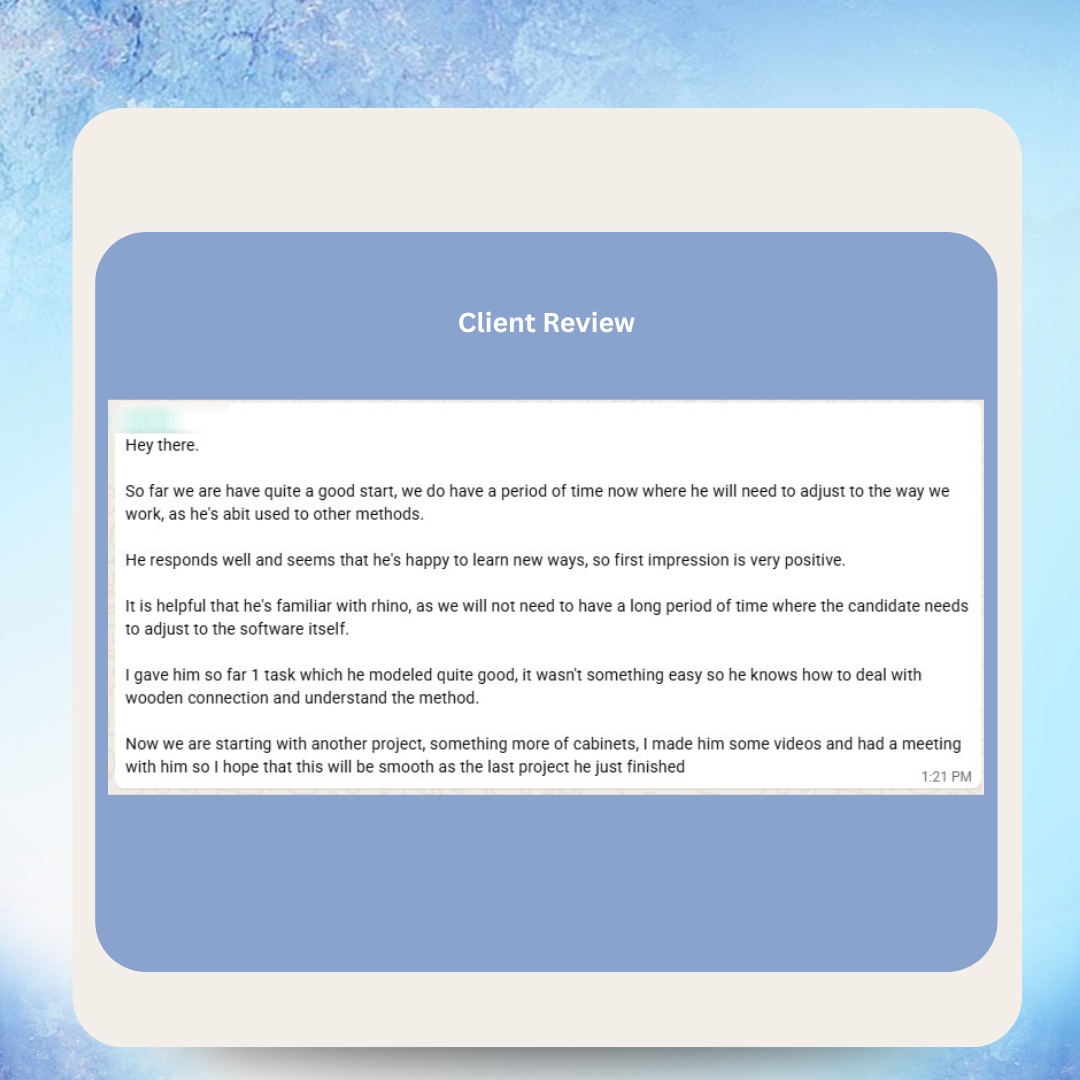
Working with VA Masters to find Jane for our fashion e-commerce business saved us countless hours of recruitment time. They understood exactly what our brand needed and matched us with the perfect candidate on the first try. Jane expertly handles our customer service, website updates, and social media, which allows me to focus on product design and brand development. What impresses me most is how quickly she grasped our unique combination of style and comfort, effectively communicating this to our customers. The recruitment process that would have taken weeks of my time was handled efficiently, letting me stay focused on growing the business. For any fashion entrepreneur looking to find talented support without the hiring headache, I couldn't recommend VA Masters more highly.
How to Implement Each Model Successfully
Choosing the right model is half the battle. Implementing it correctly is the other half. Each model has distinct implementation requirements that, when followed, maximize the probability of a successful outcome.
Implementing Process Outsourcing
Phase 1: Documentation (Week 1-2)
Before hiring anyone, document your processes. Not to perfection — but enough that a smart professional can follow the workflow with minimal hand-holding. Record Loom videos of yourself performing the tasks. Write step-by-step guides for recurring workflows. Document decision criteria for situations that require judgment. This upfront investment pays returns for the entire duration of the engagement.
Phase 2: Hiring and Onboarding (Week 2-4)
Work with your provider to define the ideal candidate profile. Share your documentation and provide access to your tools. Plan a structured first week that introduces systems, processes, and communication expectations. Assign increasingly complex tasks as competence is demonstrated. Do not dump your full workload on day one.
Phase 3: Management Rhythm (Week 4+)
Establish a daily or weekly check-in cadence. Use project management tools (Asana, Monday, Trello) to track assignments and priorities. Provide feedback consistently — what went well, what needs adjustment, what your preferences are. The management investment during months one through three defines the team's effectiveness for years to come.
Phase 4: Optimization (Month 3+)
Once your process team is running smoothly, shift from managing tasks to managing outcomes. Set KPIs, measure productivity, and hold regular performance reviews. Look for opportunities to expand responsibilities based on demonstrated capability. The best process outsourcing relationships evolve from task execution to operational partnership over 6-12 months.
Implementing Project Outsourcing
Phase 1: Requirements Definition (Before Engagement)
The success of project outsourcing is determined before work begins. Write detailed requirements covering deliverables, acceptance criteria, technical specifications, design preferences, integration requirements, and anything else that defines "done." Include examples of work you like. Specify what you do not want. The more thorough your requirements, the more accurate the estimate and the fewer change orders during execution. Consider including key contract provisions to protect both parties.
Phase 2: Provider Selection and Scoping
Share your requirements with potential providers. Evaluate proposals not just on price but on comprehension — does the provider demonstrate understanding of what you need, or are they quoting generically? Ask about their process for handling scope changes (because they will happen). Agree on milestones, review points, and the change order process before work begins.
Phase 3: Execution and Review
Engage at every milestone review point. Do not wait until the final deliverable to provide feedback — course-correcting at milestone two costs far less than rebuilding after the final delivery misses the mark. Maintain a change log to track any scope adjustments and their cost implications.
Phase 4: Delivery and Transition
When the deliverable is accepted, plan the transition. If the project output requires ongoing maintenance, decide now whether that maintenance will be process-outsourced or handled through periodic project engagements. Document any knowledge the project team has that your ongoing team will need. Do not let institutional knowledge walk out the door with the project team.
Our 6-Stage Recruitment Process
Whether you choose process outsourcing for ongoing operations or need skilled professionals for a project engagement, VA Masters' recruitment process ensures the right match. Our 6-stage screening evaluates technical skills, English communication, cultural fit, remote work readiness, and the reliability that both models demand. With 1,000+ successful placements, this process has been refined to consistently deliver professionals who perform at or above expectations from day one.
Detailed Job Posting
Custom job description tailored to your specific needs and requirements.
Candidate Collection
1,000+ applications per role from our extensive talent network.
Initial Screening
Internet speed, English proficiency, and experience verification.
Custom Skills Test
Real job task simulation designed specifically for your role.
In-Depth Interview
Culture fit assessment and communication evaluation.
Client Interview
We present 2-3 top candidates for your final selection.
Have Questions or Ready to Get Started?
Our team is ready to help you find the perfect match.
Get in Touch →| Feature | VA MASTERS | Others |
|---|---|---|
| Custom Skills Testing | ✓ | ✗ |
| Dedicated Account Manager | ✓ | ✗ |
| Ongoing Training & Support | ✓ | ✗ |
| SOP Development | ✓ | ✗ |
| Replacement Guarantee | ✓ | ~ |
| Performance Reviews | ✓ | ✗ |
| No Upfront Fees | ✓ | ✗ |
| Transparent Pricing | ✓ | ~ |
What Our Clients Say




Real Messages from Real Clients


Hear From Our VAs

As Featured In






Frequently Asked Questions
What is the difference between process outsourcing and project outsourcing?
Process outsourcing transfers an ongoing business function (customer service, bookkeeping, admin support) to an external team that runs it continuously with no end date. Project outsourcing engages external resources to deliver a defined output (website, data migration, research report) within a fixed scope, timeline, and budget. Process is about ongoing capability. Project is about a specific deliverable.
Which is cheaper — process or project outsourcing?
For ongoing work, process outsourcing is typically 30-50% cheaper than running the same work as sequential projects. Through VA Masters, process outsourcing costs $7-$15/hour ($1,120-$2,400/month full-time). Project outsourcing appears to have fixed costs but often exceeds estimates by 20-40% due to scope changes, and repeated projects include re-onboarding costs each time.
When should I use process outsourcing?
Use process outsourcing when work is continuous with no natural endpoint, quality depends on deep business knowledge, you need flexibility to shift priorities without change orders, and cost predictability matters. Customer service, admin support, bookkeeping, social media management, and data entry are ideal process outsourcing functions.
When should I use project outsourcing?
Use project outsourcing when scope is clearly defined, you need specialized skills temporarily, the work has a natural endpoint, and budget approval requires fixed costs per engagement. Website builds, app development, data migrations, system implementations, and one-time content batches suit the project model.
Can I combine process and project outsourcing?
Yes, and this hybrid approach often delivers the best results. Maintain process-outsourced team members for ongoing operations (admin, customer service, bookkeeping) and engage project specialists for defined initiatives (website redesign, CRM migration). Your process team provides continuity while project resources deliver specialized capabilities on demand.
How much does process outsourcing cost through VA Masters?
VA Masters process outsourcing rates are $7-$15/hour depending on role complexity and experience level. A full-time VA (40 hours/week) costs $1,120-$2,400/month. A three-person team runs $3,360-$7,200/month or $40,320-$86,400/year — representing up to 80% savings compared to equivalent US hiring with no hidden fees or long-term contracts.
What is the biggest mistake in choosing between process and project outsourcing?
Treating ongoing operational work as sequential projects. Businesses outsource customer service or bookkeeping as quarterly 'projects' with renewals, paying project premiums (scope definition, project management fees, change orders) for work that has no natural endpoint. This costs 30-50% more than process outsourcing while preventing the knowledge accumulation that makes outsourcing increasingly valuable over time.
How do I transition from project outsourcing to process outsourcing?
Start with a project engagement to evaluate the provider's quality and communication. If satisfied, propose converting to an ongoing process arrangement with the same team members. This approach de-risks the transition because you have already validated compatibility. VA Masters supports this conversion path and finds it produces strong long-term placements.
Does process outsourcing require more management than project outsourcing?
Yes. Process outsourcing requires 30-60 minutes daily of management time per 1-5 team members — assigning priorities, reviewing work, providing feedback. Project outsourcing shifts daily management to the provider's project manager. However, the management investment in process outsourcing pays dividends through better quality, faster execution, and compounding institutional knowledge.
How do I know if my work is process-shaped or project-shaped?
Ask two questions: Does this work have a natural endpoint where it is 'done'? Can I write a detailed specification covering 90% of what needs to happen? If both answers are yes, it is project-shaped. If the work recurs continuously and the scope evolves based on business needs rather than a predefined plan, it is process-shaped. Most operational functions are process-shaped. Most builds, migrations, and one-time deliverables are project-shaped.
Ready to Get Started?
Join 500+ businesses who trust VA Masters with their teams.
- No upfront payment required
- No setup fees
- Only pay when you are 100% satisfied with your VA

Anne is the Operations Manager at VA MASTERS, a boutique recruitment agency specializing in Filipino virtual assistants for global businesses. She leads the end-to-end recruitment process — from custom job briefs and skills testing to candidate delivery and ongoing VA management — and has personally overseen the placement of 1,000+ virtual assistants across industries including e-commerce, real estate, healthcare, fintech, digital marketing, and legal services.
With deep expertise in Philippine work culture, remote team integration, and business process optimization, Anne helps clients achieve up to 80% cost savings compared to local hiring while maintaining top-tier quality and performance.
Email: [email protected]
Telephone: +13127660301