

Outsourcing means paying an outside company or professional to do work you would otherwise do in-house. It can cut costs and free up your time, and it can also go wrong in predictable ways. Most articles list the pros, mention a few cons and stop there.
This guide is the honest version: seven real advantages, eight real risks with how to manage each one, the main outsourcing models (project-based, fixed-price, time and materials, managed services and dedicated staff) compared side by side, and which business functions outsource well. VA MASTERS has placed 1,000+ virtual assistants with businesses worldwide, so the advice comes from what we see work and fail.
Quick Answer
The pros of outsourcing are lower cost, access to skills you don’t have in-house, faster hiring, flexibility to scale, more time for core work, coverage beyond office hours and less hiring admin. The cons are less direct control, uneven quality between providers, communication and time-zone friction, real onboarding effort, data-security risk, hidden costs, vendor dependence and the effect on your in-house team. Outsourcing works best for defined, repeatable work; through VA MASTERS a dedicated Filipino VA costs from $6.50/hr, up to 80% less than hiring locally, and first candidates typically arrive in about 2 business days.
Outsourcing Pros and Cons at a Glance
Outsourcing changes who does the work: an outside provider instead of your own employee. (Offshoring changes where it is done; see outsourcing vs. offshoring for the difference.) Every advantage comes with a matching risk:
| Pro | Matching con | How to keep the pro and limit the con |
|---|---|---|
| Lower cost | Hidden costs (management time, change requests, exit costs) | Compare total monthly cost, not the headline rate |
| Access to skills you don’t have | Quality varies widely between providers | Choose providers that test on your real tasks |
| Faster hiring | Onboarding still takes time | Document processes before day one |
| Flexibility to scale up or down | Dependence on one vendor | Own your documentation, accounts and data |
| More time for core work | Less direct control | Agree clear outcomes, reporting and review points |
| Coverage beyond office hours | Communication and time-zone friction | Written briefs, a daily update and a weekly call |
| Less hiring and HR admin | Data-security and IP risk | Access by role, NDAs and your own accounts |
The Pros of Outsourcing
1. Lower Cost
You pay for the work, not for recruitment, office space, equipment and the overhead of a local hire. The size of the saving depends on the model and the market: a dedicated Filipino VA through VA MASTERS costs from $6.50/hr, which is up to 80% less than hiring locally. Project vendors and managed services typically save less, because their margin and management layer sit on top of the work.
2. Access to Skills You Don’t Have
Hiring locally limits you to the people in commuting distance who are available now. Outsourcing lets you hire a bookkeeper who knows Xero, a support agent who knows Zendesk or a marketer who runs Meta ads, without waiting for one to appear in your city.
3. Faster Hiring
A provider with an existing recruiting engine fills roles faster than most small businesses can on their own. Through VA MASTERS, first candidates typically arrive in about 2 business days, and the median VA role was filled in 15 days, a figure that includes the client’s own interviews and decision (179 closed roles, January 2025 to August 2026; see the report).
4. Flexibility to Scale Up or Down
Outsourcing lets you buy the hours you need. Part-time is the norm: 72% of the VA roles opened with VA MASTERS between February and August 2026 were part-time, and 46% were opened at exactly 80 hours a month (323 roles, 253 companies). Data as of August 2026; see the full report for the latest figures.
5. More Time for Core Work
Clients often mention this benefit. When scheduling, follow-ups, data entry and first-line support move to someone else, founders and senior staff get hours back for customers, sales and product.
6. Coverage Beyond Your Office Hours
A provider in another time zone or with shift teams can handle support queues, order processing or reporting while your office is closed. Agree in writing which hours you need covered; don’t assume it.
7. Less Hiring and HR Admin
Depending on the model, the provider handles sourcing, screening, payroll and day-to-day HR. That removes work you would otherwise do yourself, though you still own the results.
The Cons of Outsourcing (and How to Manage Each)
Every one of these risks is real. None of them is a reason not to outsource on its own; each is a reason to pick the right model and set it up properly.
1. Less Direct Control
You no longer manage every step. With project vendors and managed services, someone else decides who does the work and how.
How to manage it
Agree outcomes, deadlines and reporting upfront. If you want to direct the work day to day, choose a dedicated-staff model, where the person works in your tools and takes direction from you.
2. Quality Varies Widely Between Providers
The same task can be done brilliantly or badly depending on who you hire, and providers screen people very differently. A CV alone is a weak predictor of work quality: in VA MASTERS’ analysis of 16,308 hiring decisions (January 2025 to September 2026), candidates rejected for too little experience and candidates who failed the skills test had almost identical CV ratings (1.76 vs 1.71) but very different test scores (3.51 vs 2.40) (see the report).
How to manage it
Ask every provider how candidates are tested. A practical test on your real tasks predicts work quality better than a CV review and a short interview.
3. Communication and Time-Zone Friction
Instructions that a colleague would clarify in passing need to be written down. Across time zones, a question can wait a day for an answer.
How to manage it
Use written task briefs, short Loom videos for complex tasks, a daily update and a weekly call. Agree working hours and response times at the start.
4. Onboarding Takes Real Effort
Outsourcing is not “hire and forget”. A skilled person who doesn’t know your business, standards and tools will underdeliver for the first weeks. As one of our clients put it on Trustpilot: “Just be ready to invest time upfront in proper onboarding.”
How to manage it
Document your top recurring tasks before day one, give specific feedback early and plan the first weeks as a structured handover.
5. Data-Security and IP Risk
Outsiders get access to customer data, financial systems or code.
How to manage it
Give access by role: separate user accounts, a password manager instead of shared passwords, two-factor authentication, confidentiality terms in the agreement, and removal of access the day a role ends. Keep work in your own accounts and repositories.
6. Hidden Costs
The headline rate is not the total cost. Management time, setup fees, change requests on fixed-price projects, minimum terms and the cost of switching providers all add up.
How to manage it
Compare the full monthly cost for the hours you need, ask about setup fees, minimum terms and exit terms, and budget your own management time.
7. Dependence on One Vendor
If a provider holds your processes, accounts and know-how, leaving becomes hard and expensive.
How to manage it
Keep SOPs, logins and data in your own systems, and put the provider’s commitments (response times, quality, reporting) into a service-level agreement. Our guide to outsourcing SLAs shows what to include.
8. Effect on Your In-House Team
Staff may worry that outsourcing means job cuts, and morale can drop if the change isn’t explained.
How to manage it
Tell the team what is moving and why. Small businesses often outsource the work nobody has time for, so in-house staff can focus on higher-value work. Add outsourced people to your team channels so they work with your staff, not around them.
Outsourcing Models Compared: Pros and Cons
Many outsourcing problems are really model problems: a fixed-price contract for work that keeps changing, or a project vendor for work that never ends. Match the model to how well-defined and how ongoing the work is.
| Model | How you pay | Pros | Cons | Best for |
|---|---|---|---|---|
| Project-based | Per project | Defined deliverable; vendor manages its own team; no ongoing commitment | Scope changes cost extra; less control over how the work is done; know-how leaves with the vendor | One-off, well-scoped work (website build, migration, audit) |
| Fixed-price | One price for an agreed scope | Budget certainty; vendor carries overrun risk; easy to compare bids | Needs a detailed spec upfront; every change is repriced; risk margin built into the price | Small projects with stable requirements |
| Time and materials | Hourly or daily rates for time actually worked | Flexible scope; quick to start; pay for what you use | Budget less predictable; needs active oversight | Evolving or exploratory work |
| Managed service / BPO | Per seat, per transaction or per outcome, under an SLA | Provider runs the whole function; handles high volume | Shared or rotating staff; provider’s processes; layers between you and the workers; harder to exit | High-volume, repeatable processes (contact center, claims, payroll processing) |
| Dedicated staff (e.g. a dedicated VA) | Monthly or hourly per person | One person works only for you, learns your business and takes your direction; part-time or full-time | You set priorities and own onboarding; plan cover for absences; not built for one-off projects | Ongoing operations: admin, support, bookkeeping, marketing execution |
| Freelance marketplaces | Per task or per hour, set by each freelancer | Fast for small, one-off tasks | You do all the screening; availability and quality vary; no backup if someone leaves | Short, self-contained tasks |
Project-Based Outsourcing Pros and Cons
Project-based outsourcing works when you can describe the finished result: a new website, a CRM migration, a one-time data cleanup. You buy an outcome and the vendor manages the people. The trade-off is control and continuity: changes mid-project cost extra, and when the project ends, the people who learned your systems go with the vendor.
Fixed-Price Outsourcing Pros and Cons
Fixed-price is project-based outsourcing with one agreed price for an agreed scope. It gives you budget certainty and puts the risk of overruns on the vendor. It works badly when requirements are vague or change often: every change request is repriced, vendors add a margin for risk, and anything not written into the specification may be delivered to the minimum. Best fit: small, stable projects with a written spec and clear acceptance criteria.
Dedicated Staff: When the Work Never Ends
Most small-business work is ongoing: inboxes, customer tickets, bookkeeping, CRM updates, social media. A project contract fits that poorly. A dedicated outsourced professional who works only on your business, in your tools, usually fits better, part-time to start and full-time as the work grows.
Traditional BPOs were built for repetitive tasks managed through middle management layers that separate the client from the worker. Modern business leaders don’t want an isolated call center. They want dedicated team members who understand their brand, work directly in their company tools, and help them accomplish high-level work.— Alon Pearl, Founder & CEO, VA MASTERS
Pros and Cons by Function: What to Outsource
Outsourcing works best for defined, repeatable work with clear quality standards. It works less well where every decision depends on context only you have.
| Function | Fit | Main pro | Main con / what to keep in-house |
|---|---|---|---|
| Administrative support | Strong | Frees the most owner hours | Needs clear rules on what the assistant can decide alone |
| Customer service (email, chat) | Strong | Faster replies and longer coverage | Brand voice and escalations: write macros and escalation rules |
| Bookkeeping and payroll admin | Strong | Clean books every month | Financial access: approvals and payments stay with you |
| Marketing | Good for execution | Campaigns, content and reporting done consistently | Strategy and positioning stay in-house |
| IT and help desk | Good for tier-1 and monitoring | Tickets handled and logged | System access: least-privilege accounts |
| Recruitment | Good for coordination | Job posts, screening and scheduling handled | Final hiring decisions stay in-house |
| Software development | Good with a clear spec or a dedicated developer | Specialist skills on demand | Specs, code ownership and IP: keep repositories in your accounts |
| Business analysis | Partial | Data gathering, reporting and process documentation | Owning requirements and stakeholder decisions |
| Strategy and leadership | Weak | Outside perspective (consulting) | Decisions need embedded context |
| On-site work | Not remote | — | Needs physical presence |
Should You Outsource Business Analysis?
Outsource the analysis work, keep the decisions. An outsourced analyst or data analyst VA can collect data, build dashboards and reports, document processes and write up requirements. The person who owns the requirements, weighs trade-offs and agrees priorities with stakeholders should sit close to the business.
Outsourcing Done Carefully: Two Short Videos
A real skills-test sample: Karyl, an administrative VA candidate, builds a step-by-step SOP and writes a professional client email on ad placements and banner specifications, the kind of practical test VA MASTERS uses so clients see actual work before they hire.
Australian coaching founders describe hiring their VA through VA MASTERS: how quickly they went from a first call to a working VA, and how the VA took over their CRM and funnel work so they could focus on higher-value work.
Is Outsourcing Good or Bad? Companies, Workers and Jobs
Outsourcing is neither good nor bad by default. It depends on who you ask and what is outsourced.
- For the business: lower cost, access to skills and flexibility, against less control and the risks above.
- For in-house staff: repetitive work can move out so they focus on higher-value work; where whole functions move, jobs can be lost, which is why the change needs to be explained.
- For outsourced professionals: access to international employers and remote careers.
For many small businesses the choice isn’t between a local employee and an outsourced one: it is between outsourced help and no help at all. 87% of VA MASTERS clients have fewer than 50 employees, and 57% have 10 or fewer (client portfolio as of July 2026).
What Actually Determines Whether Outsourcing Works
After 1,000+ placements, the factors that predict success are less about the country or the function and more about how the arrangement is set up:
- The right model. Projects for one-off work, dedicated staff for ongoing work.
- How the person is selected. A skills test on your real tasks beats a CV review.
- Onboarding. Documented processes and early feedback in the first weeks.
- Communication structure. Written briefs, daily priorities and a weekly review.
- Task clarity. The clearer the deliverable and the quality bar, the better outsourcing works.
Fewer than 4% of VA MASTERS clients have ever ended an engagement citing dissatisfaction (as of July 2026; see the data).
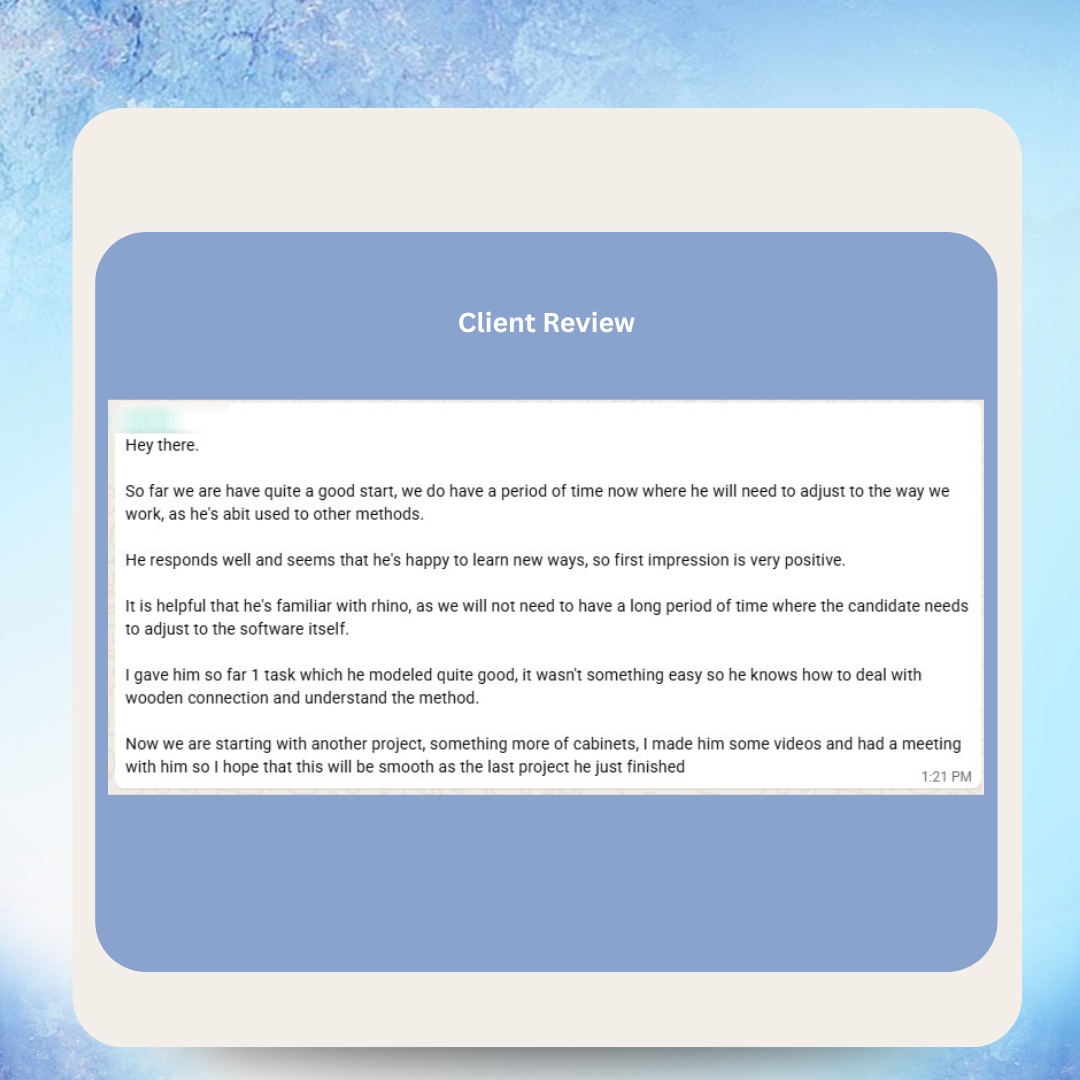
Onboarding is real work on both sides. These are messages from clients during their VA’s first weeks:
Real Messages from Real Clients


What Outsourcing Costs
Through VA MASTERS, a dedicated Filipino VA costs from $6.50/hr: $6.50–$10/hr for administrative and customer-support roles, and most roles fall within $6.50–$15/hr; IT roles go up to $16/hr and data and analytics roles up to $17/hr. Full-time, an admin VA costs about $1,040–$1,600 a month, up to 80% less than hiring locally.
| Role | VA MASTERS rate | Full-time (160 h/month) |
|---|---|---|
| Administrative & operations | $6.50–$10/hr | $1,040–$1,600 |
| Customer service | $6.50–$10/hr | $1,040–$1,600 |
| Bookkeeping & finance | $7.50–$14/hr | $1,200–$2,240 |
| Writing & content | $7–$12/hr | $1,120–$1,920 |
| Marketing & advertising | $8.50–$15/hr | $1,360–$2,400 |
| Sales & lead generation | $8.50–$14.50/hr | $1,360–$2,320 |
| IT & technical support | $8.50–$16/hr | $1,360–$2,560 |
| Data & analytics | $9.50–$17/hr | $1,520–$2,720 |
Full-time means 160 hours a month; part-time at 80 hours costs half. For salary, benefits and overhead of a local hire next to these figures, see our full outsourcing vs. hiring full-time cost comparison, or model your own role in the cost savings calculator.

… VA Masters helped us map out our processes and routines, identifying tasks that could be outsourced to optimize our workflow. Hiring four Virtual Assistants for administrative tasks, operations, customer support, and social media allowed us to streamline daily operations without losing control or quality. The cost savings have been significant—over 30% in administrative and operational expenses. …
Where to Outsource: Why Many Small Businesses Choose the Philippines
For English-language operations work (admin, customer support, bookkeeping, marketing execution), the Philippines is a common choice: English is an official language and the country has a large, experienced remote and outsourcing workforce. In VA MASTERS’ data, 81.6% of hired VAs report fluent or native English (136,215 applications, February to August 2026; see the report).
For a country-by-country view, see Philippines vs. India outsourcing and our guide to outsourcing to the Philippines.
How VA MASTERS Reduces the Usual Risks
VA MASTERS is a recruitment agency for dedicated Filipino virtual assistants. Every search is custom-built for your role through our 6-stage process, and it is selective: about 1 in 508 applicants is placed (166,350 applications, January 2025 to July 2026; see the data).
Detailed Job Posting
We map your tasks, tools and standards, then write a job description for that exact role.
Candidate Collection
A role typically attracts 1,000+ applicants, backed by our database of 400,000+ pre-assessed Filipino applicants.
Initial Screening
Internet reliability, English and relevant experience are checked, with AI-assisted screening and human recruiters.
Custom Skills Test
Candidates complete real tasks from your workflow, so you see actual work quality, not just a CV.
In-Depth Interview
Our recruiters assess communication, ownership and how candidates raise problems.
Client Interview
You meet the top 2–3 candidates, usually within about 2 business days, and choose who joins your team.
- Quality risk: candidates are tested on your real tasks before you meet them.
- Control: you choose the person, and your VA works only for you, in your tools.
- Onboarding: we check in with you and your VA after placement.
- Wrong fit: if you’re not satisfied with your VA, you get a replacement, free of charge.
- Cost: it costs nothing to start, with no upfront or setup fees.
Not Sure What to Outsource First?
Tell us where your time goes, and we’ll tell you honestly which tasks are worth outsourcing and which to keep.
Get in Touch →| What to check | VA MASTERS | What to ask other providers |
|---|---|---|
| Who selects the person | You choose from the top 2–3 candidates | Do you interview candidates, or is someone assigned? |
| Skills testing | ✓ Custom skills test on your real tasks | Is the test built on your work or generic? |
| Dedicated or shared | ✓ A dedicated VA who works only for you | Is the person shared across clients? |
| Who directs the work | You, in your own tools | Is there a middle layer between you and the people doing the work? |
| Time to first candidates | About 2 business days | Varies |
| Cost to start | Nothing: no upfront or setup fees | Setup fees, minimum terms, exit fees? |
| If it isn’t working | ✓ Free replacement if you’re not satisfied | Is a replacement included, and on what terms? |
What Our Clients Say




Hear From Our VAs: Happy VAs Deliver Better Results for Your Business


Frequently Asked Questions
What are the pros and cons of outsourcing?
The main pros of outsourcing are lower cost, access to skills you don’t have in-house, faster hiring, flexibility to scale up or down, more time for core work, coverage beyond office hours and less hiring admin. The main cons are less direct control, uneven quality between providers, communication and time-zone friction, real onboarding effort, data-security and IP risk, hidden costs, dependence on one vendor and the effect on your in-house team. Each con can be reduced with the right model, provider and process.
What are the cons of outsourcing?
The cons of outsourcing are: less day-to-day control over how the work is done; quality that varies widely between providers; communication gaps, especially across time zones; an onboarding period before the work runs smoothly; data-security and intellectual-property risk; hidden costs such as management time and change requests; dependence on one vendor; and possible impact on in-house morale and jobs.
Is outsourcing good or bad?
Neither by default. Outsourcing tends to work well for defined, repeatable work with clear quality standards (admin, customer support, bookkeeping, marketing execution, data work) and badly for core strategy, work that needs constant in-person presence, or tasks no one can describe clearly. The provider’s screening and your own onboarding usually decide the outcome.
What are the pros and cons of project-based outsourcing?
Project-based outsourcing gives you a defined deliverable, a vendor that manages its own team, and no ongoing commitment once the project ends. The downsides: changes in scope cost extra, you have less control over how the work is done, and the knowledge built during the project leaves with the vendor. It suits one-off, well-scoped work such as a website build, a data migration or an audit.
What is fixed-price outsourcing, and what are its pros and cons?
Fixed-price outsourcing means you and the vendor agree one price for an agreed scope before work starts. Pros: budget certainty, the vendor carries the risk of overruns, and bids are easy to compare. Cons: you need a detailed specification upfront, every change request is repriced, vendors build a risk margin into the price, and anything not written into the spec may be done to the minimum. It fits small projects whose requirements won’t change.
What is the difference between outsourcing a project and hiring dedicated outsourced staff?
With a project, you buy an outcome and the vendor directs the people. With dedicated staff, such as a dedicated virtual assistant, you get a person who works only on your business, learns your tools and processes, and takes direction from you every day, usually on a monthly or hourly basis. Projects suit one-off work; dedicated staff suit ongoing operations.
Should I outsource business analysis?
Partly. Data gathering, reporting, dashboards, process documentation and requirements write-ups outsource well. Owning the requirements, weighing trade-offs and making decisions with stakeholders should stay close to the business. A common setup is an in-house owner supported by an outsourced analyst or data VA.
What are the pros and cons of outsourcing jobs?
For a company, outsourcing jobs can lower costs and give access to skills and capacity it could not hire locally. The cons are the effect on in-house staff, possible job losses where work moves, and the risks of depending on outside providers. For small businesses that could not afford a local hire, outsourcing often adds help that did not exist before rather than replacing someone.
What tasks should you not outsource?
Keep in-house your core strategy and leadership decisions, the relationships that win and keep your biggest customers, work that needs physical presence, and anything you cannot yet describe clearly enough to hand over. Outsource defined, repeatable work with measurable quality.
How much can a small business save by outsourcing?
It depends on the role and the model. Through VA MASTERS, a dedicated Filipino VA costs from $6.50/hr: $6.50–$10/hr for administrative and customer-support roles (about $1,040–$1,600 a month full-time), and $6.50–$15/hr for most roles. That is up to 80% less than hiring locally.
How do you reduce the risks of outsourcing?
Pick the model that matches your scope, choose a provider that tests candidates on your real tasks, document your processes before day one, give access by role, agree service levels and reporting in writing, and plan the first weeks of onboarding with regular feedback.
How quickly can I start outsourcing with VA MASTERS?
First candidates typically arrive in about 2 business days. You interview the top 2–3 candidates and choose who you want to work with. It costs nothing to start: there are no upfront fees and no setup fees.
Get the Pros of Outsourcing, With the Risks Managed
We recruit a dedicated VA tested on your real tasks, and support you after the hire.
- It costs nothing to start: no upfront or setup fees
- First candidates in about 2 business days
- Custom skills test on your real tasks
- Ongoing support and a free replacement guarantee

Anne is the Operations Manager at VA MASTERS, a recruitment agency specializing in Filipino virtual assistants for global businesses. She leads the end-to-end recruitment process — from custom job briefs and skills testing to candidate delivery and ongoing VA management — and has personally overseen the placement of 1,000+ virtual assistants across industries including e-commerce, real estate, healthcare, fintech, digital marketing, and legal services.
With deep expertise in Philippine work culture, remote team integration, and business process optimization, Anne helps clients achieve up to 80% cost savings compared to local hiring while maintaining top-tier quality and performance.
Email: [email protected]
Telephone: +13127660301