

Outsourcing for Small Businesses: A Practical Guide to Delegating Smarter and Growing Faster
Every small business owner knows the feeling. You started the company to do the work you love — building products, serving clients, solving problems — and somewhere along the way you became the bookkeeper, customer service rep, social media manager, IT troubleshooter, HR department, and office administrator all rolled into one. The revenue keeps growing, but your time does not. You are working longer hours, handling more tasks, and spending less time on the strategic work that actually drives the business forward. Something has to give, but hiring a full-time local employee for every role you need filled would drain your budget faster than it fills your calendar.
That gap between what your business needs and what you can afford to staff locally is exactly where outsourcing transforms small businesses. Not the old-school outsourcing of shipping entire departments overseas with no oversight — but strategic delegation of specific tasks and roles to trained professionals who work as dedicated members of your team, at a fraction of the cost of local hires. Small businesses across every industry are discovering that a Filipino virtual assistant who costs $7-12 per hour can handle the same work that a local employee charges $25-50+ per hour for, with equivalent quality and often greater consistency because they are focused solely on your business without the distractions of a shared office environment.
VA Masters has placed 1,000+ virtual assistants for businesses of every size, and small businesses with 1 to 50 employees represent a significant portion of our clients. This guide walks you through the practical realities of outsourcing as a small business — what to outsource, what to keep in-house, how to find the right people, how to manage remote workers effectively, and how to avoid the common mistakes that turn outsourcing from a growth accelerator into a frustrating money pit. Our 6-stage recruitment process delivers pre-vetted candidates within 2 business days at up to 80% savings compared to local hires.
Why Outsourcing Matters for Small Businesses
Small businesses operate under constraints that larger companies do not face. Every dollar spent on payroll is a dollar not invested in marketing, product development, or inventory. Every hour the owner spends on administrative tasks is an hour not spent on sales, client relationships, or strategic planning. The traditional solution — hire full-time local employees as the business grows — works eventually, but it creates a painful gap during the growth phase where you need help but cannot yet justify the full cost of local salaries, benefits, office space, equipment, and employment taxes that come with each new hire.
Outsourcing eliminates this gap. Instead of waiting until you can afford a $50,000-70,000 fully loaded cost for a local administrative assistant, you hire a Filipino VA at $1,200-2,000 per month for the same hours and comparable quality. Instead of paying a local bookkeeper $25-40 per hour, you hire a trained accounting VA at $8-12 per hour. Instead of engaging a marketing agency at $3,000-5,000+ per month for social media management, you hire a dedicated social media VA who costs a fraction of that retainer and works exclusively on your brand. The savings are not marginal — they are transformational for a small business's cash flow and growth trajectory.
The Small Business Outsourcing Advantage
Small businesses actually have an advantage over large corporations when it comes to outsourcing effectively. In a large company, outsourced workers are often anonymous cogs in a bureaucratic machine, managed through layers of middle management with minimal direct interaction. In a small business, your VA works directly with you or your small team. They learn your business intimately — your customers, your products, your processes, your preferences. They become a true extension of your team rather than a faceless resource. This direct relationship produces better results, faster onboarding, and stronger loyalty than the impersonal outsourcing arrangements that give the practice a bad reputation.
The Numbers Behind the Decision
Consider a practical example. A small e-commerce business owner spends 15 hours per week on customer emails, 8 hours on social media, 5 hours on bookkeeping, and 10 hours on order processing and inventory management. That is 38 hours consumed by operational tasks — leaving barely 10 hours for the product development, marketing strategy, and supplier relationships that actually grow the business. Hiring a full-time VA at $10 per hour to handle those 38 hours costs roughly $1,733 per month. The owner reclaims 38 hours weekly — over 150 hours monthly — to focus on revenue-generating activities. If even a fraction of that reclaimed time translates into new sales, better products, or stronger client relationships, the ROI is enormous.
Key Insight
The decision to outsource is not about whether your business can afford to hire help. It is about whether your business can afford not to. Every hour you spend on a $10-15/hour task is an hour you are not spending on work worth $50, $100, or $500 per hour to your business. The real cost of not outsourcing is the growth you never achieve because you are too busy doing everything yourself to focus on the things that matter most.
What Small Businesses Should Outsource
The key to successful outsourcing is starting with the right tasks. Not everything should be delegated, and not everything should be delegated at once. Here is a practical framework for identifying your best outsourcing candidates, organized by function.
Administrative and Back-Office Tasks
Administrative work is the most natural starting point for outsourcing because it is high-volume, process-driven, and does not require deep domain expertise. Email management and inbox triage, calendar scheduling and appointment coordination, data entry and CRM updates, document formatting and preparation, travel booking and expense reporting, file organization and digital asset management, meeting minutes and follow-up tracking, and vendor communication and invoice processing. These tasks consume enormous time in aggregate but follow repeatable patterns that a trained VA can execute from day one with minimal supervision.
For most small businesses, administrative tasks alone consume 10-20 hours per week of the owner's or manager's time. Delegating this single category can free up half a workday every day — time that immediately redirects to higher-value activities.
Customer Service and Support
Responsive customer service is a competitive advantage for small businesses, but it is also one of the most time-consuming operational functions. Your VA handles inbound customer inquiries across email, chat, and phone support channels. They process returns and refunds according to your policies, update order status and tracking information, manage support ticket queues, create and maintain FAQ documentation, conduct customer satisfaction follow-ups, and escalate complex issues to you with context and recommended resolutions. A dedicated customer service VA ensures your customers receive fast, consistent support without requiring you to be personally available for every inquiry.
Bookkeeping and Financial Administration
Small business bookkeeping is a perfect outsourcing candidate because it follows strict rules and processes, requires consistency and attention to detail, and has clear quality metrics (accuracy). Your VA handles accounts payable and receivable processing, bank and credit card reconciliation, invoice generation and payment tracking, expense categorization, payroll preparation, monthly financial report generation, and tax document organization. They work within your accounting software — QuickBooks, Xero, FreshBooks, or Wave — maintaining your books in real time rather than the end-of-month scramble that most small business owners default to. Outsourcing this function to a specialist accounting VA ensures accuracy while freeing you from the tedium of financial data entry.
Social Media and Content Marketing
Small businesses know they need a social media presence, but consistent content creation and community management takes far more time than most owners anticipate. Your VA creates and schedules social media posts across platforms, designs basic graphics using Canva or similar tools, engages with followers and responds to comments, researches trending content in your niche, manages your content calendar, tracks engagement metrics and reports on performance, and coordinates with content creators or photographers for original assets. Outsourcing to a digital marketing specialist ensures your brand stays visible and active online without consuming your evenings and weekends.
E-Commerce Operations
For small businesses selling online — whether through Shopify, WooCommerce, Amazon, Etsy, or other platforms — operational tasks multiply quickly as order volume grows. Your VA manages product listing creation and updates, order processing and fulfillment coordination, inventory tracking and reorder alerts, product photography editing, marketplace customer messaging, review management, shipping label generation, and returns processing. These tasks are individually simple but collectively consume hours daily, making them ideal for delegation.
Research and Data Tasks
Small business owners regularly need research that they never have time to conduct properly. Market research and competitive analysis, lead generation and prospect list building, vendor and supplier research, pricing analysis, industry trend monitoring, and data compilation for business decisions. Your VA conducts thorough research and delivers organized, actionable summaries that support better decision-making — research you would otherwise skip or rush through because there are always more urgent tasks demanding your attention.
Pro Tip
Start a "delegation diary" for two weeks. Every time you perform a task, note what it was, how long it took, and whether it required your specific expertise or judgment. At the end of two weeks, sort tasks into three categories: "only I can do this" (client relationships, strategic decisions, specialized expertise), "someone could do this with my guidance" (tasks needing some business context), and "anyone trained could do this" (repeatable processes). Start outsourcing from the third category, then gradually move into the second. Most business owners discover that 50-70% of their weekly hours fall into categories two and three.
What to Keep In-House
Effective outsourcing is as much about knowing what not to delegate as it is about knowing what to hand off. Some tasks and functions should remain with you or your core team — at least until your outsourced team has proven themselves over months of collaboration.
Strategic Decision-Making
Business strategy, product direction, pricing decisions, market positioning, partnership selection, and growth planning should remain with the business owner and core leadership team. Your VA can research, compile data, and present options to inform these decisions, but the decisions themselves require the context, vision, and accountability that only the business owner possesses. Outsource the research that supports strategy; keep the strategy itself in-house.
Core Client Relationships
For service businesses where personal relationships drive revenue — consulting, coaching, professional services, high-touch B2B sales — the primary client relationship should remain with you or your senior team. Your VA can handle scheduling, follow-up communications, proposal preparation, and client onboarding logistics, but the relationship itself — the trust, the strategic conversation, the value delivery — is your competitive advantage and should not be delegated to someone your client has never met. As your VA becomes familiar with your clients and your clients become comfortable with them, you can gradually expand the VA's client-facing role.
Brand Voice and Creative Direction
Your VA can create social media posts, draft emails, and write content, but the brand voice, creative direction, and messaging strategy should originate from you. Provide your VA with brand guidelines, tone examples, approved messaging, and editorial direction. Let them execute within those guidelines while you maintain creative oversight. Over time, a good VA internalizes your brand voice and requires less direction, but the initial calibration must come from you.
Compliance and Legal Matters
Anything involving legal liability, regulatory compliance, contracts, or sensitive legal documentation should be handled by qualified professionals — your attorney, accountant, or compliance officer. Your VA can organize documents, track deadlines, and manage communication with legal professionals, but they should not be making compliance decisions or interpreting regulatory requirements on your behalf.
The boundary between "outsource" and "keep in-house" is not fixed — it shifts as your team matures and trust develops. Many VA Masters clients start by outsourcing basic administrative tasks and gradually expand their VA's responsibilities to include customer communication, project coordination, and even team management as the working relationship deepens. The key is to start conservatively, build trust through consistent performance, and expand delegation intentionally rather than all at once.
Finding the Right People
The difference between outsourcing success and failure almost always comes down to the quality of the people you hire. A skilled, reliable VA transforms your business. An unskilled or unmotivated one creates more work than they eliminate. Here is how to find the right people and avoid the hiring mistakes that plague small business owners new to outsourcing.
Why the Philippines
The Philippines has become the world's leading source of virtual assistants for English-speaking businesses, and for good reason. Filipino professionals are educated in an American-influenced education system where English is the medium of instruction. They grow up consuming American media, understanding Western business culture, and developing communication styles that feel natural to US, UK, Canadian, and Australian clients. The Philippines produces over 500,000 college graduates annually across business, accounting, IT, and communication fields — creating a deep talent pool of educated professionals who are eager for remote work opportunities that offer competitive compensation by local standards while delivering significant savings for international clients.
Beyond language and education, Filipino culture emphasizes values that translate directly into workplace excellence: strong work ethic, respect for authority and process, loyalty to employers who treat them well, attention to detail, and genuine warmth in interpersonal interactions. These cultural attributes make Filipino VAs particularly effective for small business roles where they work closely with owners and small teams, because the relationship is personal rather than corporate.
Agency vs. Freelance Platforms
Small business owners typically choose between three hiring channels: freelance platforms (Upwork, Fiverr, OnlineJobs.ph), direct hiring, or specialized VA agencies. Each has trade-offs.
Freelance platforms offer the largest selection and lowest initial cost, but they shift the entire burden of screening, vetting, skills assessment, and quality assurance onto you. Reviewing dozens of applications, conducting skills tests, checking references, and managing the trial-and-error process consumes significant time — often more time than the tasks you are trying to outsource. The dropout rate is high because freelancers on these platforms often juggle multiple clients and will deprioritize your work when a higher-paying project appears.
Specialized VA agencies like VA Masters handle the recruitment, vetting, skills assessment, and matching process for you. Our 6-stage recruitment process screens thousands of candidates through application review, skills testing, English proficiency evaluation, practical work assessments, personality and work style evaluation, and reference verification. We present you with 2-3 pre-qualified candidates within 2 business days — candidates who have already demonstrated the specific skills your role requires. The agency model costs slightly more per hour than finding a freelancer yourself, but it saves enormous time on hiring, reduces the risk of a bad hire, and provides ongoing support if issues arise.
Step-by-Step Hiring Through VA Masters
The process is straightforward. First, schedule a free discovery call where we discuss your business, the tasks you want to outsource, your preferred working hours, communication style, and any specific skills or experience requirements. Within 2 business days, we present 2-3 candidates with detailed profiles including their skills assessment results, work history, and practical assessment outputs. You interview your preferred candidates — we recommend asking scenario-based questions relevant to your actual tasks rather than generic interview questions. Once you select a candidate, we facilitate onboarding with structured handoff processes. There are no long-term contracts, no upfront fees, and ongoing support throughout the engagement.
Common Mistake
The most expensive hiring mistake small businesses make is prioritizing the lowest hourly rate over candidate quality. A VA who costs $4 per hour but requires constant supervision, makes frequent errors, and quits after three months ultimately costs more than a $10 per hour VA who works independently, delivers consistent quality, and stays for years. When evaluating candidates, focus on demonstrated skills, communication quality, and reliability track record — not just the number on the rate card.
Managing Remote Workers Effectively
Hiring the right person is only half the equation. Managing remote workers requires deliberate communication practices, clear expectations, and management systems that compensate for the absence of in-person interaction. Small business owners who have only managed in-office employees often struggle with remote management initially — not because it is harder, but because it is different.
Set Clear Expectations From Day One
Your VA cannot read your mind, and they cannot pick up on the unspoken expectations that in-office employees absorb through osmosis. Document everything: working hours and availability expectations, communication channels and response time standards, task priorities and deadlines, quality standards with examples of good and poor work, escalation procedures for problems and questions, and reporting frequency and format. The more explicit you are about expectations upfront, the fewer misunderstandings you will encounter later. Most management frustrations with remote workers trace back to expectations that were assumed but never communicated.
Create Standard Operating Procedures
SOPs are the backbone of effective delegation. For every task you delegate, create a simple document (or Loom video) that covers the purpose of the task, step-by-step instructions, decision criteria for common scenarios, quality checklist, common mistakes to avoid, and examples of correct output. SOPs take time to create but pay for themselves many times over. They reduce training time, ensure consistency, make it possible to hand off tasks to a replacement if needed, and free you from answering the same questions repeatedly. Building these systems is one of the most valuable investments a small business owner can make — our training and onboarding framework provides a proven structure for creating effective SOPs quickly.
Establish a Communication Rhythm
Remote work requires more deliberate communication than in-office work. Establish a regular rhythm: a brief daily check-in (5-10 minutes via Slack or a quick video call) to align on priorities and address questions, a weekly review meeting (15-30 minutes) to discuss progress, challenges, and upcoming priorities, and a monthly performance review to provide feedback, recognize achievements, and adjust goals. Between scheduled check-ins, use asynchronous communication (Slack, email, project management comments) for non-urgent items and reserve real-time communication (calls, video chat) for complex discussions and relationship building.
Trust but Verify
Micromanaging remote workers defeats the purpose of outsourcing — you end up spending as much time overseeing as you would doing the work yourself. Instead, establish clear outputs and deadlines, give your VA autonomy to execute within defined parameters, and audit results periodically rather than supervising continuously. Review completed work for quality, check metrics and KPIs weekly, and provide feedback that helps your VA improve. If you find yourself unable to trust your VA with autonomous work after the first month, the issue is either with the hire (wrong person) or the systems (unclear SOPs and expectations) — address the root cause rather than compensating with surveillance.
Pro Tip
Create a shared "Daily Update" document where your VA logs their completed tasks, hours spent, questions or blockers, and planned priorities for the next day. This takes them 5 minutes to complete and gives you complete visibility into their productivity without needing to check in constantly. It also creates an accountability record that helps both of you identify patterns — tasks that consistently take longer than expected, recurring questions that suggest SOP gaps, and productivity trends over time.
Tools and Systems for Remote Collaboration
The right technology stack makes remote outsourcing seamless. You do not need expensive enterprise software — most small businesses can build an effective remote collaboration environment using affordable or free tools.
Communication
Slack is the standard for team communication, offering organized channels, direct messaging, file sharing, and integration with other tools. For businesses that want something simpler, Google Chat or Microsoft Teams work well. Zoom or Google Meet handles video calls for weekly check-ins and complex discussions. Loom enables asynchronous video communication — record your screen while explaining a process, and your VA watches on their own time. This is invaluable for training and SOP creation because it captures both visual steps and verbal context.
Project and Task Management
Asana, Trello, Monday.com, or ClickUp provide structured task management with assignments, deadlines, status tracking, and comments. Choose one and use it consistently. The specific tool matters less than the discipline of putting every task, deadline, and deliverable into the system rather than relying on email threads or verbal instructions. For simpler needs, a shared Google Sheets task tracker can serve as an effective lightweight project management system without the learning curve of dedicated software.
Document Management and SOPs
Google Workspace (Docs, Sheets, Drive) is the most common document management system for small businesses working with remote teams. It offers real-time collaboration, version history, and sharing controls. Notion is increasingly popular for SOP documentation and team wikis because it combines documents, databases, and task management in one platform. Loom's video library serves as a visual SOP repository for process-heavy roles where written instructions alone do not capture the nuance of how to perform a task.
Time Tracking and Accountability
For hourly VA arrangements, time tracking tools like Toggl, Hubstaff, or Time Doctor provide transparency into how hours are being spent. These tools range from simple time logging (Toggl) to comprehensive monitoring with screenshots and activity levels (Hubstaff, Time Doctor). We recommend starting with simple time tracking and only adding monitoring features if productivity concerns arise — most Filipino VAs hired through a rigorous process like VA Masters' are self-motivated professionals who do not require surveillance to be productive.
Specialized Business Tools
Your VA will need access to the business-specific tools relevant to their role. For bookkeeping: QuickBooks, Xero, or FreshBooks. For customer service: Zendesk, Freshdesk, or Intercom. For social media: Buffer, Hootsuite, or Later. For e-commerce: Shopify, WooCommerce, or your marketplace seller dashboard. For CRM: HubSpot, Salesforce, or Pipedrive. Ensure your VA has proper access credentials (never share your primary login — create separate user accounts with appropriate permissions) and that they are comfortable with the tools before full task delegation begins.
VA Masters includes tool proficiency in our candidate assessments. When you tell us which tools your business uses, we test candidates specifically on those platforms. A VA matched for a QuickBooks bookkeeping role has demonstrated hands-on QuickBooks proficiency. A VA matched for social media management has shown practical skills with your scheduling and design tools. This ensures your new VA can be productive from the first week without extended tool training.
See What Our Clients Have to Say
Cost and Pricing
One of the most compelling reasons small businesses outsource to Filipino VAs is the dramatic cost advantage. The savings are not about paying people less for the same job — they reflect the substantial difference in cost of living between the Philippines and Western countries, which means a salary that provides excellent quality of life in the Philippines costs a fraction of what equivalent talent commands in the US, UK, or Australia.
To put these numbers in context, consider the fully loaded cost of a local hire. A US-based administrative assistant earning $40,000 annually costs approximately $52,000-56,000 when you add employer taxes, health insurance, paid time off, office space, equipment, and other overhead. That works out to roughly $25-27 per hour for a full-time employee. A Filipino VA performing the same tasks at $9 per hour costs approximately $1,560 per month for full-time work — roughly $18,720 annually. That is up to 80% savings on the same work output, with the savings flowing directly to your bottom line or reinvested into growth.
For small businesses operating on tight margins, these savings can be the difference between stagnation and growth. The $30,000+ annual savings from outsourcing a single role can fund marketing campaigns, inventory purchases, equipment upgrades, or additional VA hires that further accelerate growth. Many VA Masters clients start with one VA, reinvest the savings, and expand to a small remote team within 12-18 months — building operational capacity that would have taken years to afford through local hiring alone. For a complete analysis of how these savings compound, see our outsourcing cost by function guide.
Without a VA
- Owner working 60+ hours handling every operational task
- Paying $25-50/hr for local part-time administrative help
- $3,000-5,000/month agency retainers for social media management
- Bookkeeping done quarterly in a last-minute scramble
- Customer emails piling up with 24-48 hour response times
With VA MASTERS
- Owner focused on strategy, sales, and client relationships
- Dedicated full-time VA at $7-12/hr handling daily operations
- In-house social media specialist creating daily content for your brand
- Books maintained in real-time with monthly reports ready on demand
- Customer inquiries answered within 2-4 hours every business day

Since working with VA Masters, my productivity as CTO at a fintech company has drastically improved. Hiring an Administrative QA Virtual Assistant has been a game-changer. They handle everything from detailed testing of our application to managing tasks in ClickUp, keeping our R&D team organized and on schedule. They also create clear documentation, ensuring our team and clients are always aligned.The biggest impact has been the proactive communication and initiative—they don’t just follow instructions but actively suggest improvements and catch issues before they escalate. I no longer have to worry about scheduling or follow-ups, which lets me focus on strategic decisions. It’s amazing how smoothly everything runs without the usual HR headaches.This has saved us significant costs compared to local hires while maintaining top-notch quality. I highly recommend this solution to any tech leader looking to scale efficiently.
Our 6-Stage Recruitment Process
VA Masters does not post job ads and forward whoever applies. Our 6-stage recruitment process with AI-powered screening ensures that every candidate we present has been rigorously evaluated for skills, communication ability, reliability, and professional maturity.
For small business roles specifically, we place extra emphasis on versatility and communication skills during assessment. Small business VAs often handle multiple task categories — administration, customer service, light bookkeeping, social media — rather than a single specialized function. Our assessments test candidates across the task categories relevant to your role, ensuring they can deliver competently across the full scope of responsibilities rather than excelling in one area while struggling in others.
Communication assessment is particularly rigorous for small business placements because your VA will work closely with you in a small team environment where clear, proactive communication is essential. We evaluate written communication quality, response speed, ability to ask clarifying questions, comfort with video calls, and capacity to summarize information concisely — the everyday communication skills that determine whether a remote working relationship feels seamless or frustrating.
Detailed Job Posting
Custom job description tailored to your specific needs and requirements.
Candidate Collection
1,000+ applications per role from our extensive talent network.
Initial Screening
Internet speed, English proficiency, and experience verification.
Custom Skills Test
Real job task simulation designed specifically for your role.
In-Depth Interview
Culture fit assessment and communication evaluation.
Client Interview
We present 2-3 top candidates for your final selection.
Have Questions or Ready to Get Started?
Our team is ready to help you find the perfect match.
Get in Touch →Outsourcing Mistakes Small Businesses Make
We have helped hundreds of small businesses build remote teams, and the outsourcing failures we see follow consistent patterns. Here are the mistakes to avoid so your outsourcing experience delivers the results you expect.
Trying to Outsource Everything at Once
Enthusiastic small business owners sometimes try to hand off a dozen tasks on day one. This overwhelms the VA, overwhelms you (because you are now training someone on multiple complex processes simultaneously), and creates a chaotic start that damages both confidence and productivity. Start with 2-3 clearly defined tasks. Let your VA master those before adding more responsibilities. Gradual expansion builds competence, confidence, and trust on both sides — and gives you time to create the SOPs and training materials that make each subsequent task handoff smoother than the last.
Skipping SOPs and Expecting Mind-Reading
The most common complaint we hear from disappointed small business owners is "they did not do it the way I wanted." When we investigate, we almost always find that the business owner never documented how they wanted it done. They described the task verbally, assumed the VA would figure out the details, and were frustrated when the output did not match the image in their head. Invest the time to create clear, specific SOPs with examples and quality standards. The 30 minutes you spend documenting a process saves hours of correction and frustration over the life of the working relationship.
Hiring the Cheapest Option
When you are watching every dollar, the temptation to hire the lowest-cost VA is strong. But in outsourcing as in everything else, you get what you pay for. A $3-4 per hour VA from a freelance platform often lacks the English proficiency, professional experience, and reliability that your business depends on. The cost of their mistakes — lost customers, accounting errors, missed deadlines, poor brand representation — far exceeds the savings on their hourly rate. Invest in quality candidates from the start. The premium you pay for a well-vetted $8-12 per hour VA is insurance against the expensive failures that cheap hires produce.
Not Providing Feedback
Some business owners avoid giving constructive feedback because they feel awkward about it, especially across cultural boundaries. But your VA cannot improve if they do not know what needs to change. Filipino professionals value clear, respectful feedback and genuinely want to meet your expectations. Schedule regular feedback conversations, be specific about what is working and what needs adjustment, and deliver criticism with respect and suggested solutions rather than frustration. VAs who receive consistent, constructive feedback become dramatically more effective within weeks.
Treating Your VA as Disposable
Some business owners view outsourced workers as interchangeable and replaceable — an attitude that creates exactly the turnover they feared. Your VA is a human being with career goals, professional pride, and loyalty to employers who value them. Invest in the relationship: learn about their life, recognize their achievements, provide growth opportunities, and pay fairly. The VA who feels valued and respected will go above and beyond for your business in ways that a demoralized, underappreciated worker never will. The best outsourcing relationships last years and compound in value as your VA accumulates deep knowledge of your business. Evaluating your VA's development with clear performance metrics and KPIs keeps the relationship growth-oriented for both sides.
Key Insight
The small business owners who get the most value from outsourcing share a common trait: they treat their VA as a team member, not a vendor. They share business context, explain the "why" behind tasks, include their VA in team communications, celebrate wins together, and invest in their VA's professional development. This creates a loyalty loop where the VA's growing knowledge of the business makes them increasingly valuable, which motivates the owner to invest further in the relationship, which deepens the VA's commitment and performance. The opposite approach — treating your VA as a replaceable task machine — produces exactly the disengaged, mediocre performance that skeptics associate with outsourcing.
| Feature | VA MASTERS | Others |
|---|---|---|
| Custom Skills Testing | ✓ | ✗ |
| Dedicated Account Manager | ✓ | ✗ |
| Ongoing Training & Support | ✓ | ✗ |
| SOP Development | ✓ | ✗ |
| Replacement Guarantee | ✓ | ~ |
| Performance Reviews | ✓ | ✗ |
| No Upfront Fees | ✓ | ✗ |
| Transparent Pricing | ✓ | ~ |
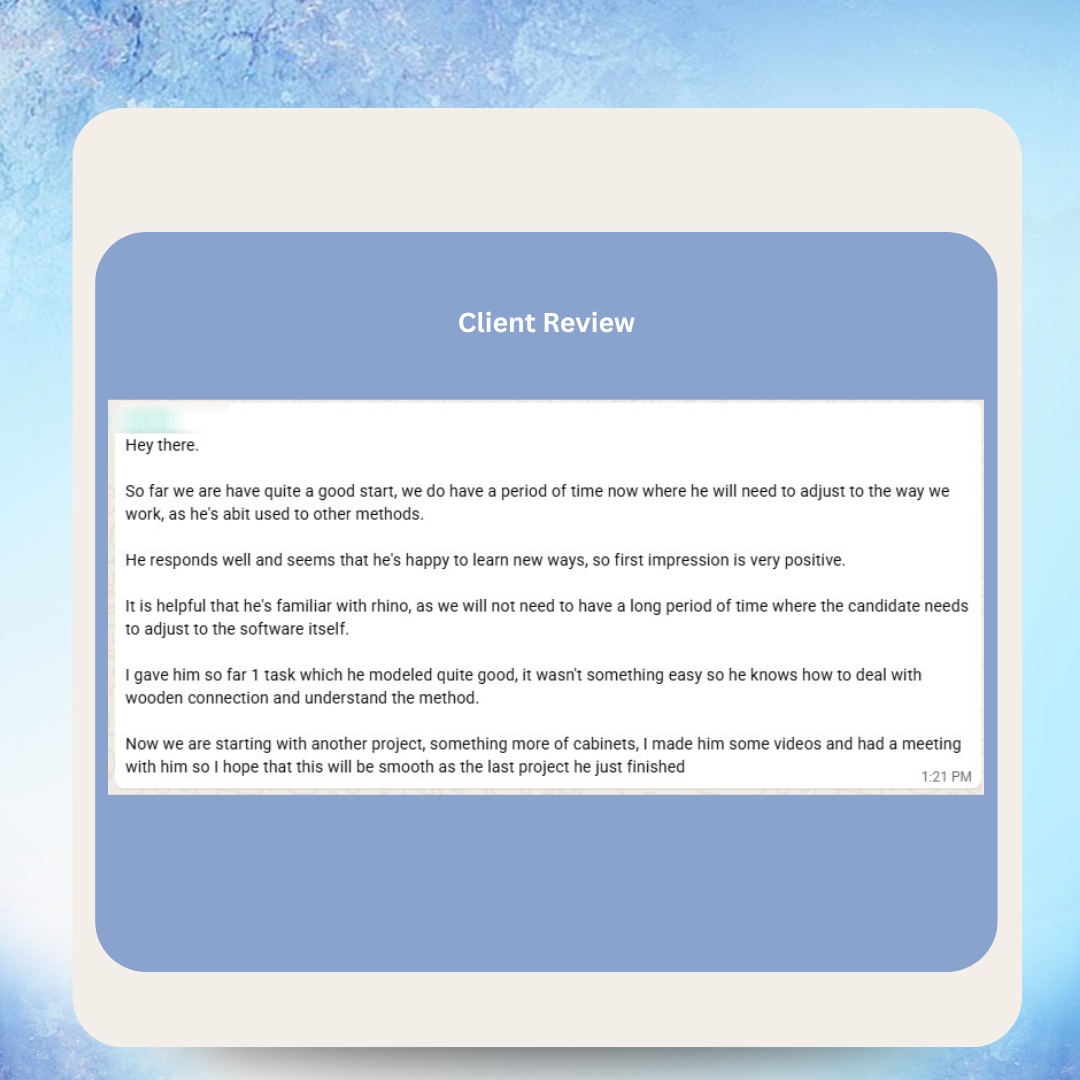
What Our Clients Say



Real Messages from Real Clients


As Featured In






Frequently Asked Questions
What tasks can a small business outsource to a virtual assistant?
Small businesses commonly outsource administrative tasks (email management, scheduling, data entry), customer service (email and chat support, order inquiries, returns processing), bookkeeping (accounts payable and receivable, reconciliation, invoicing), social media management (content creation, scheduling, community engagement), e-commerce operations (listing management, order processing, inventory tracking), research (market analysis, lead generation, vendor sourcing), and general operations coordination. The specific tasks depend on your business needs — most small business VAs handle multiple task categories.
How much does it cost to outsource for a small business?
Filipino virtual assistants through VA Masters typically cost $7 to $12 per hour for full-time dedication. For a full-time VA working 40 hours per week, that translates to approximately $1,200 to $2,080 per month. This represents up to 80% savings compared to hiring locally, where equivalent roles cost $20-40+ per hour before benefits, taxes, and overhead. There are no long-term contracts, no upfront fees, and no hidden costs.
How quickly can I hire a virtual assistant?
VA Masters delivers pre-vetted candidates within 2 business days. Our 6-stage recruitment process screens for skills, English proficiency, work experience, practical task ability, and professional reliability. You review candidate profiles, conduct interviews with your preferred candidates, and can have your VA onboarded and working within the first week. The entire process from initial discovery call to a productive VA is typically 5-7 business days.
Do I need to provide training, or do VAs come ready to work?
VAs matched through VA Masters come with demonstrated skills in their role area — they know the tools, understand the tasks, and have practical experience. However, every business has unique processes, preferences, and systems that require some initial training. You should expect to invest 1-2 weeks in onboarding where you share your SOPs, introduce your tools and accounts, explain your quality standards, and gradually transfer tasks. The more documented your processes are, the faster onboarding goes.
How do I communicate with a VA in a different time zone?
Filipino VAs are experienced working across time zones and many adjust their schedules to overlap with your business hours. For most small businesses, a combination of asynchronous communication (Slack messages, email, shared task boards) for routine items and scheduled real-time meetings (daily 5-10 minute check-ins, weekly 30-minute reviews) provides effective collaboration without requiring constant simultaneous availability. Many tasks — email processing, bookkeeping, social media scheduling, research — can be completed overnight during your non-working hours, effectively giving your business 24-hour productivity.
What if I am not happy with my virtual assistant?
VA Masters provides ongoing support throughout your engagement. If your VA is not meeting expectations, we work with you to identify whether the issue is a skills gap (additional training needed), a communication gap (clearer expectations needed), or a fit issue (different candidate needed). If replacement is the right solution, we source and present new candidates at no additional cost. There are no long-term contracts, so you are never locked into a relationship that is not working.
Is my business data safe with a remote virtual assistant?
Data security with remote workers requires the same common-sense precautions you would take with any employee. Use separate user accounts with role-appropriate permissions rather than sharing your primary credentials. Enable two-factor authentication on business accounts. Use business-grade tools with access logs and permission controls. Limit access to only the systems and data your VA needs for their specific tasks. VA Masters candidates are vetted for professionalism and integrity, and we guide you through secure access setup during onboarding.
Can a virtual assistant really replace a local employee?
For most operational, administrative, and support tasks — yes. Filipino VAs deliver comparable quality at significantly lower cost for tasks like customer service, bookkeeping, social media management, data entry, research, and general administration. Where local employees have advantages is in roles requiring physical presence, face-to-face client interaction, or deep local market knowledge. Many small businesses use a hybrid model: local employees for client-facing and strategic roles, remote VAs for operational and support functions.
How many hours per week should I start with?
Most small businesses start with a full-time VA (40 hours per week) because the cost is low enough to justify dedicated support and full-time VAs deliver the best results through consistency and deep engagement with your business. However, if your task volume is genuinely limited, you can start with part-time hours (20 hours per week) and increase as you identify additional tasks to delegate. We recommend against fewer than 20 hours weekly because very part-time arrangements make it difficult for the VA to build momentum and deep understanding of your business.
What is the difference between VA Masters and hiring on Upwork or Fiverr?
On freelance platforms, you handle the entire recruitment process yourself — posting the job, reviewing dozens or hundreds of applications, conducting skills assessments, checking references, and managing the trial-and-error of finding a reliable candidate. VA Masters handles all of this through our 6-stage recruitment process, presenting you with 2-3 pre-vetted candidates who have already passed skills testing, English proficiency evaluation, practical work assessments, and reference checks. You also get ongoing support, replacement guarantees, and structured onboarding assistance — services that freelance platforms do not provide.
Ready to Get Started?
Join 500+ businesses who trust VA Masters with their teams.
- No upfront payment required
- No setup fees
- Only pay when you are 100% satisfied with your VA

Anne is the Operations Manager at VA MASTERS, a recruitment agency specializing in Filipino virtual assistants for global businesses. She leads the end-to-end recruitment process — from custom job briefs and skills testing to candidate delivery and ongoing VA management — and has personally overseen the placement of 1,000+ virtual assistants across industries including e-commerce, real estate, healthcare, fintech, digital marketing, and legal services.
With deep expertise in Philippine work culture, remote team integration, and business process optimization, Anne helps clients achieve up to 80% cost savings compared to local hiring while maintaining top-tier quality and performance.
Email: [email protected]
Telephone: +13127660301