

What Is BPO? Business Process Outsourcing Explained
Business Process Outsourcing — BPO — is one of the most searched terms in the outsourcing space, yet most definitions found online are either too academic or too shallow to be useful. This guide gives you the practical picture: what BPO actually means, the different types, what it costs, what works for SMEs versus enterprises, and how the market has evolved in 2026.
If you’re a business owner trying to understand whether BPO applies to your situation — or how it differs from hiring a virtual assistant — this is the guide for you.
Key Findings: BPO in 2026
- The global BPO market exceeds $280 billion — the Philippines alone generates approximately $40 billion as the world’s leading English-language BPO destination
- 1.9 million Filipinos work in the IT-BPO sector (direct and indirect roles), contributing over 10% of national GDP
- Offshore BPO delivers up to 80% cost savings versus equivalent US, UK, or Australian in-house hires
- SMEs can access BPO-equivalent capability through the dedicated VA model — starting with a single hire at $6.50/hr, no minimum team size required
- The Philippines ranks 2nd globally in English proficiency (EF English Proficiency Index), making it the optimal destination for English-language operations roles
What Is BPO? The Plain-English Definition
Business Process Outsourcing (BPO) is the practice of contracting specific business functions or processes to an external provider rather than handling them in-house. Instead of hiring employees to run your customer service department, bookkeeping function, or marketing operations, you engage an outside firm — often in a lower-cost country — to run those functions for you.
The term originated in manufacturing, where companies like Nike and Apple outsourced physical production to third-party factories. It evolved to describe service-based outsourcing as the global economy shifted toward information work — and today it primarily refers to outsourcing knowledge and administrative business functions to countries with strong English-speaking professional workforces and competitive labour costs.
BPO in One Sentence
BPO is hiring an outside provider to run a business function you’d otherwise staff in-house — typically overseas, at significantly lower cost, while maintaining or improving quality.
A Simple Example
A US e-commerce company with 200 daily customer service emails has three options: hire a US-based customer service representative at $45,000–$55,000/year; use a large BPO call centre in the Philippines that handles their account alongside 50 others; or hire a dedicated Filipino VA through a boutique agency like VA MASTERS at $13,500–$20,800/year. All three are forms of BPO in the broad sense. The differences between them — in cost, quality control, and institutional knowledge — are significant and covered in detail below.
Key Takeaway
BPO is not just for large corporations. Any business that contracts an outside provider to run a function they’d otherwise staff in-house is practising BPO — including SMEs that hire a single dedicated VA at $6.50/hr. The scale is different; the principle is identical.
Types of BPO: Front Office, Back Office, and More
Back Office BPO
Back office BPO covers internal business functions that don’t involve direct customer contact. These are the operational and administrative processes that keep a business running but don’t directly generate revenue.
| Back Office Function | Examples |
|---|---|
| Finance & Accounting | Bookkeeping, accounts payable/receivable, payroll processing, financial reporting, tax preparation support, reconciliation |
| Human Resources | Recruitment support, onboarding coordination, employee records, benefits administration, compliance documentation |
| Data Management | Data entry, database management, data cleaning, reporting, analytics support |
| IT Support | Help desk, QA testing, technical documentation, system administration, cybersecurity monitoring |
| Legal & Compliance | Document review support, compliance monitoring, contract administration, regulatory filings |
| Supply Chain & Logistics | Order management, inventory tracking, supplier coordination, logistics administration |
Front Office BPO
Front office BPO covers customer-facing functions — the interactions that directly shape how clients and customers experience your business.
| Front Office Function | Examples |
|---|---|
| Customer Service | Inbound email support, live chat, complaint handling, order tracking, returns management |
| Sales Support | Lead generation, CRM management, appointment setting, follow-up sequences, pipeline management |
| Marketing Operations | Social media management, content scheduling, email marketing, campaign management, SEO operations |
| Technical Support | Tier 1 and Tier 2 technical support, troubleshooting, user onboarding |
Knowledge Process Outsourcing (KPO)
KPO is a subset of BPO involving higher-skill knowledge work that requires specialised expertise rather than process execution. Examples include financial analysis, market research, legal research, engineering support, medical coding, and data science. KPO rates are higher than standard BPO and typically require more rigorous skills vetting. VA MASTERS places KPO-level professionals — data analysts, QA engineers, financial controllers — through the same 6-stage recruitment process used for all placements.
Information Technology Outsourcing (ITO)
ITO specifically covers technology functions: software development, infrastructure management, cybersecurity, QA testing, and IT support. India dominates large-scale ITO. The Philippines has a strong ITO presence in QA testing, technical documentation, and Tier 1–2 support roles. For development-heavy ITO at volume, India’s engineering talent pool is deeper; for individual or small-team ITO roles with strong English and Western cultural alignment, the Philippines is competitive.
Key Takeaway
Filipino professionals cover every BPO category — from back office admin at $6.50/hr to KPO-level data science at $17/hr. The breadth of the talent pool is what makes the Philippines the world’s leading destination for English-language outsourcing. See full data in our outsourcing statistics 2026 report.
BPO vs Virtual Assistant: Key Differences
This distinction matters practically for SMEs. “BPO” in the traditional sense refers to engaging a large outsourcing firm that manages a team of staff on your account — with staff rotation, shared management, and minimum volume commitments. A “virtual assistant” in the dedicated model is a single professional who works exclusively for your business, building institutional knowledge over time.
| Feature | Traditional BPO Firm | Dedicated VA (VA MASTERS) |
|---|---|---|
| Staff dedication | Shared across multiple clients | 100% dedicated to your business only |
| Minimum size | Typically 5–20+ FTEs minimum | Start with 1 VA |
| Staff rotation | Common — 30–40% annual turnover | Rare — dedicated model drives loyalty |
| Institutional knowledge | Limited — rotates with staff | Compounds over time with same VA |
| Custom skills testing | Standardised across client base | Built for your specific role |
| Setup complexity | High — contracts, SLAs, onboarding teams | Low — discovery call to candidates in about 2 business days |
| Cost structure | Management fees + per-agent cost | Hourly rate only — no management markup |
| Best for | Large volume, enterprise scale | SMEs, 1–10 dedicated professionals |
| Upfront fees | Common | None at VA MASTERS |
| Replacement process | Handled by BPO firm (staff rotation) | Guaranteed by VA MASTERS at no extra cost |
The practical implication: Most SMEs searching for “BPO” are actually looking for what a dedicated VA agency like VA MASTERS provides — a rigorously vetted professional working exclusively for their business. True BPO at enterprise scale requires minimum team sizes, complex contractual arrangements, and management overhead that doesn’t fit the needs of a 5–50 person business. The dedicated VA model gives SMEs the cost and capability benefits of BPO without the scale requirements.
Key Takeaway
For businesses with 1–50 employees, the dedicated VA model consistently outperforms traditional BPO on three metrics: cost per output, institutional knowledge retention, and staff loyalty. Enterprise BPO is optimised for volume. The dedicated VA model is optimised for quality and business-specific expertise.
Onshore, Nearshore, and Offshore BPO
BPO is categorised by geographic relationship between the client business and the outsourcing provider.
| Type | Definition | Example | Cost vs. Local | Best For |
|---|---|---|---|---|
| Onshore BPO | Provider in same country as client | US company outsources to US-based agency | Minimal savings (10–20%) | Regulatory requirements, local knowledge essential |
| Nearshore BPO | Provider in nearby country, similar time zone | US company outsources to Mexico or Colombia | Moderate savings (30–50%) | Real-time collaboration important, some cost reduction needed |
| Offshore BPO | Provider in distant country, different time zone | US company outsources to Philippines or India | Maximum savings (up to 80%) | Cost reduction primary driver, async model works |
Offshore BPO to the Philippines delivers the largest cost savings — up to 80% versus equivalent US, UK, or Australian hires — making it the dominant choice for SMEs where cost efficiency is a primary driver. The time zone gap requires an async-first communication model, which most businesses adapt to within 2–4 weeks and subsequently find more productive than they expected.
For a deeper breakdown of how these models compare, see our guide: Outsourcing vs Offshoring — What’s the Difference?
Key Takeaway
Offshore BPO to the Philippines delivers the maximum cost advantage — up to 80% savings — while maintaining English-language quality and cultural alignment. For most SMEs, this is the optimal model. Nearshore is the right choice only when synchronous real-time communication is non-negotiable and some cost reduction is preferred over maximum savings.
The Philippines as the World’s BPO Capital
The Philippines is the world’s leading English-language BPO destination — a position built over 25+ years of sector development. Understanding why helps explain why Filipino VAs and BPO professionals consistently outperform alternatives for English-language operations roles.
| Factor | Detail |
|---|---|
| English status | Official language since American colonial era — alongside Filipino. Education system is English-medium from primary school. |
| BPO workforce size | 1.4 million+ employed in IT-BPO sector; 10%+ of GDP contribution |
| English proficiency | Ranked 2nd globally (EF English Proficiency Index). Neutral accent with Western cultural familiarity. |
| Cultural alignment | Strong US cultural influence via media, education, and historical ties. Filipino professionals understand Western business communication norms intuitively. |
| Education system | High university graduation rates in business, IT, accounting, marketing, and nursing — directly feeding BPO and VA talent pools. |
| Cost structure | $6.50–$17/hr for most roles via VA MASTERS — up to 80% below equivalent US/UK/AU hire costs |
| Work ethic and loyalty | Filipino professionals in dedicated roles show strong retention — driven by relationship-oriented culture and genuine client investment |
| Time zone flexibility | GMT+8 — excellent for Australian real-time overlap; effective overnight delivery model for US and UK clients |
The Philippines isn’t just a cheap BPO destination — it’s the world’s most developed English-language operations outsourcing ecosystem. The talent pool, the infrastructure, and the cultural alignment for Western SMEs make it the optimal BPO destination for the functions most businesses actually need.
See: Philippines Outsourcing Industry Report 2026 | Philippines vs India outsourcing comparison
Key Takeaway
The Philippines is not simply a low-cost BPO destination. It is the world’s most developed English-language operations ecosystem — built on 25+ years of sector investment, a 1.4 million-strong direct IT-BPO workforce, and the deepest Western cultural alignment of any outsourcing nation. For English-language business operations, no alternative comes close.
BPO Global Market Size & Data 2026
The BPO industry is one of the largest and fastest-growing sectors in the global economy. Understanding the scale helps contextualise why the Philippines’ position is so strategically significant — and why the cost savings available to SMEs through offshore BPO are structural, not cyclical.
| Metric | 2026 Data | Notes |
|---|---|---|
| Global BPO market size | $280B+ | Growing at ~8–9% CAGR; projected to exceed $400B by 2030 |
| Philippines BPO revenue | ~$40B | ~15% of global BPO market; #1 for English-language roles |
| Philippine IT-BPO workforce | 1.4M+ direct / 1.9M+ total | Including indirect and freelance BPO professionals |
| Philippines BPO GDP contribution | 10%+ of national GDP | One of the largest foreign exchange earners |
| India BPO market | ~$250B IT-BPO (broader) | Dominates IT development; Philippines leads English voice/ops |
| Top BPO functions (global) | Finance & accounting, customer service, HR, IT support, marketing ops | Back office growing faster than front office |
| AI adoption in BPO | 67%+ of Philippine BPO firms have adopted AI tools | Augmenting rather than replacing Filipino BPO professionals |
| Average cost savings (offshore BPO) | up to 80% vs. US/UK/AU equivalent hires | Varies by role; KPO roles trend toward lower end |
Philippine BPO Industry — Key Stats at a Glance
The BPO sector’s growth is being shaped by two forces in 2026: AI integration and the shift from large shared-team models to smaller, higher-specialisation dedicated placements. SMEs are driving this shift — they want the cost efficiency of offshore BPO without the enterprise minimum commitments. The dedicated VA model is the market’s answer.
For full data and sources: Outsourcing Statistics 2026 — The Complete Data Report | Philippines Outsourcing Industry Report 2026
Is BPO Right for Your Business? Decision Framework
BPO is not a one-size-fits-all solution. The right model depends on your team size, workflow, budget, and communication requirements. Use this framework to identify which outsourcing model fits your situation.
The 5-Question BPO Decision Framework
| Question | Your Answer | Recommendation |
|---|---|---|
| 1. How many people do you need? | 1–5 professionals | Dedicated VA model (VA MASTERS) — enterprise vetting, individual placement, no minimum |
| 5–20 professionals | Hybrid — dedicated VAs per role, managed as a team. VA MASTERS scales this model. | |
| 50+ professionals | Traditional BPO firm — volume economics and shared management structures apply | |
| 2. Is real-time communication critical? | Yes — calls, live chat, sync sprints | Arrange timezone overlap hours (Filipino VAs can work US morning/AU daytime). Or consider nearshore BPO. |
| No — email, task management, async delivery | Offshore BPO optimal. Philippines overnight delivery model works extremely well for most operations roles. | |
| 3. What is your primary driver? | Cost reduction (primary) | Offshore Philippines — maximum savings of up to 80% |
| Specialisation (primary) | KPO via boutique agency — VA MASTERS recruits analysts, engineers, finance specialists | |
| Risk mitigation (primary) | Consider onshore or nearshore BPO — lower savings but higher regulatory alignment | |
| 4. What’s your monthly budget? | Under $2,000/month | Single dedicated VA — $6.50–$15/hr full-time. Admin, customer service, marketing ops. |
| $2,000–$8,000/month | 1–3 dedicated VAs covering different functions. VA MASTERS manages the team HR. | |
| $8,000+/month | 3–5+ VAs or consider whether a traditional BPO firm adds value at this volume. | |
| 5. Do you need compliance coverage? | HIPAA, SOX, GDPR required | Ensure your VA or BPO provider has specific compliance training and NDAs. VA MASTERS handles this contractually. |
| No specific compliance requirements | Standard offshore model — no additional complexity needed. |
The honest answer for most SMEs: If you’re a business with 1–50 employees looking to reduce operational costs, access professional specialisation, and free your core team for higher-value work — the dedicated VA model via VA MASTERS is almost certainly the right starting point. You can always scale from one VA to a team. It’s far harder to downscale from an enterprise BPO contract.
When BPO Is NOT the Right Choice
Avoid any outsourcing model — BPO or dedicated VA — if: the role requires physical on-site presence (facilities management, hands-on production); if you need to outsource core IP development without robust IP protection agreements; or if the role requires licences that are jurisdiction-specific and non-transferable. For everything else, BPO-equivalent capability is available offshore.
BPO in Practice — Real Client Stories
BPO for Small and Medium Businesses in 2026
Traditional BPO was designed for enterprise-scale operations — Fortune 500 companies outsourcing 50-person customer service departments or 200-person data processing teams. The economics and the minimum commitments didn’t work for businesses with 5–50 employees.
The rise of the dedicated VA model changed this. A small business can now access the core benefits of BPO — cost reduction, professional specialisation, operational capacity without local headcount costs — through a single dedicated hire placed through a boutique agency. VA MASTERS operates specifically in this space: enterprise-grade vetting rigour (6 stages, custom live skills test) applied to individual placements that start at one VA.
What SME BPO Looks Like in Practice
A 10-person e-commerce company outsources customer service and order management to a dedicated Filipino VA at $8.50/hr. Total annual cost: $17,700. Equivalent US hire cost: $52,000–$65,000. The $35,000–$47,000 annual saving funds additional inventory, marketing spend, or a second hire. The institutional knowledge of having one dedicated person — who knows the product catalogue, the supplier relationships, and the customer base — builds over 12–24 months into a genuine business asset.
This is BPO at the scale SMEs actually need. Not a 50-agent call centre with 40% annual turnover. One professional, fully dedicated, growing with the business.
For a comparison of the best providers in this space, see: Best Outsourcing Companies in the US — 2026 Comparison
Traditional Enterprise BPO
- Minimum 5–20+ FTE commitment
- Complex SLA contracts and setup fees
- Staff shared across multiple client accounts
- 30–40% annual staff turnover
- 2–8 week setup and onboarding process
- Management overhead on both sides
VA MASTERS Dedicated Model (SME BPO)
- Start with 1 VA — scale as needed
- No setup fees, no minimum commitment
- 100% dedicated to your business only
- High retention — relationship-oriented culture
- Candidates in about 2 business days, start within 2 weeks
- VA Masters handles all HR management
Key Takeaway
The dedicated VA model is the BPO solution built for SMEs. One professional, exclusively yours, with compounding institutional knowledge — at up to 80% below local hire cost. VA MASTERS applies the same 6-stage vetting rigour used by enterprise BPO firms, scaled to individual placements from a single VA upward.
BPO Costs: What to Expect in 2026
| BPO Function | VA MASTERS Rate | Annual (FT) | US Local Equivalent | Savings |
|---|---|---|---|---|
| Back office admin / ops | $6.50–$10/hr | $13,500–$20,800 | $45,000–$65,000 | ~65–79% |
| Finance & bookkeeping | $7.50–$14/hr | $15,600–$29,100 | $50,000–$75,000 | ~61–79% |
| Customer service | $6.50–$10/hr | $13,500–$20,800 | $40,000–$58,000 | ~64–77% |
| Digital marketing ops | $8.50–$15/hr | $17,700–$31,200 | $60,000–$90,000 | ~65–80% |
| IT support / QA (KPO) | $8.50–$12/hr | $17,700–$24,900 | $65,000–$95,000 | ~74–82% |
| Data science / analytics (KPO) | $9.50–$17/hr | $19,700–$35,400 | $80,000–$120,000 | ~71–84% |
| HR & recruitment support | $8.50–$14/hr | $17,700–$29,100 | $55,000–$80,000 | ~64–78% |
Use the cost savings calculator to model your specific role. See also: Full Philippines outsourcing cost guide | US vs Philippines VA cost comparison
Key Takeaway
The cost advantage of offshore BPO is structural — it reflects genuine differences in labour markets, not differences in quality. A Filipino data analyst at $9.50–$17/hr has the same professional training and analytical capability as a US equivalent at $40–$60/hr. The savings fund business growth, not compromises.
How to Get Started with BPO via VA MASTERS
Discovery Call
30-minute call to define your BPO need — which function, what tools, what hours, what outcomes you’re targeting. We determine whether a dedicated VA is the right model or whether a different structure better fits your volume and requirements.
Role Brief Development
We build a precise role brief — not a generic job description. Specific tasks, tools, quality standards, working patterns, and communication expectations. This brief drives the entire recruitment process and ensures the candidates we present match your actual requirements.
Candidate Sourcing
Posted to Filipino professional networks with specific filtering for your role requirements. 500–1,000+ applicants per role. We filter aggressively based on the brief — you never see a candidate who doesn’t meet baseline requirements.
Custom Skills Test
The differentiator that enterprise BPO firms rarely offer for individual placements. Live task execution against your actual role — bookkeeping, QA, marketing, customer service, data analysis — demonstrated before you invest interview time. Only candidates who pass the skills bar reach you.
Client Interview
You meet 1–3 vetted finalists. Ask them real work questions. Test their tool knowledge. Evaluate communication quality. Most VA MASTERS clients select their VA in the first round — because the upstream process did its job.
Ongoing Support
Full HR management after placement — performance monitoring, issue resolution, annual review support, replacement guarantee at no cost if anything isn’t right. VA MASTERS doesn’t recruit and disappear. We manage the relationship long-term.
Ready to Explore BPO for Your Business?
Book a free 30-minute discovery call. We’ll identify the right BPO model for your size and needs, walk through costs, and explain how the 6-stage process works — no commitment required.
Book a Free Discovery Call →
“We evaluated traditional BPO firms and the minimum team sizes and management overhead didn’t fit our scale. VA Masters gave us the same quality rigour — 6 stages, live skills test — but applied to a single dedicated professional. That’s the BPO model that works for growing businesses. Three months in and I’m planning our second hire.”
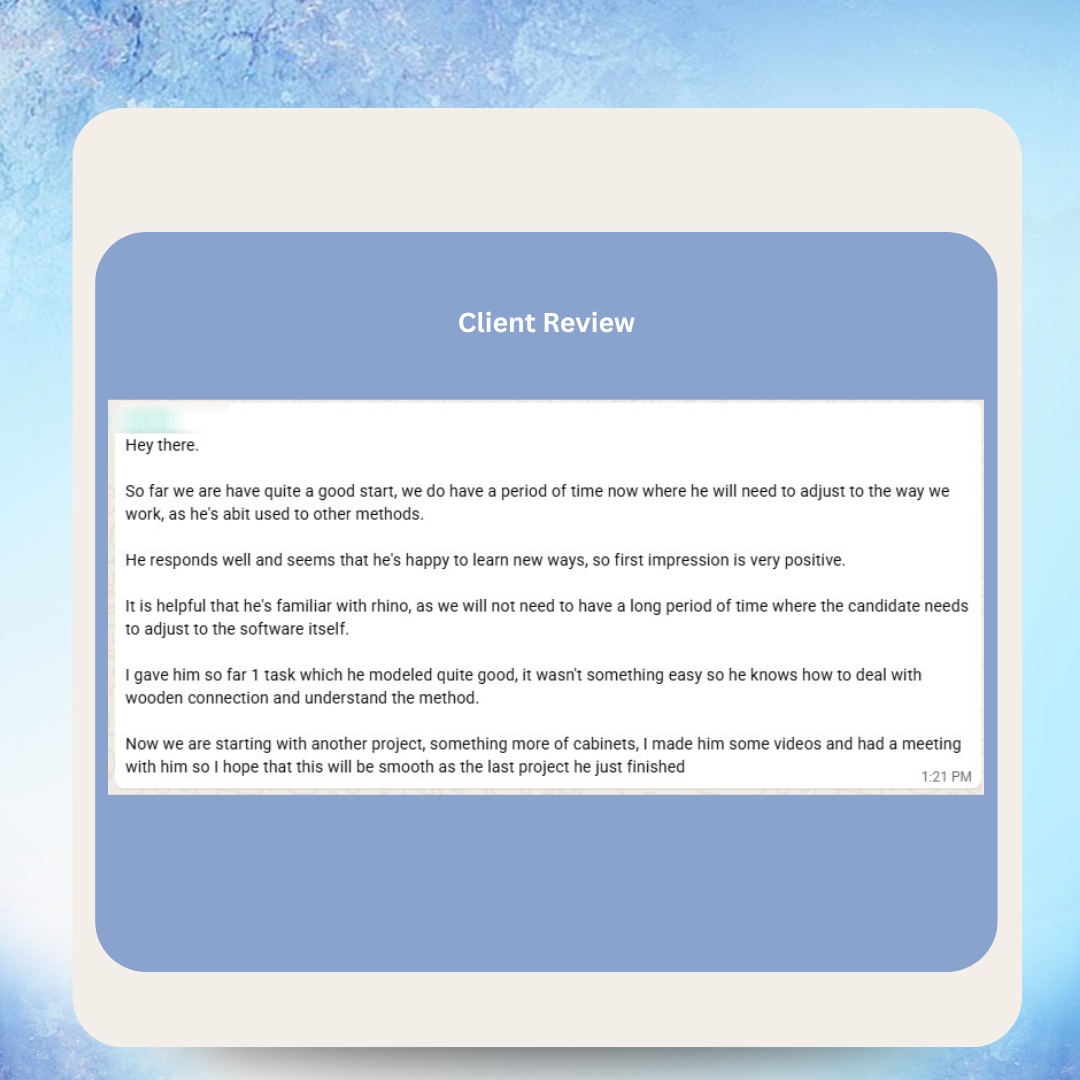
What Our Clients Say




Real Messages from Real Clients


Hear From Our VAs — Happy VAs Deliver Better Results for Your Business



As Featured In








Frequently Asked Questions
What does BPO stand for?
BPO stands for Business Process Outsourcing — the practice of contracting specific business functions to an external provider rather than handling them in-house. BPO typically involves engaging a firm in a lower-cost country (most commonly the Philippines or India) to run operational functions like customer service, bookkeeping, data entry, marketing operations, IT support, or administrative work.
What is an example of BPO?
A US e-commerce company hiring a Filipino customer service VA through VA MASTERS to handle all customer emails, order tracking, and complaint resolution is a form of BPO. A UK accounting firm engaging a Filipino bookkeeper for Xero data entry and reconciliation is BPO. A SaaS startup using a dedicated Filipino QA tester is BPO. Any business function handled by an outside provider rather than an in-house employee qualifies as BPO.
What is the difference between BPO and a virtual assistant?
Traditional BPO refers to large outsourcing firms managing teams of staff across multiple client accounts, with minimum FTE requirements and high setup complexity. A dedicated virtual assistant — placed through an agency like VA MASTERS — is a single professional working exclusively for your business. For SMEs, the dedicated VA model delivers the cost and capability benefits of BPO without enterprise-scale minimum commitments, staff rotation, or management overhead.
Why is the Philippines the top BPO destination?
The Philippines has a 1.4M+ IT-BPO workforce, English as an official language since the early 1900s, a ranking of 2nd globally in English proficiency (EF EPI), strong Western cultural alignment built through American historical ties and media, and competitive labour costs of $6.50–$17/hr for most roles. The combination of English quality, cultural fit, and talent pool depth makes the Philippines consistently the top destination for English-language operations outsourcing.
What are the main types of BPO?
Back office BPO covers internal functions: finance and accounting, HR, data management, IT support, legal and compliance, and supply chain administration. Front office BPO covers customer-facing functions: customer service, sales support, marketing operations, and technical support. Knowledge Process Outsourcing (KPO) covers higher-skill work: financial analysis, data science, market research, engineering support, and legal research. ITO (Information Technology Outsourcing) covers software development, infrastructure, and IT services.
How much does BPO cost for a small business?
Via VA MASTERS: $6.50–$10/hr for administrative and customer service roles ($13,500–$20,800/year full-time). $7.50–$14/hr for bookkeeping and finance ($15,600–$29,100/year). $8.50–$15/hr for digital marketing ($17,700–$31,200/year). Compare to $40,000–$90,000 in total US employer cost for equivalent local hires — savings of 65–80% depending on role. No setup fees, no minimum FTE commitment, and no upfront payment required.
Is BPO right for a small business?
Yes — particularly through the dedicated VA model rather than traditional enterprise BPO. Small businesses can access all the core benefits of BPO (cost reduction, professional specialisation, operational capacity without local headcount costs) through a single dedicated VA starting at $6.50/hr. VA MASTERS specialises in SME BPO — one VA minimum, enterprise-grade vetting rigour, no minimum commitment, and candidates in about 2 business days.
What is the global BPO market size in 2026?
The global BPO market exceeds $280 billion in 2026 and is growing at approximately 8–9% annually, projected to surpass $400 billion by 2030. The Philippines accounts for approximately $40 billion of this as the world’s leading English-language BPO destination. The fastest-growing segments are KPO (knowledge process outsourcing), AI-augmented BPO roles, and dedicated individual placements for SMEs — replacing traditional shared-team models.
What is the difference between BPO and outsourcing?
Outsourcing is the broader term — it refers to any business function contracted to an outside party, including manufacturing, logistics, or professional services. BPO is a specific category of outsourcing focused on business process functions: administrative, operational, customer-facing, and knowledge work. All BPO is outsourcing, but not all outsourcing is BPO. When people say “BPO,” they typically mean outsourcing operational or knowledge-work business functions, usually offshore.
What is nearshore BPO and when should I use it?
Nearshore BPO means contracting a provider in a geographically nearby country with a similar or overlapping time zone. For US companies, this means Latin America (Mexico, Colombia, Costa Rica). For UK companies, it means Eastern Europe (Poland, Romania, Ukraine). Nearshore BPO offers moderate cost savings of 30–50% versus local hires and enables real-time collaboration during business hours. It’s the right choice when synchronous communication is non-negotiable — live calls, real-time pair work — and some cost savings are preferable to maximum offshore savings. For maximum savings with English-language quality, offshore Philippines remains superior.
How is AI affecting BPO in 2026?
AI is augmenting BPO rather than replacing it at the professional level. In 2026, approximately 67% of Philippine BPO firms have adopted AI tools — primarily for quality monitoring, translation support, data processing acceleration, and workflow automation. The impact: AI handles repetitive low-skill task components while Filipino professionals focus on higher-judgment work. The net result for clients is higher output quality, not reduced headcount. VA MASTERS VAs are expected to use AI tools as part of their workflow — it’s a skill we assess in recruitment.
What are the main risks of BPO and how do I manage them?
The four main BPO risks are: (1) Quality degradation — mitigated by custom skills testing before hire and ongoing performance monitoring. (2) Communication gaps — mitigated by clear async communication protocols, regular video check-ins, and task management tools. (3) Staff turnover — mitigated by the dedicated model (your VA works for you only, building loyalty) and replacement guarantees. (4) Data security — mitigated by NDAs, access controls, and working only with providers who have documented security protocols. VA MASTERS manages all four through its 6-stage recruitment and ongoing HR support model.
How do I manage a remote BPO team or VA effectively?
Effective remote BPO management requires: (1) Clear SOPs — document every recurring process before your VA starts. (2) Task management tools — ClickUp, Asana, or Monday.com for visibility on what’s in progress. (3) Regular async updates — daily or weekly Loom video or written reports from your VA. (4) Defined communication windows — set expected response times for different request types. (5) Outcome-based KPIs rather than hour-tracking. VA MASTERS helps clients build this management framework during onboarding and provides ongoing support when issues arise.
How long does it take to set up BPO via VA MASTERS?
Discovery call to first candidates: about 2 business days. Client interviews and selection: 1–3 days. Onboarding and start: 1–2 weeks after selection. Total time from first contact to VA at work: typically 2–4 weeks. Compare to traditional enterprise BPO setup: 4–12 weeks minimum. The speed difference reflects the dedicated individual placement model versus large-team BPO contract negotiations and implementation phases.
What is KPO vs BPO?
KPO (Knowledge Process Outsourcing) is a subset of BPO involving higher-skill specialised work — financial analysis, data science, market research, engineering support, medical coding. BPO typically refers to more process-driven operational work. VA MASTERS places both BPO and KPO professionals through the same 6-stage vetting process. KPO roles typically fall in the $9.50–$17/hr range; standard BPO roles from $6.50/hr upward — both representing up to 80% savings versus US/UK/AU equivalent hire costs.
Access BPO-Level Capability — Without BPO-Scale Minimums
VA MASTERS applies enterprise-grade vetting rigour to individual dedicated placements. 6 stages, custom live skills test, 1,000+ applicants screened to 2–3 candidates for your specific role. Start with one VA. Scale as your business grows. No upfront fees.
- Back office, front office, and KPO functions covered
- Custom skills test built for your specific role
- Up to 80% cost savings vs. local hires
- Candidates in about 2 business days
- No setup fees, no minimum commitment
- Full HR management and replacement guarantee included

Anne is the Operations Manager at VA MASTERS, a recruitment agency specializing in Filipino virtual assistants for global businesses. She leads the end-to-end recruitment process — from custom job briefs and skills testing to candidate delivery and ongoing VA management — and has personally overseen the placement of 1,000+ virtual assistants across industries including e-commerce, real estate, healthcare, fintech, digital marketing, and legal services.
With deep expertise in Philippine work culture, remote team integration, and business process optimization, Anne helps clients achieve up to 80% cost savings compared to local hiring while maintaining top-tier quality and performance.
Email: [email protected]
Telephone: +13127660301