
Compliance Virtual Assistant: Hire Expert Regulatory & Policy Support at Up to 80% Less
Your compliance deadlines don't care that you're already stretched thin. Regulatory filings pile up. Policy documentation falls behind. Audit prep gets rushed. And the cost of getting it wrong — fines, reputational damage, operational disruption — is unforgiving in any regulated industry.
A dedicated compliance virtual assistant handles the execution work that keeps you perpetually behind: policy drafting and updates, regulatory monitoring, audit preparation, document control, risk register maintenance, and the ongoing administrative weight of keeping your organization compliant across frameworks like HIPAA, GDPR, SOX, PCI-DSS, and AML/KYC.
Filipino compliance VAs from VA Masters bring relevant academic backgrounds in law, business administration, or healthcare administration — and they work at up to 80% less than local compliance professionals. This guide covers exactly what they handle, which industries benefit most, how to vet them properly, and how VA Masters' 6-stage recruitment process identifies candidates who can actually do the work.
What Does a Compliance Virtual Assistant Do?
A compliance virtual assistant is a remote professional who handles the documentation, monitoring, reporting, and administrative execution work that keeps your organization meeting its regulatory obligations. They are not a compliance officer making strategic decisions — they are the operational engine that translates compliance requirements into completed tasks, organized records, and audit-ready documentation.
This distinction matters. Most organizations don't lack compliance strategy. They lack the operational bandwidth to execute it consistently, month after month, without lapses. That execution gap is exactly what a dedicated compliance VA fills.
Core Compliance Tasks a VA Handles
Policy documentation and management: Drafting new policies from regulatory requirements and industry best practices. Updating existing policies when regulations change. Maintaining version control and documentation records. Building policy review schedules to ensure nothing goes stale. Creating the supporting procedures, templates, and forms that make policies operational rather than theoretical documents.
Regulatory monitoring and tracking: Setting up alerts across government websites, regulatory newsletters, and industry association communications. Reviewing updates daily and summarizing changes relevant to your business. Maintaining a regulatory change log so your team always knows what's in force and what's coming. This proactive monitoring is how organizations avoid the scramble of discovering a regulatory change after it's already in effect.
Audit preparation and support: Compiling documentation packages for internal and external audits. Organizing evidence files — policies, training records, risk assessments, incident logs — into the formats auditors require. Preparing compliance reports and gap analyses. Running pre-audit checklists against regulatory requirements. Coordinating with internal stakeholders to close documentation gaps before auditors arrive.
Risk register and incident management: Maintaining risk registers with current risk ratings, control descriptions, and action item status. Logging compliance incidents and near-misses. Tracking corrective action timelines and following up with accountable parties. Preparing incident summary reports for management and regulatory notification packages when required.
Training coordination and records: Scheduling and tracking mandatory compliance training completion. Maintaining training records and certification logs. Sending reminders for upcoming training deadlines. Preparing training matrices showing who has completed what, by role and date. In regulated industries, an incomplete training record can trigger a finding — a VA ensures it never does.
Compliance calendar management: Maintaining a master compliance calendar tracking all regulatory filing deadlines, license renewals, certification renewals, and reporting obligations. Issuing advance reminders. Coordinating with relevant departments to ensure filings are prepared on schedule. This single function — a well-maintained compliance calendar owned by a dedicated VA — eliminates the most preventable category of compliance failures.
Document control and records management: Maintaining controlled document registers. Managing document workflows (review, approval, distribution, archiving). Ensuring the right version of every document is in use and previous versions are properly retired. Maintaining audit trails for document changes. This is tedious but precision-critical work — and it's exactly what detail-oriented, process-oriented compliance VAs excel at.
Third-party and vendor compliance: Tracking vendor compliance documentation — certificates of insurance, data processing agreements, NDA status, regulatory certifications. Chasing outstanding documentation. Maintaining vendor compliance registers. Coordinating annual re-certification processes. This grows dramatically in complexity as organizations scale, but a dedicated VA can manage it systematically without letting anything slip.
The Critical Difference
A compliance consultant gives you strategy. A compliance VA gives you execution. Most organizations don't fail audits because they don't know what good compliance looks like. They fail because the documentation wasn't organized, the training record wasn't complete, or the regulatory change wasn't tracked. A VA Masters compliance VA closes that execution gap — permanently, not just before the next audit.
See How VA Masters Vets and Places Compliance-Ready VAs
Compliance Frameworks Your VA Can Support
Filipino compliance VAs with degrees in law, business administration, healthcare administration, or related fields come with a working understanding of major regulatory frameworks. They learn your specific requirements during onboarding and become increasingly expert in your compliance environment over time. Here are the frameworks where compliance VAs add the most consistent value:
| Framework | Industry | What Your VA Handles |
|---|---|---|
| HIPAA | Healthcare, Medical Tourism, Dental, Mental Health | PHI handling procedures, BAA tracking, training records, incident log maintenance, privacy notice updates, HIPAA risk assessment documentation |
| GDPR / CCPA / Privacy | Any business handling EU or California consumer data | Data processing agreements, privacy policy maintenance, subject access request tracking, consent record management, breach notification documentation |
| SOX (Sarbanes-Oxley) | Public companies, financial reporting | Internal control documentation, evidence gathering for control testing, audit trail maintenance, financial reporting compliance records |
| PCI-DSS | E-commerce, payments, retail | Compliance evidence compilation, vendor compliance tracking, annual questionnaire support, training record maintenance, remediation tracking |
| AML / KYC | Fintech, Financial Services, Crypto | Customer onboarding documentation, KYC record management, suspicious activity log maintenance, regulatory reporting coordination, sanctions screening records |
| SEC / FINRA | Financial Advisors, Investment Firms | Client communication logging, disclosure documentation, record retention schedules, Form ADV/BD support, compliance calendar management |
| ISO 27001 / SOC 2 | SaaS, Technology, Data Processing | Evidence collection for control testing, policy library maintenance, risk register updates, vendor assessments, audit preparation, certificate tracking |
| OSHA / Workplace Safety | Construction, Manufacturing, Operations | Incident reporting, safety inspection records, training completion tracking, OSHA log maintenance, corrective action tracking |
| Lettings / Property Compliance | Property Management, Real Estate Agencies | Licensing documentation, EPC tracking, gas and electrical certificate management, tenancy deposit compliance records, HMO licensing |
| Employment / HR Compliance | All industries | I-9 and right-to-work document tracking, policy handbook maintenance, training compliance records, equal opportunity documentation, contractor compliance |
Pro Tip: Start With Your Calendar
The fastest compliance win when onboarding a new VA is having them build a comprehensive compliance calendar in the first two weeks. Every regulatory filing deadline, license renewal, certification expiry, and audit cycle. This single deliverable immediately eliminates the most common compliance failure: deadline surprises. It also reveals gaps in your current compliance posture that can be systematically addressed.
Industries That Benefit Most From Compliance VA Support
While compliance challenges exist in every regulated business, certain industries have particularly high administrative compliance burdens that are well-suited to virtual assistant support:
Healthcare and Medical Practices
HIPAA, state licensing, Medicare/Medicaid billing compliance, CMS requirements, and patient data privacy create a constant compliance workload in healthcare. A VA handles HIPAA training record maintenance, business associate agreement tracking, privacy notice updates, breach notification documentation, and the regulatory monitoring that keeps practices ahead of CMS rule changes. They handle the compliance paperwork — your clinical staff focus on patients.
Financial Services and Fintech
AML/KYC compliance, SEC and FINRA record-keeping, bank secrecy act requirements, and consumer protection regulations create one of the heaviest compliance environments in any industry. Fintech companies face the added complexity of operating across multiple jurisdictions with different regulatory regimes. A compliance VA maintains the KYC documentation workflows, logs suspicious activity records, manages the compliance calendar across all jurisdictions, and keeps regulatory change monitoring current. Ori, CTO of a fintech company and VA Masters client, notes the impact of having a VA who handles documentation and process tracking with genuine initiative.
Real Estate and Property Management
Property management firms face compliance obligations around tenant data, fair housing, deposit protection schemes, licensing, and in the UK and Australia, lettings compliance requirements including EPC ratings, gas safety certificates, electrical installation condition reports, and HMO licensing. A VA tracks all certificate expiry dates, manages the compliance calendar, maintains tenancy compliance documentation, and coordinates renewals before they lapse — preventing the costly violations that come from missed certificate expiry.
Legal and Professional Services
Law firms and professional services firms face ongoing obligations around client confidentiality, data protection under GDPR and state privacy laws, trust account compliance, conflict of interest documentation, and professional licensing maintenance. A compliance VA maintains the records, manages renewal calendars, and prepares the documentation packages that support professional obligation compliance without consuming billable time.
Insurance and Financial Advisory
Insurance agencies manage producer license renewals, carrier appointment documentation, continuing education tracking, and E&O compliance. Financial advisors face SEC and FINRA record retention, client communication logging, and Form ADV maintenance requirements. A dedicated compliance VA owns all of this — tracking deadlines, maintaining records, and preparing the documentation that keeps licenses active and audits clean.
SaaS and Technology Companies
As data privacy regulations proliferate and enterprise customers increasingly require ISO 27001, SOC 2, or similar certifications, technology companies face growing compliance workloads. A compliance VA supports the evidence collection cycles for certification audits, maintains the policy library, tracks vendor security assessments, manages the risk register, and keeps the compliance documentation current between annual audits.
E-commerce and Retail
PCI-DSS compliance, consumer protection regulations, product liability documentation, sales tax compliance tracking across states, and CCPA/GDPR privacy requirements create a multi-framework compliance environment for e-commerce businesses. A VA maintains the compliance records, tracks the annual PCI questionnaire cycle, manages privacy policy updates, and ensures the documentation is organized for any regulatory inquiry.
Policy Management Virtual Assistant: A Specific Use Case
Policy management is one of the highest-value compliance VA use cases — and one of the most consistently neglected functions in growing businesses. Most organizations create policies reactively, when a regulator or auditor requires them. Then they forget to update them as regulations change, staff grow, or operations evolve. The result: a policy library full of outdated documents that creates liability rather than reducing it.
A policy management VA owns this function end-to-end:
Policy inventory and gap analysis: Cataloguing all existing policies, assessing currency and completeness against your regulatory obligations, and identifying gaps where required policies don't exist or existing policies don't reflect current regulatory requirements.
Policy drafting and updating: Researching regulatory requirements and industry best practices, drafting new policies in plain language that meets both regulatory requirements and practical usability standards, and updating existing policies when regulations change or operational needs evolve.
Review cycle management: Building and maintaining a policy review calendar with assigned owners and scheduled review dates. Tracking policies through their review, approval, and publication cycle. Ensuring nothing is left to stagnate beyond its review cycle.
Version control and distribution: Maintaining a policy library with proper version control — ensuring staff always access current versions and previous versions are properly archived. Managing policy distribution and acknowledgment tracking when policies are updated.
Procedures and supporting documentation: Policies describe the "what" and "why" of compliance requirements. Procedures describe the "how." A compliance VA develops supporting procedures, checklists, and templates that translate policy intent into repeatable operational steps — making policies genuinely useful rather than compliance theater.

As a medical tourism company operating globally across multiple countries and locations, maintaining organization and efficiency is crucial for our success. VA Masters helped us map out our processes and routines, identifying tasks that could be outsourced to optimize our workflow. Hiring four Virtual Assistants for administrative tasks, operations, customer support, and social media allowed us to streamline daily operations without losing control or quality. The cost savings have been significant — over 30% in administrative and operational expenses. Having all HR aspects managed for us made the whole experience smooth and stress-free.
Compliance & Regulatory Support for Operations Teams
One of the most common questions we receive is specifically about compliance support for operations teams — organizations that manage compliance as a function within operations, rather than as a standalone department. This is the reality for most SMEs and growing mid-market businesses: compliance is everyone's responsibility and no one's dedicated job.
A compliance VA embedded within an operations team provides:
Compliance workflow automation support: Setting up and maintaining automated reminder workflows for compliance deadlines, license renewals, and document reviews. Building compliance tracking dashboards in tools like Monday.com, Asana, or ClickUp. Creating the systems that make compliance visible and manageable across the team rather than invisible until something fails.
Cross-functional compliance coordination: Acting as the operational coordination point for compliance tasks that touch multiple departments — HR for employment law compliance, IT for data security compliance, Finance for financial regulations, Operations for safety and environmental compliance. The VA tracks action items across all of these, ensuring nothing falls through the organizational gaps that exist between departments.
Regulatory reporting preparation: Compiling data and preparing regulatory reports — whether financial reports for the SEC, safety incident reports for OSHA, or data breach notifications for privacy regulators. The VA assembles the data, prepares the draft reports, and coordinates the review process with your compliance lead or legal team. They handle the preparation work; your compliance officer applies the judgment and signs off.
Compliance monitoring and alerts: Operating a systematic regulatory monitoring function: scanning government websites, regulator communications, industry association updates, and legal news feeds for changes relevant to your business. Summarizing relevant changes for your compliance team in a regular briefing. This is the function that most growing businesses know they should have and consistently lack — a VA can provide it reliably.
What a Compliance VA Is Not
A compliance VA does not replace a compliance officer, legal counsel, or regulatory specialist who provides compliance judgment and strategic advice. They handle execution: documentation, monitoring, record-keeping, reporting coordination, and administrative compliance work. Your compliance officer sets the direction; the VA ensures it's implemented, documented, and maintained. Firms that try to use a VA as a substitute for compliance expertise create risk. Firms that use a VA to scale and systematize their compliance execution get ahead.
Cost of a Compliance VA vs. Every Alternative
Organizations addressing compliance gaps have several options. Here is what each actually costs:
| Option | Monthly Cost | What You Get | Key Limitation |
|---|---|---|---|
| In-house compliance coordinator (US) | $4,500–$7,500+ | Dedicated staff, on-site presence | Full-time overhead; hard to hire in competitive labor market |
| Compliance consultant | $3,000–$12,000 (project/retainer) | Expert advice and strategy | Strategy, not execution; doesn't maintain your records |
| Compliance management software | $500–$3,000/mo | Tracking and workflow tools | Software doesn't do the work — someone still has to |
| Compliance VA — VA Masters | $1,480–$2,600/mo full-time | Dedicated execution support, policy docs, audit prep, monitoring | Judgment/strategy remains with your compliance lead |
A full-time Filipino compliance VA through VA Masters works at $8.50–$15 per hour — up to 80% less than a US-based compliance coordinator. The cost of a single missed regulatory filing or audit finding frequently exceeds the annual cost of a dedicated compliance VA many times over.
Without a Compliance VA
- Regulatory changes discovered after they take effect
- Policy documentation months out of date
- Audit prep is a crisis every time it happens
- Training records incomplete; risk of findings
- License and certification renewals missed
- Senior staff burning hours on compliance paperwork
With a VA Masters Compliance VA
- Regulatory changes monitored and summarized weekly
- Policy library current, versioned, and review-scheduled
- Audit files organized and ready 365 days a year
- Training records complete and certification calendar maintained
- All deadlines tracked; nothing missed
- Up to 80% cost savings vs. local compliance coordinator
How to Vet a Compliance Virtual Assistant
The compliance domain has a particular problem: it's easy to claim familiarity with regulatory frameworks. The words "HIPAA," "GDPR," and "SOX" appear on a lot of resumes without meaning much. Here is how to establish whether a candidate can actually do the work:
Framework Knowledge Assessment
Ask the candidate to walk through the key documentation requirements of a specific framework relevant to your business. For HIPAA: what constitutes a business associate agreement, and what must it contain? For GDPR: what is the difference between a data controller and a data processor, and what records must a controller maintain? For SOX: what is the purpose of a control matrix, and how is it used in an audit? Genuine knowledge produces clear, specific answers. Superficial familiarity produces generalities.
Practical Documentation Test
The most reliable vetting tool for a compliance VA is a documentation task. Provide a scenario — for example, a regulatory change notification — and ask the candidate to draft a policy update addressing the change, including the affected provisions, the new requirement, the effective date, and the necessary operational changes. Review the result for accuracy, professional language, structural clarity, and attention to the specific requirements you described. This task reveals much more than any interview question.
Compliance Calendar Construction
Give the candidate a list of regulatory obligations and ask them to build a compliance calendar covering the next 12 months, including advance notification timelines, responsible parties, and documentation requirements. How they organize this task — what they include, what they ask about, how they structure the calendar — reveals their compliance process thinking.
Regulatory Research Ability
Ask the candidate to research a specific regulatory requirement relevant to your industry and summarize the key compliance obligations in writing. Verify the accuracy of what they find. A compliance VA who can navigate government websites, regulatory agency publications, and legal databases efficiently and accurately is far more valuable than one who knows only what's in their existing knowledge base.
Red Flags
Watch for candidates who speak only in frameworks and buzzwords without demonstrating practical knowledge of specific documentation requirements. Watch for candidates who have experience in one compliance domain (e.g., healthcare) but claim equal familiarity with unrelated frameworks (e.g., financial services). Genuine compliance experience is domain-specific. Be cautious of candidates who have no sample work — organized documentation, policy templates, compliance reports — they can show you from prior roles.
Ready to Build Your Compliance Function?
Tell us your industry, your regulatory environment, and the specific compliance gap you need to close. We'll build the role and start the search immediately.
Start the Conversation →How VA Masters Recruits Compliance Virtual Assistants
Compliance roles require a different recruiting lens than general VA placements. The candidate needs verifiable domain knowledge, professional-grade writing ability, and a genuine understanding of how compliance documentation and audit evidence work. Here is how our 6-stage process addresses these specific requirements:
Compliance Discovery
We begin by understanding your regulatory environment: which frameworks apply, which compliance functions you currently own in-house versus what you need the VA to handle, your industry-specific documentation requirements, and what "audit-ready" means for your particular business. A healthcare company's compliance VA role is structurally different from a fintech company's — we design the search around your actual obligations.
Targeted Sourcing
We source from candidates with academic backgrounds in law, business administration, healthcare administration, or related fields — professionals who understand legal frameworks and regulatory structures at a substantive level, not just operationally. We also target candidates with prior compliance roles at BPO firms, international companies, or organizations with US or EU regulatory compliance requirements.
Background and Experience Screening
We screen for verifiable compliance experience: specific frameworks worked with, types of documentation produced, audit participation, and regulatory research experience. We review writing samples — policy documents, compliance reports, gap analyses — for the professional quality that compliance work demands. Candidates who can only claim framework familiarity without demonstrated documentation experience don't advance.
Custom Compliance Skills Test
We build a skills test based on your actual compliance environment. This typically includes a policy drafting task, a regulatory research exercise, a document organization scenario, and a compliance calendar construction task using real parameters from your business. Candidates who pass this stage have demonstrated they can produce the work your organization actually needs.
Communication and Professional Assessment
Compliance work frequently involves communicating with auditors, regulators, and senior management. We assess written English at a professional business standard, the ability to explain regulatory requirements clearly, judgment in ambiguous compliance scenarios, and the discretion required to handle sensitive regulatory information appropriately.
Client Presentation
You meet 2–3 candidates who've passed every previous stage. Review their compliance writing samples, discuss specific regulatory scenarios relevant to your business, and select the person whose background aligns with your compliance environment. You already know they can do the work — your decision is about fit and focus.
| Feature | VA MASTERS | General VA Agencies |
|---|---|---|
| Custom compliance skills test | ✓ | ✗ |
| Writing sample review for compliance docs | ✓ | ✗ |
| Dedicated full-time VA exclusively for you | ✓ | ✗ |
| 6-stage vetting process | ✓ | ✗ |
| Ongoing HR & performance support | ✓ | ✗ |
| SOP development assistance | ✓ | ✗ |
| No upfront payment required | ✓ | ✗ |
| Up to 80% cost savings | ✓ | ✓ |
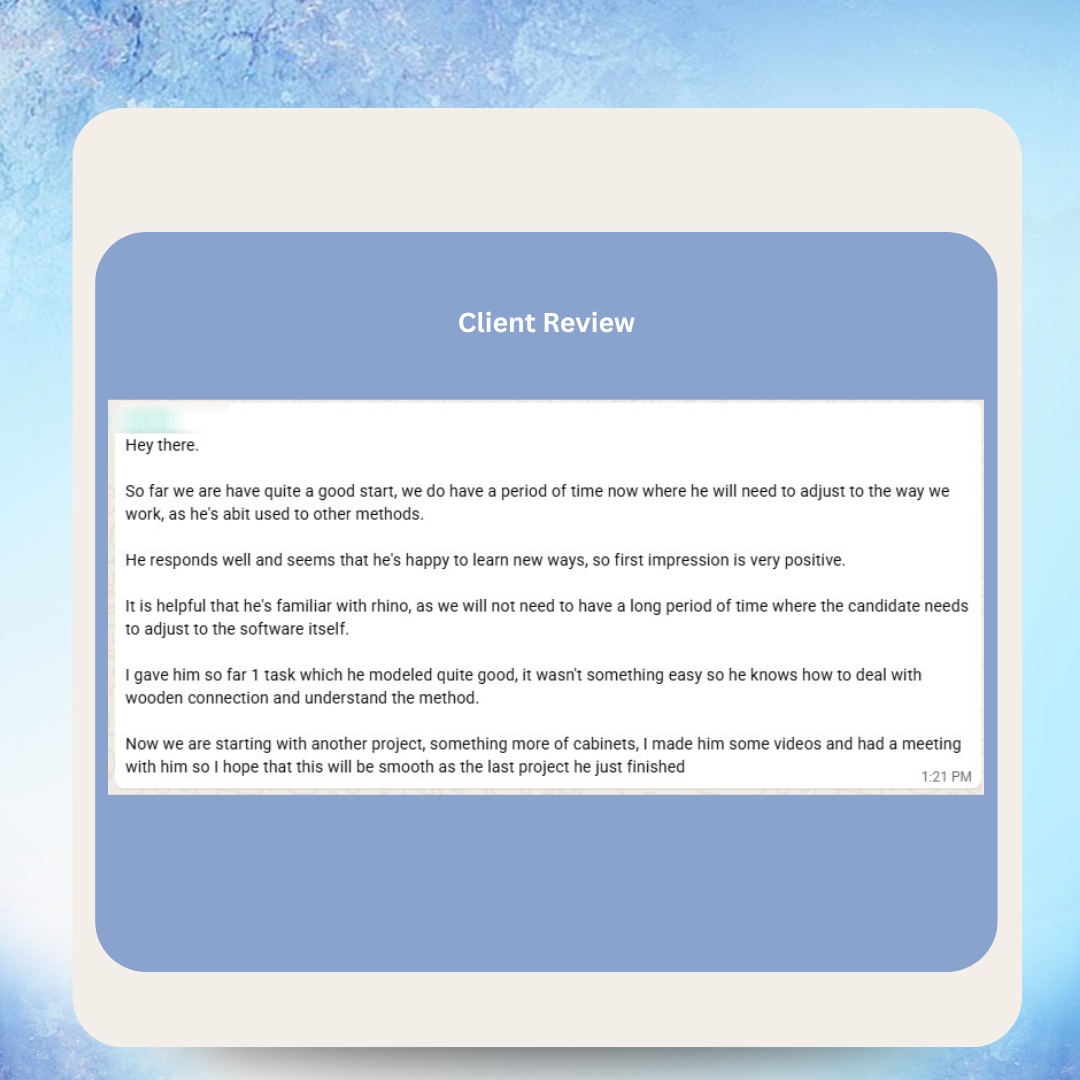
What Our Clients Say



Real Messages from Real Clients


Hear From Our VAs
Happy, supported VAs deliver better results for your business. The compliance professionals you hire through VA Masters choose us because of the genuine investment we make in their development — and that shows in every piece of documentation they produce.



As Featured In





Frequently Asked Questions
What does a compliance virtual assistant do?
A compliance virtual assistant handles the documentation, monitoring, reporting, and administrative execution that keeps your organization meeting its regulatory obligations. This includes policy drafting and updates, regulatory change monitoring, audit preparation and document organization, risk register maintenance, training record tracking, compliance calendar management, and third-party compliance documentation. They handle execution — your compliance officer or legal team retains strategic judgment and oversight.
Is there admin help for compliance tasks?
Yes. A compliance VA provides dedicated administrative support for compliance functions including: document control, policy library management, compliance calendar maintenance, audit evidence compilation, training completion tracking, regulatory filing preparation, vendor compliance documentation, and cross-functional compliance coordination. This is exactly the administrative workload that most compliance officers and operations managers need support with but can't justify a full local hire to cover.
What compliance frameworks can a VA support?
Filipino compliance VAs from VA Masters can support documentation and administrative work across frameworks including HIPAA, GDPR, CCPA, SOX, PCI-DSS, AML/KYC, SEC/FINRA requirements, ISO 27001, SOC 2, OSHA, UK lettings compliance, and HR/employment law compliance. The specific depth of support depends on the candidate's background and the custom skills test we build for your role. Framework familiarity is verified during recruitment, not assumed.
What is a policy management virtual assistant?
A policy management VA specifically owns your organization's policy library: inventorying existing policies, assessing gaps against regulatory requirements, drafting and updating policies, managing review cycles, maintaining version control, and building supporting procedures and templates. This role ensures your policies are current, accurate, and organizationally actionable — rather than outdated documents that create liability. Most organizations significantly underinvest in this function until an audit reveals the gap.
Can a virtual assistant help with compliance and regulatory support for operations teams?
Yes. For operations teams where compliance is embedded rather than standalone, a VA provides: regulatory monitoring and briefings, compliance workflow coordination across departments, audit preparation, training record management, reporting preparation, and compliance calendar ownership. They become the operational compliance coordination point — ensuring that compliance tasks assigned to operations, finance, IT, and HR teams are tracked, completed, and documented.
Are there virtual assistants that specialize in compliance reviews and routine task automation for operations teams?
Yes. VA Masters compliance VAs can both conduct compliance reviews (policy gap analyses, regulatory checklists, document audits) and set up automated workflows for routine compliance tasks — building reminder automation in tools like Monday.com, Asana, or ClickUp, setting up regulatory monitoring alerts, creating templated reporting workflows, and maintaining automated compliance tracking dashboards. The combination of human judgment and systematic automation is what makes a compliance VA more effective than either alone.
Can a virtual assistant help compliance officers with fraud detection and dispute resolution?
A compliance VA can support fraud detection and dispute resolution workflows administratively: maintaining suspicious activity logs, preparing case documentation, organizing evidence files for dispute resolution, tracking investigation timelines, and coordinating regulatory notification requirements. For AML/KYC compliance specifically, VAs can manage the documentation workflows around customer due diligence, enhanced due diligence requirements, and suspicious activity reporting. The VA handles the documentation infrastructure; your compliance officer or legal team applies the judgment and makes the determinations.
Are there digital assistants specifically for lettings compliance?
VA Masters compliance VAs can be specifically configured for lettings and property management compliance: tracking EPC certificate expiry, gas safety certificate schedules, electrical installation condition report (EICR) deadlines, HMO licensing requirements, tenancy deposit compliance, right-to-rent checks, and any other lettings regulatory obligations relevant to your portfolio. Building a comprehensive compliance calendar and document tracking system for a property portfolio is a straightforward onboarding task for a properly briefed compliance VA.
How much does a compliance virtual assistant cost?
Through VA Masters, Filipino compliance VAs work at $8.50–$15 per hour — approximately $1,480–$2,600 per month for a full-time dedicated specialist. This is up to 80% less than a US-based compliance coordinator ($4,500–$7,500/month) and significantly less than compliance consultant retainers ($3,000–$12,000/month). The cost of a single missed regulatory deadline or audit finding typically exceeds the annual cost of a compliance VA many times over.
What compliance software do VA Masters compliance VAs use?
Compliance VAs can work within your existing tools: compliance management platforms (Drata, Vanta, LogicGate, Hyperproof), project management tools (Asana, Monday.com, ClickUp, Jira), document management systems (SharePoint, Google Drive, Confluence), and communication platforms (Slack, Microsoft Teams). We match based on your specific stack. If you use specialized compliance management software, we verify candidate familiarity during the skills test stage.
How do I vet a compliance virtual assistant?
The most reliable vetting approach for a compliance VA is a practical test: provide a scenario (a regulatory change notification or an audit evidence request) and ask the candidate to draft the appropriate documentation response. Review for regulatory accuracy, professional language, structural completeness, and attention to the specific requirements described. Also ask framework-specific questions: what documents constitute a HIPAA risk assessment? What records must a SOX-compliant company maintain for internal controls? Genuine knowledge produces specific, accurate answers. Superficial familiarity produces generalities. At VA Masters, we build this test before presenting any compliance VA candidate.
What are the compliance or regulatory considerations when using virtual agents or AI tools?
When using AI tools or virtual agents in compliance workflows, key considerations include: data residency and processing location requirements under GDPR, HIPAA, and other privacy regulations; confidentiality of regulatory information processed by third-party AI systems; the non-substitutability of human judgment for compliance decisions; audit trail requirements for AI-assisted compliance processes; and vendor due diligence on AI tool providers as data processors. A compliance VA can help document these considerations and maintain the oversight records that demonstrate human review of AI-assisted outputs.
Stop Scrambling When Auditors Knock — Build Your Compliance Function Today
Get a dedicated compliance VA who owns your regulatory monitoring, policy documentation, audit preparation, and compliance calendar — at up to 80% less than a local hire.
- Custom compliance skills test for every candidate
- Writing sample review — documentation quality verified before you meet them
- Up to 80% cost savings vs. US-based compliance coordinator
- Top 2–3 verified candidates delivered in days
- No upfront fees — pay only when you approve your hire
- Ongoing HR support, performance reviews, and replacement guarantee