

What Does an Outsourcing Company Actually Do? A Complete Breakdown of How Outsourcing Firms Operate
You have been running your business for months — maybe years — and the same bottleneck keeps choking your growth. You need more hands, but every time you run the numbers on hiring locally, the salary, benefits, office space, and onboarding costs eat into the very profits you are trying to protect. A colleague mentions they work with an outsourcing company in the Philippines and swears it transformed their operations. You nod, say you will look into it, and then sit at your desk wondering: what does an outsourcing company actually do? Is it just a staffing agency with an overseas address? Do they manage the people or just hand over a resume and disappear? Where does their responsibility end and yours begin? The uncertainty keeps you stuck, and every week you stay stuck is another week of missed revenue, unanswered customer emails, and strategic plans that never leave the whiteboard.
That confusion is not a personal failure — it is an industry problem. The term “outsourcing” covers everything from call centers with 5,000 agents to a single virtual assistant handling your calendar. Without understanding what a quality outsourcing company actually provides behind the scenes, you cannot evaluate whether the investment makes sense or distinguish a partner that will genuinely solve your staffing pain from one that will create new headaches. This article pulls back the curtain on the full operation — the sourcing, screening, matching, onboarding, payroll, compliance, management support, and ongoing quality assurance that a legitimate outsourcing company handles so you can focus on growing your business instead of managing hiring logistics.
VA Masters has placed 1,000+ virtual assistants for businesses across dozens of industries, and our 6-stage recruitment process with AI-powered screening delivers pre-vetted Filipino professionals within 2 business days at up to 80% savings compared to local hires. Everything described in this article is what we do every day — and understanding the full scope of these operations will help you evaluate any outsourcing partner, including us, with confidence.
What an Outsourcing Company Is (and Is Not)
An outsourcing company is a business that recruits, vets, and provides skilled professionals to other businesses so those businesses can delegate specific tasks, roles, or entire functions without handling the recruitment and employment logistics themselves. The outsourcing company acts as an intermediary layer that absorbs the complexity of finding talent, verifying qualifications, managing employment infrastructure, and ensuring ongoing performance — freeing the client to focus on directing the work rather than managing the hiring pipeline.
At its simplest, an outsourcing company answers a question every growing business faces: how do I get qualified people doing the work my business needs without spending months recruiting, thousands on job postings, and countless hours interviewing candidates who look great on paper but cannot perform in practice? The outsourcing company has already built the recruitment infrastructure, talent pipeline, screening methodology, and employment framework that would take you years and significant capital to develop independently.
What an Outsourcing Company Is Not
Understanding what outsourcing companies do requires clearing away what they are not. An outsourcing company is not a temp agency that sends random bodies to fill seats. Legitimate firms invest heavily in screening, skills assessment, and client matching to ensure each placement is a strategic fit — not just a warm body with a pulse. An outsourcing company is not a freelance marketplace where you post a job and sift through hundreds of unvetted applications. The whole value proposition is that the outsourcing company does the sifting for you, presenting only candidates who have already passed rigorous evaluation. And an outsourcing company is not a black box where you hand over work and hope for the best. Quality firms maintain transparency throughout the engagement — you know who is doing the work, how they are performing, and what support structures are in place.
Key Distinction
The fundamental difference between an outsourcing company and a freelance platform is who carries the risk. On Upwork or Fiverr, you carry 100% of the hiring risk — if the person cannot perform, you lose the time and money you invested in finding and onboarding them. With an outsourcing company, that risk is shared or transferred. If a placement does not work out, the outsourcing company replaces the candidate at no additional cost because their business model depends on successful placements, not volume of introductions.
The Core Functions of an Outsourcing Company
A full-service outsourcing company operates across six interconnected functions that together create the seamless experience clients expect. Each function represents infrastructure, expertise, and ongoing investment that would be prohibitively expensive for a single business to replicate. Understanding these functions helps you evaluate what you are actually paying for — and why the right outsourcing partner delivers value far beyond a simple hourly rate.
The six core functions are talent sourcing and screening, client matching and placement, onboarding and training support, payroll and compliance management, ongoing quality assurance, and account management. Some outsourcing companies excel at all six. Others handle only one or two and leave the rest to you. Knowing which functions your potential partner covers — and which they do not — is the single most important factor in predicting whether the engagement will succeed or create more problems than it solves.
Why These Functions Matter Together
Each function depends on the others. Excellent sourcing means nothing if the matching process pairs the wrong candidate with your business. Perfect matching fails if onboarding is haphazard. Smooth onboarding unravels if payroll issues frustrate the worker. Reliable payroll cannot compensate for the absence of quality assurance when performance slips. And none of it works without responsive account management that catches problems before they escalate. The companies that deliver consistent results are the ones that have invested in every link in this chain, not just the flashy ones they put on their website.
Talent Sourcing and Screening
The first and arguably most valuable function of an outsourcing company is building and maintaining a pipeline of qualified talent. This is not a passive process of posting job ads and waiting for applications. Quality outsourcing firms invest continuously in sourcing strategies that attract top-tier candidates — university partnerships, professional network cultivation, employee referral programs, social media recruitment, and targeted outreach to experienced professionals in high-demand skill areas.
The Sourcing Funnel
A well-run outsourcing company maintains a recruitment funnel that operates independently of any specific client request. They are always sourcing, always screening, always building their talent bench. When you submit a staffing request, they are not starting from scratch — they are searching a pre-qualified talent pool of candidates who have already passed initial screening. This is why companies like VA Masters can present candidates within 2 business days rather than the weeks or months that traditional hiring requires. The talent pipeline was already flowing before you picked up the phone.
The sourcing volume behind each successful placement is significant. For every candidate presented to a client, dozens or hundreds may have entered the top of the funnel. A typical outsourcing company in the Philippines might receive thousands of applications monthly, advance a fraction to skills testing, pass a smaller fraction through comprehensive assessment, and maintain a curated pool of deployment-ready professionals. You see the finished product — a polished candidate profile with verified skills — without seeing the massive filtration process that produced it.
Multi-Stage Screening
Screening is where outsourcing companies earn their fees. The depth and rigor of the screening process is what separates a legitimate outsourcing partner from a glorified resume-forwarding service. Comprehensive screening typically includes application and resume review for education, experience, and career trajectory. English proficiency testing covers written communication, verbal fluency, accent clarity, and comprehension. Technical skills assessment is tailored to the specific role — bookkeeping candidates are tested on accounting software, customer service candidates on communication scenarios, administrative candidates on organizational tasks. Practical work samples require candidates to complete realistic assignments that simulate actual client work. Personality and work-style evaluation assesses traits like reliability, initiative, attention to detail, and communication habits. Background and reference verification confirms employment history and professional reputation.
This multi-stage approach ensures that candidates who reach the client presentation stage are not just qualified on paper but have demonstrated practical competence under realistic conditions. At VA Masters, our 6-stage process incorporates AI-powered screening to evaluate candidates with consistency and depth that manual-only processes cannot match — every candidate faces the same rigorous standards regardless of volume or timing.
What to Ask
When evaluating an outsourcing company, ask them to walk you through their screening process step by step. How many stages? What does each stage test? What percentage of applicants pass all stages? What specific assessments are used for the role you need? If they cannot answer these questions in detail, their "screening" may be little more than a resume review and a quick chat — which is not meaningfully different from what you could do yourself on a freelance platform.
Client Matching and Placement
Having a pool of vetted talent is only valuable if the right candidate is matched to the right client. The matching function is where an outsourcing company's institutional knowledge becomes critical — they have placed hundreds or thousands of professionals and have developed pattern recognition for which candidate profiles succeed in which client environments.
Understanding Client Requirements
The matching process begins with a thorough discovery of the client's needs — and "needs" means far more than a job description. Quality outsourcing companies explore the specific tasks and responsibilities the role covers, the tools and software the candidate will use daily, the communication style and frequency the client prefers, the working hours and time zone requirements, the management style (hands-on versus autonomous), the team culture and personality dynamics, the growth trajectory of the role (will responsibilities expand over time), and the non-negotiable qualifications versus nice-to-have skills. This discovery process is not a formality — it is the foundation of a successful placement. Outsourcing companies that skip or rush this step end up making placements based on surface-level criteria, which produces the mismatches that give outsourcing a bad name.
Candidate Presentation and Selection
After matching client requirements against their talent pool, the outsourcing company presents a curated shortlist — typically 2-5 candidates — with detailed profiles that go beyond a standard resume. These profiles include assessment results, practical work samples, interviewer notes on communication style and personality, and an explicit explanation of why each candidate was selected for this particular role. The client then interviews their preferred candidates, and the outsourcing company facilitates the selection process with guidance based on their placement experience.
This is fundamentally different from the freelance marketplace model where you post a job and receive 50-200 applications that you must evaluate yourself. The outsourcing company has already done the evaluation. Your job is to select from pre-qualified finalists, not to build a screening process from scratch for every hire.
Onboarding and Training Support
The transition from "candidate selected" to "productive team member" is where many outsourcing relationships succeed or fail. Quality outsourcing companies do not hand you a candidate and disappear — they provide structured onboarding support that accelerates the new hire's path to full productivity and reduces the early-stage friction that causes both clients and workers to become frustrated.
Structured Handoff Processes
Onboarding support typically includes communication setup assistance — ensuring the new hire has access to required tools, platforms, and communication channels before the first working day. It includes expectation alignment facilitation — helping both client and worker establish clear agreements on working hours, availability, communication protocols, task priorities, and performance standards. It includes documentation guidance — advising the client on what SOPs, training materials, and reference documents will help the new hire become productive fastest. And it includes check-in scheduling — establishing a structured first-week and first-month cadence of progress reviews that catch issues early before they compound.
VA Masters goes beyond basic onboarding logistics by providing clients with a proven training and onboarding framework that has been refined across thousands of placements. This framework covers everything from first-day welcome procedures to 90-day performance ramp-up milestones, giving both you and your new VA a clear roadmap for the critical first weeks of the working relationship.
Training Coordination
While the client is ultimately responsible for training their new hire on business-specific processes, outsourcing companies provide the structure that makes training efficient. This includes recommending training sequences (which tasks to introduce first, second, and third), providing templates for SOP documentation, offering best practices for screen-recorded training sessions, and advising on realistic timeline expectations for different task categories. Some outsourcing companies also provide supplementary training in common tools and platforms, ensuring that candidates arrive with baseline proficiency in the software their clients use most frequently.
Effective onboarding is a shared responsibility. The outsourcing company provides the structure, tools, and guidance. The client provides the business-specific knowledge, processes, and quality standards. The worker brings their skills, effort, and willingness to learn. When all three parties fulfill their role, the typical time to full productivity is 2-4 weeks for administrative roles, 3-6 weeks for specialized functions like bookkeeping or digital marketing, and 4-8 weeks for complex roles requiring deep business context. When any party drops the ball, that timeline stretches indefinitely.
Payroll, Compliance, and Infrastructure
Behind every successful outsourcing arrangement is a layer of operational infrastructure that clients rarely see but always benefit from. Payroll processing, legal compliance, worker benefits, and employment framework management represent significant complexity that outsourcing companies absorb entirely — complexity that would otherwise fall on you as the client.
Payroll and Payment Processing
Outsourcing companies handle the mechanics of paying workers in their local currency, managing the foreign exchange logistics, withholding applicable taxes, processing overtime and adjustments, and providing payment documentation. For clients, this means a single, predictable invoice rather than the headache of navigating international wire transfers, currency conversion, Philippine tax law, and local banking requirements. You pay one amount to the outsourcing company. They handle everything downstream. The simplicity of this arrangement is easy to take for granted until you consider what direct international employment involves — establishing a legal entity in the Philippines, registering with local tax authorities, complying with Philippine labor law, managing mandatory government contributions (SSS, PhilHealth, Pag-IBIG), and processing payroll in a currency and regulatory environment you have no experience with.
Legal and Compliance Framework
Employment law varies dramatically across countries, and the Philippines has specific labor regulations covering working hours, overtime, mandatory benefits, holiday pay, separation procedures, and employee protections. An outsourcing company maintains compliance with all applicable regulations, protecting both the worker's rights and the client's exposure to legal risk. This includes structuring the employment relationship correctly under Philippine law, maintaining required documentation, providing government-mandated benefits, and ensuring that working conditions meet local standards. You benefit from a legally sound employment framework without needing to understand or manage Philippine labor law yourself.
IT Infrastructure and Security
Some outsourcing companies, particularly those operating with office-based models, provide the physical and digital infrastructure that workers need — workstations, high-speed internet, backup power systems, secure network configurations, and monitored work environments. Even in remote-first models, outsourcing companies typically set requirements for home office standards — minimum internet speed, backup connectivity, dedicated workspace, and security protocols — that ensure reliable performance. They may also provide or subsidize equipment, software licenses, and cybersecurity tools that protect client data during remote work. For businesses concerned about data security in outsourcing, understanding what infrastructure your outsourcing partner provides is essential.
Ongoing Management and Quality Assurance
The most underappreciated function of a quality outsourcing company is what happens after placement. Many businesses assume that once they have a worker, the outsourcing company's job is done. In reality, ongoing management and quality assurance are what separate outsourcing companies that deliver consistent long-term results from those that produce high initial satisfaction followed by gradual deterioration.
Account Management
A dedicated account manager serves as your ongoing point of contact with the outsourcing company. They proactively check in on the working relationship, address concerns before they become problems, coordinate solutions when issues arise, and serve as a communication bridge when direct discussion between client and worker is not resolving an issue. Good account management feels invisible when everything is working well — you only notice it when you need help, and help arrives quickly. Bad account management — or no account management — means you are on your own when problems emerge, which defeats much of the purpose of working with an outsourcing company.
Performance Monitoring
Quality outsourcing companies maintain their own performance monitoring alongside whatever the client tracks internally. This might include periodic satisfaction surveys with both the client and the worker, regular check-ins on workload, challenges, and development needs, performance benchmarking against similar placements, early warning systems for disengagement or performance decline, and structured reviews at 30, 60, and 90-day milestones. This dual monitoring catches issues that either party might miss individually. A client might not notice gradual performance decline because they are too close to the daily work. A worker might not voice concerns about workload or communication issues because they do not want to seem difficult. The outsourcing company's monitoring creates a safety net that catches these problems before they cause real damage.
Replacement and Escalation
Even with rigorous screening and careful matching, some placements do not work out. A quality outsourcing company handles replacement quickly and at no additional cost to the client. They maintain enough bench depth to source replacement candidates within days, manage the transition professionally so the departing worker is treated with respect, and apply lessons from the failed placement to improve the replacement match. The willingness and ability to replace workers efficiently is a strong signal of an outsourcing company's quality. Companies that make replacement difficult, slow, or costly are prioritizing their own convenience over your business needs. Ask about replacement policies and timelines before you engage. For a deeper understanding of how to evaluate VA performance and set clear KPIs, use structured metrics that make performance conversations objective rather than subjective.
Red Flag
If an outsourcing company requires long-term contracts with expensive early termination fees, be cautious. This business model profits from lock-in rather than satisfaction. Quality outsourcing companies — including VA Masters — do not require long-term contracts because they are confident that the quality of their service earns continued business. If the relationship works, you stay. If it does not, you leave without penalty. That alignment of incentives produces better outcomes for everyone.
Types of Outsourcing Companies
Not all outsourcing companies operate the same way, and understanding the major categories helps you identify which type aligns with your needs. The outsourcing industry spans a wide spectrum from massive enterprise providers to boutique virtual assistant agencies, and the right fit depends on your business size, task complexity, budget, and management preferences.
Business Process Outsourcing (BPO) Companies
Traditional BPO companies operate large facilities — often with hundreds or thousands of employees — and serve enterprise clients who need to outsource entire departments or high-volume functions. Think call centers handling millions of customer interactions for telecom companies, or back-office processing centers managing claims for insurance firms. BPOs offer scale, standardized processes, and sophisticated technology infrastructure. However, they are typically not a good fit for small and mid-sized businesses because they require minimum headcounts (often 10-50+ seats), impose rigid operational frameworks that do not accommodate customization, and charge overhead rates that make small engagements uneconomical.
Staff Augmentation Firms
Staff augmentation companies provide skilled professionals who integrate into your existing team and work under your direct management. The outsourcing company handles recruitment, employment logistics, and HR administration, but the day-to-day work direction comes from you. This model works well for businesses that need specific skills — software developers, designers, marketing specialists — and want direct control over how those skills are applied. The workers feel like members of your team rather than external vendors, which produces better collaboration and deeper engagement with your business goals.
Managed Service Providers
Managed service providers take ownership of specific business functions or outcomes rather than just providing people. Instead of hiring a bookkeeper through them, you outsource your entire bookkeeping function — and the managed service provider is responsible for delivering accurate, timely financial records regardless of how they staff the work internally. This model works well when you want to delegate an entire function without managing the individual workers, but it provides less control and visibility than staff augmentation.
Virtual Assistant Agencies
Virtual assistant agencies like VA Masters occupy a specific niche that has grown explosively over the past decade. They specialize in matching individual skilled professionals with businesses that need dedicated, long-term support for defined roles. The VA works exclusively for one client (or a small number of clients), integrates into the client's workflows and tools, and operates as a remote team member rather than an anonymous outsourced worker. This model combines the cost advantages of offshore outsourcing with the personal working relationship of a direct hire — making it ideal for small to mid-sized businesses that need one to ten skilled professionals without the overhead of engaging a large BPO operation.
The type of outsourcing company you need depends on what you are trying to accomplish. If you need 50 customer service agents handling standardized scripts, a BPO is appropriate. If you need a developer to join your product team for six months, staff augmentation fits. If you want to hand off your entire IT support function, a managed service provider works. If you need a dedicated professional who handles your bookkeeping, customer emails, and social media as a core member of your small team, a virtual assistant agency like VA Masters is the right match.
Outsourcing Company vs. DIY Hiring
A common question from business owners exploring outsourcing for the first time is whether they even need an outsourcing company. With platforms like Upwork, OnlineJobs.ph, and Fiverr making it possible to hire international workers directly, what additional value does an outsourcing company provide? The answer depends on how you value your time, how much hiring risk you are willing to absorb, and how important ongoing support is to your success.
The True Cost of DIY Hiring
DIY hiring appears cheaper on the surface — you pay the worker's hourly rate without an outsourcing company's margin. But this comparison ignores the significant hidden costs. Writing the job posting and posting it across relevant platforms takes time. Reviewing 50-200 applications and shortlisting candidates takes time. Conducting skills assessments — which you must design yourself — takes time. Interviewing candidates takes time. Checking references takes time. And when the first hire does not work out (which happens frequently with unvetted candidates), you repeat the entire process. Conservative estimates suggest that DIY international hiring consumes 20-40 hours of the business owner's time per placement. At a business owner's effective hourly rate of $50-200+, those hours represent $1,000-8,000 in opportunity cost — before the worker has completed a single task.
Then there are the ongoing costs. DIY hiring means you handle international payment logistics, resolve communication issues without mediator support, manage performance problems without HR expertise, and absorb 100% of the replacement cost if the hire fails. You also lack the benchmarking data that outsourcing companies accumulate — you have no baseline for what "good" performance looks like for a Filipino bookkeeper or customer service rep, so you cannot identify underperformance until it becomes a serious problem.
When DIY Hiring Makes Sense
DIY hiring can work when you have significant experience managing remote international workers, you have developed your own screening and assessment processes, you have systems for international payroll and compliance, the role is simple enough that screening risk is low, and you genuinely enjoy the recruitment process and do not consider it a distraction from revenue-generating work. If all five of these conditions apply, the outsourcing company's margin may not be justified. If even one does not apply, the outsourcing company's services likely pay for themselves through better candidates, faster placement, reduced management burden, and lower failure rates.
The Hybrid Approach
Many experienced business owners use a hybrid approach — they engage an outsourcing company for their first one or two hires, learn the processes and management techniques, and then potentially hire additional workers directly using the frameworks they have learned. The outsourcing company serves as both a staffing partner and an education in how to work effectively with Filipino professionals. VA Masters supports this approach because we believe that an informed client who chooses to continue working with us does so because of genuine value, not because they lack alternatives.
What Outsourcing Companies Do Not Do
Setting realistic expectations requires understanding the boundaries of what an outsourcing company provides. Misaligned expectations are the leading cause of outsourcing dissatisfaction — and those misalignments almost always stem from assumptions about what the outsourcing company would handle that were never explicitly confirmed.
They Do Not Manage Your Workers Day-to-Day
In staff augmentation and VA placement models, the outsourcing company provides the person, but you direct the work. Your VA reports to you, follows your processes, works on your tasks, and operates within your systems. The outsourcing company provides support and escalation pathways, but they are not a layer of management between you and your worker. If you want someone else to manage daily task assignment and supervision, you need a managed service model, not a placement model. Understanding this distinction prevents the common frustration of clients who expect the outsourcing company to ensure their VA is productive every hour without any management effort on their part.
They Do Not Replace Your Business Knowledge
No outsourcing company can teach your worker how your specific business operates. They can provide professionals with strong general skills — excellent English, bookkeeping proficiency, customer service experience, technical capabilities — but the specific knowledge of your products, customers, processes, and preferences must come from you. The outsourcing company accelerates this knowledge transfer by providing onboarding frameworks and training guidance, but the content of the training is yours to provide. Building strong management practices for your outsourced team is a skill that pays dividends across every hire.
They Do Not Guarantee Outcomes
Outsourcing companies guarantee the quality of candidates they present and the infrastructure that supports the engagement. They do not — and cannot — guarantee specific business outcomes because those outcomes depend on factors outside their control: the clarity of your instructions, the quality of your processes, the reasonableness of your expectations, and the market conditions your business operates in. A quality outsourcing company maximizes the probability of success by providing excellent candidates and strong support. But outsourcing is a partnership, not a magic wand, and the client's contribution to the partnership matters as much as the outsourcing company's.
Cost and Pricing
Understanding outsourcing company pricing requires looking beyond the hourly rate to understand what you are actually paying for and how the economics work for all parties involved. Transparent pricing builds trust and helps you evaluate whether the value justifies the cost.
How Outsourcing Company Pricing Works
Most outsourcing companies charge clients a rate that includes the worker's compensation plus a margin that covers the company's recruitment costs, screening infrastructure, employment administration, account management, replacement guarantees, and profit. This margin varies widely across the industry — from 15-20% at lean virtual assistant agencies to 50-100%+ at large BPO operations with physical infrastructure and management layers.
The key question is not "how much is the margin" but "what do I get for the margin." An outsourcing company that charges a 25% margin but provides rigorous screening, fast placement, ongoing account management, and free replacement delivers far more value than one that charges 15% but simply forwards resumes from a job board. Evaluate the total cost of engagement — including your time investment, failure risk, and support quality — not just the hourly rate.
The Savings in Context
The cost advantage of outsourcing to the Philippines remains substantial even after the outsourcing company's margin. A US-based administrative assistant earning $45,000 annually costs roughly $58,000-65,000 when you add employer taxes, health insurance, paid time off, office space, and equipment. That works out to approximately $28-31 per hour for a full-time employee. A Filipino virtual assistant through VA Masters at $9-12 per hour — which includes our recruitment, screening, and support services — delivers the same task quality at up to 80% savings. For a detailed breakdown across different business functions, our outsourcing cost by function guide provides specific pricing for every major role category.
For small and mid-sized businesses, these savings are not marginal adjustments — they are structural advantages that fund growth, improve margins, and create competitive leverage against larger competitors with bigger payrolls but proportionally higher costs.
Without a VA
- Spending 30+ hours screening candidates on freelance platforms
- Managing international wire transfers and currency conversion manually
- No replacement support when a hire does not work out
- Navigating Philippine labor law and tax requirements alone
- Zero visibility into whether candidates were properly vetted
With VA MASTERS
- Pre-vetted candidates presented within 2 business days
- Single predictable invoice — all payroll handled by the outsourcing company
- Free replacement with new candidates sourced within days
- Full legal and compliance framework managed on your behalf
- Detailed assessment results and practical work samples for every candidate

Since working with VA Masters, my productivity as CTO at a fintech company has drastically improved. Hiring an Administrative QA Virtual Assistant has been a game-changer. They handle everything from detailed testing of our application to managing tasks in ClickUp, keeping our R&D team organized and on schedule. They also create clear documentation, ensuring our team and clients are always aligned.The biggest impact has been the proactive communication and initiative—they don’t just follow instructions but actively suggest improvements and catch issues before they escalate. I no longer have to worry about scheduling or follow-ups, which lets me focus on strategic decisions. It’s amazing how smoothly everything runs without the usual HR headaches.This has saved us significant costs compared to local hires while maintaining top-notch quality. I highly recommend this solution to any tech leader looking to scale efficiently.
How to Choose the Right Outsourcing Partner
Not all outsourcing companies deliver equal value, and choosing the wrong partner is worse than not outsourcing at all — because a bad partner wastes your money, your time, and your confidence in a strategy that could genuinely transform your business. Here are the evaluation criteria that matter most, based on what we have seen work (and fail) across thousands of client engagements.
Screening Rigor
Ask for specifics about the screening process. How many stages? What does each stage test? What is the pass rate? Can they show you sample assessment outputs? Companies that invest in genuine screening can describe their process in detail and back it up with data. Companies that do not invest in screening will give vague answers about "rigorous vetting" without being able to explain what that means in practice.
Specialization and Track Record
Has the outsourcing company placed workers in your industry or for your specific role type? A company that specializes in virtual assistants for small businesses understands the unique dynamics of that relationship — the need for versatile generalists, the importance of proactive communication, the reality that your VA will work directly with you rather than through layers of management. A company that primarily serves enterprise BPO contracts may not adapt well to the personalized approach that smaller businesses need.
Contract Terms and Flexibility
Read the contract carefully. Watch for long-term lock-in periods, early termination fees, automatic renewal clauses, and hidden costs. The best outsourcing companies offer month-to-month flexibility because they earn continued business through performance, not contractual obligations. If a company needs a 12-month commitment to be profitable on your account, it raises questions about their confidence in their own placement quality.
Ongoing Support Quality
Ask what happens after placement. Do you get a dedicated account manager? How quickly do they respond to issues? What is the replacement process and timeline? How do they monitor satisfaction? Post-placement support is often the differentiator between outsourcing companies that all look similar during the sales process. References from current clients — especially clients who have faced challenges and seen how the company responded — provide the most honest signal of support quality.
Transparency
Does the outsourcing company explain their pricing structure clearly? Do they introduce you to the actual person who will be doing your work, or do they obscure the relationship behind a corporate facade? Can they provide detailed candidate profiles rather than generic descriptions? Transparency correlates strongly with quality because companies that have nothing to hide are happy to show you everything. Companies that deflect detailed questions about their processes, pricing, or people usually have good reasons for the deflection — and those reasons are not in your favor.
Due Diligence Checklist
Before engaging any outsourcing company, get clear answers to these questions: What is your exact screening process? What is your candidate-to-placement ratio? Do you require long-term contracts? What is your replacement policy and timeline? What ongoing support do I receive after placement? Can I speak with current clients as references? What is included in your pricing and what is extra? How do you handle data security and confidentiality? Having these answers in writing before you sign anything protects you from the most common outsourcing disappointments.
Our 6-Stage Recruitment Process
VA Masters built our 6-stage recruitment process to address every failure point we have seen in the outsourcing industry over years of operation. Each stage exists because we identified a specific risk that skipping it creates — and our AI-powered screening ensures consistency and depth that purely manual processes cannot match at scale.
The process begins with application review and initial screening, where we evaluate education, work history, career trajectory, and baseline qualifications against the requirements of our active client roles. Candidates who pass initial screening advance to English proficiency assessment — a multi-dimensional evaluation of written clarity, verbal fluency, accent comprehensibility, and contextual understanding that goes far beyond a standardized language test. Technical skills testing follows, customized to the specific role category — bookkeeping candidates face accounting scenarios, customer service candidates handle simulated interactions, administrative candidates demonstrate organizational and communication abilities.
The fourth stage is practical work assessment, where candidates complete realistic assignments that simulate the actual work they would perform for a client. This stage is the most predictive of on-the-job performance because it reveals not just what candidates know but how they apply that knowledge under real-world conditions. Personality and work-style evaluation assesses the behavioral and interpersonal traits that determine whether a candidate will thrive in a remote working relationship — traits like reliability, initiative, communication proactiveness, adaptability, and attention to detail. Finally, reference verification confirms the candidate's employment history, performance claims, and professional reputation through direct conversations with previous employers or clients.
Detailed Job Posting
Custom job description tailored to your specific needs and requirements.
Candidate Collection
1,000+ applications per role from our extensive talent network.
Initial Screening
Internet speed, English proficiency, and experience verification.
Custom Skills Test
Real job task simulation designed specifically for your role.
In-Depth Interview
Culture fit assessment and communication evaluation.
Client Interview
We present 2-3 top candidates for your final selection.
Have Questions or Ready to Get Started?
Our team is ready to help you find the perfect match.
Get in Touch →See What Our Clients Have to Say
| Feature | VA MASTERS | Others |
|---|---|---|
| Custom Skills Testing | ✓ | ✗ |
| Dedicated Account Manager | ✓ | ✗ |
| Ongoing Training & Support | ✓ | ✗ |
| SOP Development | ✓ | ✗ |
| Replacement Guarantee | ✓ | ~ |
| Performance Reviews | ✓ | ✗ |
| No Upfront Fees | ✓ | ✗ |
| Transparent Pricing | ✓ | ~ |
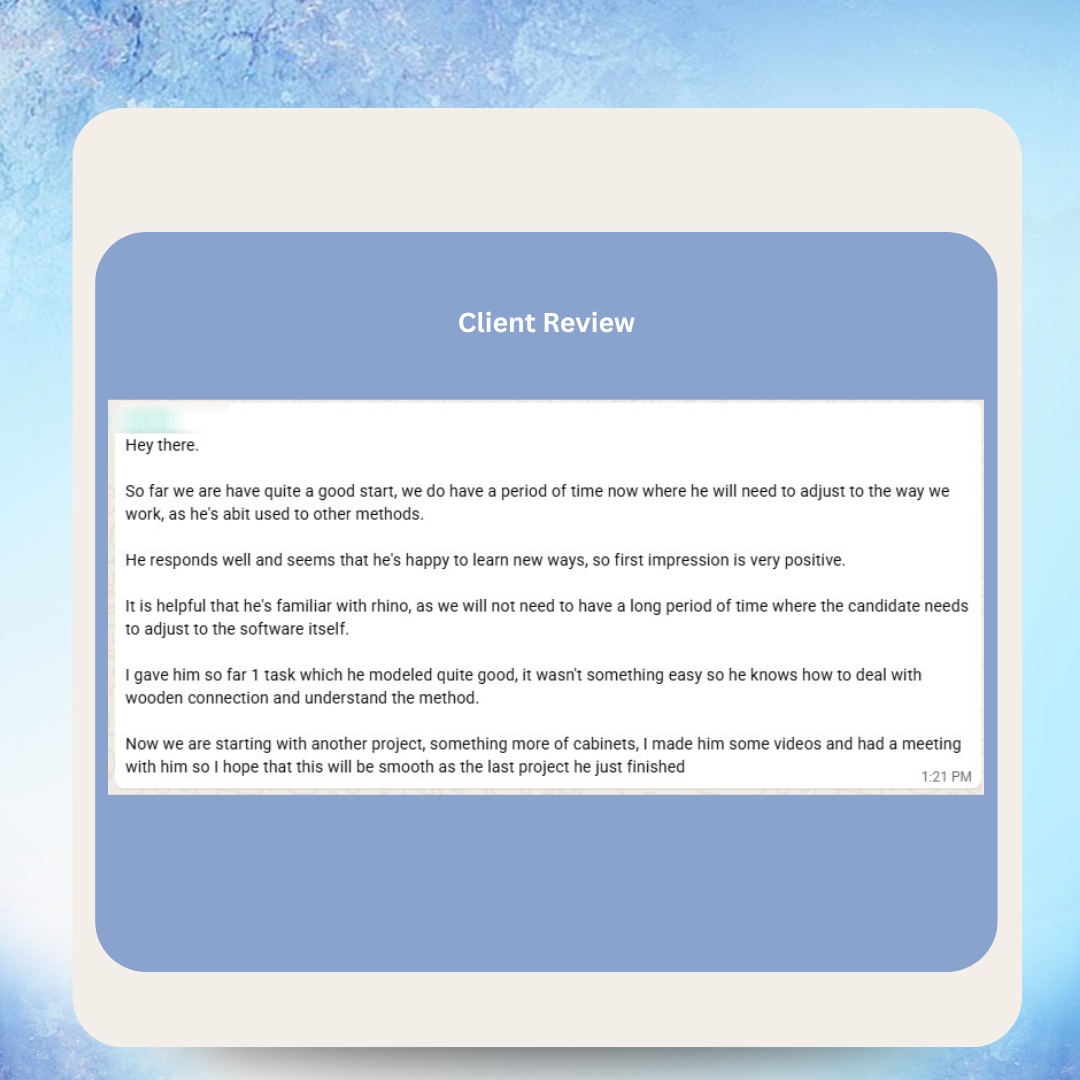
What Our Clients Say




Real Messages from Real Clients


As Featured In






Frequently Asked Questions
What exactly does an outsourcing company do?
An outsourcing company recruits, screens, and places skilled professionals with businesses that need to delegate tasks or roles. They handle the full hiring pipeline — talent sourcing, multi-stage screening, skills assessment, client matching, onboarding support, payroll processing, legal compliance, and ongoing account management. The client directs the daily work while the outsourcing company manages the employment infrastructure and provides support throughout the engagement.
How is an outsourcing company different from a staffing agency?
Traditional staffing agencies typically focus on local, temporary placements with minimal screening beyond resume review and a brief interview. Outsourcing companies — particularly those specializing in offshore talent — provide deeper screening (multi-stage skills testing, practical assessments, English proficiency evaluation), handle international employment logistics (payroll, compliance, benefits), offer ongoing account management, and focus on long-term dedicated placements rather than short-term temporary coverage. The level of vetting and ongoing support is significantly more comprehensive.
Do I manage the outsourced worker directly or does the company manage them?
In the staff augmentation and virtual assistant model that VA Masters uses, you manage the worker directly. They follow your processes, use your tools, work on your tasks, and report to you. The outsourcing company handles recruitment, employment infrastructure, payroll, and provides ongoing support — but daily work direction comes from you. If you want someone else to manage daily operations, you would need a managed service model rather than a placement model.
How much does it cost to work with an outsourcing company?
Filipino virtual assistants through VA Masters typically cost $7 to $12 per hour depending on the role and experience level. For full-time dedication (40 hours per week), that translates to approximately $1,200 to $2,080 per month. This rate includes VA Masters' recruitment, screening, placement, account management, and replacement guarantee services. There are no long-term contracts, no upfront fees, and no hidden costs. This represents up to 80% savings compared to equivalent local hires.
How quickly can an outsourcing company find someone for my business?
VA Masters presents pre-vetted candidates within 2 business days of your discovery call. This speed is possible because we maintain an active talent pipeline — candidates are continuously being sourced and screened, so when your request arrives, we are matching against an existing pool of qualified professionals rather than starting from scratch. The total time from initial call to a productive VA working on your tasks is typically 5-7 business days.
What happens if the outsourced worker does not work out?
VA Masters provides free replacement if a placement is not meeting your expectations. We source and present new candidates within days, manage the transition professionally, and apply lessons from the initial placement to improve the replacement match. There are no penalties or additional fees for replacements. This guarantee exists because our business model depends on successful placements — we only succeed when you succeed.
Is my data safe when working with an outsourcing company?
Reputable outsourcing companies implement data security protocols including secure access management, confidentiality agreements, and guidance on best practices for remote work security. VA Masters advises clients on proper access setup — separate user accounts with role-appropriate permissions, two-factor authentication, and limited data access based on job requirements. We also vet candidates for professionalism and integrity as part of our screening process.
What tasks can I outsource through an outsourcing company?
Common tasks outsourced through companies like VA Masters include administrative support (email management, scheduling, data entry), customer service (email, chat, and phone support), bookkeeping and accounting (invoicing, reconciliation, financial reports), digital marketing (social media management, content creation, SEO), e-commerce operations (listing management, order processing, inventory tracking), web development and design, HR and recruitment support, IT support, and research and data analysis. Essentially, any task that can be performed remotely with a computer and internet connection is a candidate for outsourcing.
Do outsourcing companies handle payroll and taxes?
Yes. A full-service outsourcing company handles all payroll processing, including currency conversion, local tax withholding, government-mandated contributions (in the Philippines: SSS, PhilHealth, Pag-IBIG), and payment documentation. You receive a single invoice from the outsourcing company rather than navigating international payroll logistics yourself. This eliminates the need to establish a legal entity in the Philippines or understand local tax and labor regulations.
How do I choose between different outsourcing companies?
Evaluate outsourcing companies on screening rigor (ask for detailed process descriptions), specialization (have they placed workers in your industry and role type), contract terms (avoid long-term lock-ins and early termination fees), ongoing support (dedicated account manager, replacement policy, response times), transparency (clear pricing, detailed candidate profiles, willingness to provide references), and track record (client testimonials, years of operation, placement volume). The best outsourcing companies welcome detailed questions because they have strong answers.
Ready to Get Started?
Join 500+ businesses who trust VA Masters with their teams.
- No upfront payment required
- No setup fees
- Only pay when you are 100% satisfied with your VA

Anne is the Operations Manager at VA MASTERS, a boutique recruitment agency specializing in Filipino virtual assistants for global businesses. She leads the end-to-end recruitment process — from custom job briefs and skills testing to candidate delivery and ongoing VA management — and has personally overseen the placement of 1,000+ virtual assistants across industries including e-commerce, real estate, healthcare, fintech, digital marketing, and legal services.
With deep expertise in Philippine work culture, remote team integration, and business process optimization, Anne helps clients achieve up to 80% cost savings compared to local hiring while maintaining top-tier quality and performance.
Email: [email protected]
Telephone: +13127660301