

Outsourcing Myths Debunked: What Business Owners Still Get Wrong in 2026
Here is an unpopular opinion: the biggest obstacle to outsourcing success is not bad VAs, poor communication across time zones, or cultural differences. It is business owners themselves. Specifically, it is the collection of myths, half-truths, and outdated assumptions that business owners cling to despite overwhelming evidence to the contrary. Every week at VA Masters, we speak with entrepreneurs who are hemorrhaging time and money doing everything themselves because they believe outsourcing is risky, unreliable, or only for massive corporations with offshore call centers. They are wrong — and that wrongness is costing them growth, profitability, and their own sanity.
The outsourcing industry has transformed beyond recognition in the last decade. The horror stories that shaped public perception — garbled customer service calls, missed deadlines, stolen intellectual property — belong to an era of lowest-bidder contracts with zero vetting and zero accountability. Modern outsourcing through specialized agencies bears as much resemblance to those cautionary tales as a Tesla does to a Model T. Yet business owners continue making decisions based on myths that were outdated five years ago, let alone today. Having placed 1,000+ virtual assistants for businesses across every industry, we have heard every objection, confronted every misconception, and watched skeptics become evangelists once they experienced the reality of working with a vetted, dedicated Filipino professional.
This article dismantles the most persistent outsourcing myths one by one. Not with hand-waving or sales pitches, but with the concrete evidence, client experiences, and operational data we have accumulated through years of matching businesses with exceptional remote talent. If you are on the fence about outsourcing — or if you tried it once, had a bad experience, and swore it off forever — this is the reality check you need.
Myth 1: Outsourced Work Is Always Lower Quality
This is the myth that refuses to die, and it is the most damaging one because it prevents business owners from ever testing the reality. The assumption is simple: if you are paying less, you must be getting less. A remote worker in the Philippines earning $8-12 per hour cannot possibly deliver the same quality as a local employee earning $25-50 per hour. It sounds logical in theory. In practice, it collapses completely.
The cost difference between a Filipino VA and a local hire has nothing to do with talent, skill, or work ethic. It reflects the massive difference in cost of living between the Philippines and Western countries. A VA earning $10 per hour in the Philippines takes home a salary that places them in the upper tier of local professionals. They can afford a comfortable home, quality healthcare, education for their children, and a standard of living that motivates them to perform at their best and keep the position long-term. That same $10 per hour in New York or London would not cover lunch. You are not hiring cheap labor — you are hiring premium talent in a market where the economics work dramatically in your favor.
The Philippines produces over 500,000 college graduates every year from universities that follow American-influenced curricula. English is the medium of instruction throughout the education system. Filipino professionals grow up immersed in Western media, business culture, and communication norms. The result is a talent pool of educated, English-fluent professionals with genuine expertise in accounting, marketing, customer service, IT, administration, and dozens of other disciplines. Many of our VAs hold professional certifications, advanced degrees, and years of experience working with international clients before they ever join VA Masters.
But do not take our word for it. The quality question is ultimately answered by results. Our performance KPI tracking shows that VA Masters-placed assistants consistently hit or exceed the benchmarks set by our clients. Customer satisfaction scores, task accuracy rates, response times, and productivity metrics all tell the same story: vetted Filipino VAs deliver work quality that matches or surpasses local hires for the vast majority of business functions.
Key Insight
Quality is not a function of hourly rate — it is a function of vetting, training, and management. A poorly vetted local employee at $30 per hour can produce worse results than a rigorously screened Filipino VA at $10 per hour. The variable that determines quality is the recruitment and matching process, not the geography or the price tag. VA Masters' 6-stage recruitment process with AI-powered screening exists specifically to eliminate the quality risk that haunts unvetted freelance hiring.
Myth 2: Outsourcing Is Only for Big Companies
When most people hear "outsourcing," they picture Fortune 500 companies shipping entire departments to offshore service centers with thousands of agents. That mental image leads small and mid-sized business owners to conclude that outsourcing is not for them — it is a strategy for enterprises with massive budgets, dedicated procurement teams, and complex vendor management capabilities. This could not be further from reality.
Small businesses are actually the ideal outsourcing candidates, and they often get even more value from it than large enterprises do. Here is why: a large corporation outsourcing 500 customer service positions is optimizing cost on an existing function. A small business owner outsourcing 40 hours per week of administrative work is fundamentally changing what they can accomplish as a business. They are reclaiming their time, eliminating their bottleneck, and creating capacity for growth that simply did not exist before. The relative impact is enormous.
Consider a solo consultant earning $150 per hour for client work but spending 20 hours per week on scheduling, invoicing, email management, proposal preparation, and CRM updates. Those 20 administrative hours represent $3,000 per week in lost billing opportunity. A full-time VA at $10 per hour costs approximately $1,733 per month. Even if the consultant converts just half of those reclaimed hours into billable work, the monthly return on that investment exceeds $10,000. For an in-depth treatment of small business outsourcing, we have published a complete guide covering every angle of the decision.
At VA Masters, small businesses with 1 to 50 employees represent a large portion of our client base. Solo entrepreneurs, growing startups, family businesses, professional practices, and local service companies all work with our VAs. The model scales in both directions — you can start with a single part-time VA handling 20 hours per week and expand to a full remote team as your needs grow. There are no minimum commitments, no enterprise-only features, and no long-term contracts that lock you in.
The Solo Entrepreneur Advantage
Solo entrepreneurs and very small teams actually get a unique advantage from outsourcing that larger companies do not. When your VA works directly with you — not through three layers of middle management — they learn your business intimately. They understand your clients, your preferences, your voice, and your priorities in ways that an employee buried in a corporate hierarchy never would. The result is a working relationship that feels less like outsourcing and more like having a business partner who handles the operational side while you focus on the strategic side. Many of our solo entrepreneur clients describe their VA as their most important team member — the person who makes their entire business possible.
Myth 3: Communication Across Time Zones Is Impossible
The time zone objection sounds reasonable on the surface. If your VA is in the Philippines (UTC+8) and you are on the US East Coast (UTC-5), that is a 13-hour difference. How can you possibly collaborate effectively when one person's morning is the other person's midnight? In practice, time zone differences are one of the easiest outsourcing challenges to solve — and they can actually become an advantage.
First, the flexibility factor. Filipino VAs are accustomed to working with international clients across multiple time zones, and many adjust their working hours to overlap with your business day. A VA who starts work at 8 PM Manila time is beginning at 8 AM Eastern — giving you a full workday of real-time overlap. This schedule is common and well-established in the Philippine VA industry. VA Masters discusses schedule preferences during the discovery call and matches you with candidates who are available during your preferred hours.
Second, the asynchronous advantage. Many tasks do not require real-time interaction. Bookkeeping, data entry, social media scheduling, email drafting, research, report preparation, and content creation can all be completed asynchronously. Your VA works on assignments while you sleep, and you wake up to completed work in your inbox. This effectively extends your business to 24-hour operations — your company is productive around the clock without anyone working overtime. Businesses that embrace asynchronous workflows often find they are more productive with a time zone difference than they would be with a local employee, because the VA's independent work hours add net productive capacity rather than just redistributing the same hours.
Third, the communication tools have eliminated distance. Slack, Microsoft Teams, Zoom, Google Meet, Loom, and project management platforms like Asana and ClickUp make remote collaboration seamless. A 10-minute daily standup over video, combined with Slack messaging throughout the day and a shared task board, provides more visibility into your VA's work than you would typically have with an in-office employee sitting ten feet away. The key is establishing a deliberate communication rhythm — daily check-ins, weekly reviews, and clear channels for urgent versus non-urgent items — rather than relying on the spontaneous hallway conversations that office proximity enables.
Pro Tip
Use Loom for asynchronous video communication. Record a 3-5 minute screen share explaining a task, walking through a process, or providing feedback on completed work. Your VA watches on their own time, can pause and replay complex sections, and has a permanent reference they can revisit. Loom replaces meetings that require schedule coordination with one-way videos that respect both parties' time zones. Most VA Masters clients report that Loom reduces their meeting time by at least 50% while improving instruction clarity.
Myth 4: Your Data Is Not Safe with Remote Workers
Security concerns are legitimate — but they are not unique to outsourcing, and the risk is dramatically overstated by business owners who have never examined their existing security practices. The uncomfortable truth is that most small and mid-sized businesses have far greater security vulnerabilities in their current operations than a vetted remote VA would ever introduce. Shared passwords on sticky notes, employees using personal devices without encryption, no two-factor authentication, ex-employees with active account access — these are the data security realities in most small businesses, and none of them have anything to do with outsourcing.
Adding a remote VA to your team is actually an opportunity to improve your security posture, because it forces you to implement the access controls and credential management practices you should have had all along. Here is what responsible remote access looks like: create dedicated user accounts for your VA with role-specific permissions — they get access to exactly the systems and data they need, nothing more. Enable two-factor authentication on all business accounts. Use a password manager to share credentials securely rather than sending passwords over email or chat. Implement access logging on sensitive systems so you have an audit trail. Review and revoke access promptly if the engagement ends.
These are the same security practices that any competent IT professional would recommend regardless of whether you have remote workers. The difference is that outsourcing makes you implement them, while local-only teams often operate with lax security because physical proximity creates a false sense of safety. A disgruntled local employee with unrestricted access to your systems is a far greater security risk than a vetted remote VA with properly scoped permissions. For a comprehensive approach to keeping your data protected, our data security and compliance guide covers every aspect of secure remote work.
VA Masters candidates undergo background verification and professional reference checks as part of our 6-stage recruitment process. We guide clients through secure access setup during onboarding and recommend specific security configurations for common business tools. The VAs we place understand the importance of data confidentiality — many have worked with international clients handling sensitive financial, medical, or legal information and are experienced in maintaining strict data handling protocols.
Common Mistake
The worst security practice in outsourcing is sharing your primary login credentials with your VA. Never do this. Every business tool — from email and CRM to accounting software and social media platforms — supports multiple user accounts with configurable permissions. Take 15 minutes to create a dedicated account for your VA with appropriate access levels. This protects your data, creates an audit trail, and makes it simple to revoke access if the engagement ends. If a tool does not support multiple users, that is a sign you need a better tool — not a reason to share your personal credentials.
Myth 5: You Lose Control of Your Business
This myth stems from conflating delegation with abdication. Business owners fear that outsourcing tasks means losing visibility into how those tasks are performed, losing the ability to direct outcomes, and ultimately losing control of business functions they have always managed personally. The fear is understandable — especially for entrepreneurs who built their businesses by controlling every detail — but it mistakes the mechanism for the outcome.
The reality is the opposite: well-structured outsourcing gives you more control, not less. When you handle every task yourself, you have the illusion of control but no systems. You know how things get done because you do them, but there are no documented processes, no quality standards, no performance metrics, and no redundancy. If you get sick, go on vacation, or simply have a bad week, things fall apart because everything depends on you being present and performing. That is not control — that is fragility.
When you outsource effectively, you build systems. You document processes through SOPs. You establish quality standards with clear benchmarks. You implement task management tools that provide real-time visibility into every assignment's status. You create communication rhythms with daily check-ins and weekly reviews. You track performance through measurable KPIs. The result is a business that operates through systems rather than through your personal presence — which is actual control, because the systems work whether you are watching or not. Our guide to managing outsourced teams walks through the exact frameworks that create this level of operational visibility.
Many business owners tell us they feel more in control after outsourcing than they did before, because for the first time they have documented processes and measurable outputs for functions that previously lived entirely in their heads. The VA's need for clear instructions forces the owner to articulate what they actually want — and that articulation itself is a form of control that informal, do-it-yourself operations never achieve.
The Delegation Paradox
There is a paradox at the heart of delegation that business owners need to internalize: the more you delegate, the more strategic control you gain. When you spend 50 hours per week executing tasks, you have zero hours for strategic oversight. You are so deep in the weeds that you cannot see the field. When you delegate 30 of those hours to a capable VA, you reclaim time for the planning, analysis, and decision-making that actually steer the business. Outsourcing operational execution does not reduce your control — it elevates it from tactical to strategic. You stop controlling how emails get answered and start controlling where the business goes next.
Myth 6: Cultural Differences Make Collaboration Difficult
Cultural difference anxiety is one of those fears that sounds sophisticated but evaporates on contact with reality. Business owners imagine uncomfortable misunderstandings, awkward communication styles, clashing work norms, and an unbridgeable gap between "how we do things here" and how their VA approaches work. With Filipino VAs specifically, this myth is almost comically wrong.
The Philippines has one of the strongest cultural alignments with Western business practices of any outsourcing destination in the world. The country's education system is modeled on the American system. English is an official language and the medium of instruction in schools and universities. Filipino professionals consume American and British media, understand Western humor and idioms, and have absorbed Western business communication norms through decades of BPO industry experience that has made the Philippines the global leader in outsourced services.
Beyond the structural alignment, Filipino cultural values map exceptionally well onto the employer-employee relationship. Filipino professionals are known for strong loyalty to employers who treat them fairly, genuine warmth and positivity in interpersonal interactions, high regard for professionalism and doing quality work, natural inclination toward customer service excellence, and collaborative team orientation. These are not stereotypes — they are consistently observed traits that our clients confirm across thousands of placements. The "cultural barrier" that business owners fear typically turns into the pleasant surprise of working with someone who is more communicative, more positive, and more committed than many local hires they have managed.
The one genuine cultural nuance worth understanding is that Filipino professionals tend toward indirect communication when delivering bad news or raising problems. They may say "I will try my best" when they mean "this deadline is not realistic," or hesitate to push back on instructions they think are wrong. This is easily addressed by explicitly creating a safe space for honest feedback: tell your VA directly that you want them to flag concerns, ask questions, and tell you when something does not make sense. Once they understand that directness is valued rather than punished, most Filipino VAs adapt quickly and become proactive communicators.
VA Masters includes cultural alignment assessment in our recruitment process. We evaluate candidates' experience working with Western clients, their communication directness, their comfort with various management styles, and their ability to navigate cross-cultural workplace dynamics. When we match you with a candidate, we have already confirmed that their communication style and work approach align with your expectations — eliminating the cultural adjustment that can slow down unvetted hires.
Myth 7: Lower Cost Always Means Lower Value
This myth is a cousin of Myth 1, but it operates at a deeper psychological level. Many business owners have internalized the belief that price equals value so thoroughly that they cannot accept the possibility of getting excellent work at a fraction of the local cost. It feels too good to be true, so they assume there must be a catch — the work will be sloppy, the person will disappear, or the savings will be eaten by hidden fees and management overhead.
The "catch" is simply economics. The cost of living in the Philippines is dramatically lower than in Western countries. A monthly salary of $1,500-2,000 provides an excellent quality of life in Manila, Cebu, or Davao — comfortable housing, quality food, healthcare, entertainment, and savings. That same salary in San Francisco would barely cover a studio apartment's rent. When you hire a Filipino VA at $8-12 per hour, you are not underpaying someone — you are paying a premium rate by local standards that attracts the top tier of Philippine talent. Your VA is highly motivated to perform because they are earning well above the local market rate, and the remote work arrangement offers flexibility and career development that local employers often cannot match.
The value equation becomes even clearer when you consider the fully loaded cost of a local hire. A US-based administrative assistant earning $45,000 annually costs $58,000-65,000 when you factor in employer payroll taxes, health insurance, paid time off, office space, equipment, and HR administration. That is roughly $31-33 per hour. A Filipino VA handling the same tasks at $10 per hour costs approximately $1,733 per month for full-time work — about $20,800 annually. You save up to 80% while getting a dedicated professional who works exclusively for your business. The savings are not a compromise on value — they are the result of global wage arbitrage that has nothing to do with worker quality.
Where the "cheap equals bad" myth does hold truth is in the absolute bottom of the market. If you go to a freelance platform and hire the cheapest person you can find — someone charging $2-3 per hour with no vetting, no track record, and no accountability — you will likely get what you pay for. That is not outsourcing; that is gambling. The mistake is not that you hired someone overseas, it is that you skipped every screening step and selected purely on price. The same approach would produce equally terrible results if you hired the cheapest local candidate you could find on Craigslist.
Myth 8: VAs Can Only Handle Simple Tasks
This myth reveals a fundamental misunderstanding of what "virtual assistant" means in 2026. Business owners picture a VA as someone who answers phones and files documents — a digital secretary handling basic administrative busywork. While VAs certainly handle administrative tasks, reducing the role to clerical work ignores the extraordinary breadth and depth of skills available in the Philippine talent market.
Through VA Masters, businesses hire Filipino professionals for roles spanning the full spectrum of business operations. Our placements include full-charge bookkeepers managing six- and seven-figure company finances through QuickBooks and Xero. Social media managers developing content strategies, creating graphics, writing copy, managing ad campaigns, and analyzing performance data. Customer service specialists handling complex product inquiries, technical troubleshooting, and high-stakes client communications. Web developers building and maintaining WordPress, Shopify, and custom websites. Graphic designers producing professional brand materials, marketing collateral, and social media assets. Project coordinators managing multi-team workflows across complex operations. E-commerce specialists running entire Amazon, Shopify, and multi-channel selling operations.
The "simple tasks only" myth persists because business owners have never tested it. They start by outsourcing email management and data entry, and when their VA handles those tasks well, they assume that is the VA's ceiling. In reality, the ceiling is usually the owner's willingness to delegate — not the VA's ability to perform. Our most satisfied clients are the ones who gradually expanded their VA's role as trust developed, discovering that the same person who started handling their inbox could also manage their bookkeeping, coordinate their client onboarding, and eventually oversee other team members.
Key Insight
The question is not "can a VA handle complex work?" — it is "have I hired the right VA for the complexity I need?" VA Masters matches candidates to roles based on specific skills, experience, and assessment results. If you need a bookkeeper, we present candidates with accounting credentials and demonstrated bookkeeping proficiency. If you need a digital marketer, we present candidates with marketing experience and practical campaign management skills. The recruitment process determines the capability — not some inherent limitation of the VA model.
Myth 9: Your Customers Will Notice and Complain
Business owners worry that customers will somehow detect that support emails are answered by someone in the Philippines, that social media posts are created by a remote team member, or that their bookkeeping is handled offshore — and that this discovery will damage their brand. This myth has two components, both of which are wrong.
First, in most cases customers genuinely cannot tell. Filipino VAs communicate in fluent English with natural phrasing and professional tone. When your VA responds to a customer email, manages your live chat, posts on your social media, or handles a phone call, the interaction is indistinguishable from a local team member handling the same task. The customer cares about one thing: was their question answered accurately and promptly? If the answer is yes, they do not care — and have no way of knowing — where the person who helped them is located.
Second, even when customers do know, they overwhelmingly do not care. We live in a global economy where every product, service, and business operation involves international supply chains and distributed teams. Your customers buy products manufactured in China, use software built by developers in Eastern Europe, and call customer service lines staffed in dozens of countries. The idea that they would object to your administrative support or customer service being handled by a professional in the Philippines is a projection of the owner's anxiety, not a reflection of customer reality.
The scenarios where customer perception matters are narrow and specific: if your brand positioning is explicitly built on local identity (a neighborhood business emphasizing local roots), or if you are in a regulated industry where clients expect all work to be performed domestically (certain government contracts or legal services). For the vast majority of businesses — e-commerce, professional services, SaaS, coaching, agencies, healthcare practices, real estate — customers evaluate you on quality, speed, and professionalism, not on the geographic location of your support team.
In fact, outsourcing customer service to a dedicated Filipino specialist often improves the customer experience. Instead of the business owner answering emails sporadically between meetings with 12-hour response times, a dedicated VA maintains a 1-2 hour response window throughout the business day. Faster, more consistent support makes customers happier — regardless of where it originates.
Myth 10: Outsourcing Is a Short-Term Fix, Not a Long-Term Strategy
Some business owners treat outsourcing as a temporary stopgap — something you do until you can "afford" to hire "real" local employees. This framing betrays the assumption that outsourced workers are inherently inferior to local hires and that a mature, successful business should eventually bring everything in-house. Both assumptions are false, and acting on them costs businesses significant money and operational effectiveness.
The most successful companies in the world — from Fortune 500 giants to fast-growing startups — use outsourcing as a permanent, strategic component of their operations. They do not outsource because they cannot afford local talent; they outsource because it is the optimal approach for specific functions. Why would you pay $60,000 per year for a local bookkeeper when a Filipino accounting professional delivers identical quality for $20,000? That is not a temporary compromise — it is a permanent competitive advantage. The $40,000 you save every year, forever, can be invested in growth, product development, marketing, or additional hires that expand your capacity.
The "temporary fix" myth also ignores the compounding value of long-term VA relationships. A VA who has worked with your business for two or three years possesses deep institutional knowledge that no new hire — local or remote — can replicate. They know your clients by name, understand your processes intimately, anticipate your needs, and can train new team members on your systems. This accumulated knowledge makes them more valuable every year, not less. Replacing a long-tenured VA with a local hire means starting from zero on institutional knowledge while tripling your cost. It is a downgrade disguised as an upgrade.
Our most successful clients build permanent remote teams that grow alongside their businesses. They start with one VA, add specialized roles as needs emerge, and eventually have 3-5 Filipino team members handling customer service, bookkeeping, marketing, operations, and project coordination. This remote team building approach is not a phase in their business development — it is the foundation of their operational model, and it gives them a permanent cost structure advantage over competitors who insist on doing everything locally.
VA Masters clients have an average engagement duration of over 18 months, with many relationships lasting 3-5+ years. This retention rate reflects the reality that outsourcing is not something businesses try and abandon — it is something they try and expand. The compounding value of a skilled, experienced VA who knows your business inside and out is an asset that grows more valuable over time, not a temporary band-aid you discard when you can "afford" to hire locally.
Why These Myths Persist — and How to Move Past Them
Understanding why outsourcing myths persist is as important as debunking them, because the same cognitive biases that create the myths will continue to distort your decision-making unless you recognize them.
Survivorship Bias in Horror Stories
Nobody writes a blog post or tells a dinner party story about their virtual assistant who quietly and competently handles their bookkeeping every month. But everyone shares the disaster story about the freelancer who disappeared mid-project or the offshore team that delivered unusable code. The negative experiences are dramatic and memorable; the positive experiences are mundane and invisible. This creates a skewed perception where outsourcing failures are overrepresented in public discourse relative to their actual frequency. The reality is that properly vetted outsourcing arrangements succeed at rates comparable to local hiring — both can fail if you skip due diligence, and both succeed when you invest in recruitment, onboarding, and management.
Loss Aversion and Status Quo Bias
Humans are wired to weigh potential losses more heavily than equivalent potential gains. The risk of a bad outsourcing experience (even if unlikely) feels more threatening than the near-certain gain of reclaimed time, reduced costs, and increased capacity. This asymmetry keeps business owners stuck in patterns they know are suboptimal because the known suboptimal feels safer than the unknown — even when the unknown has strong evidence of positive outcomes. The antidote is reframing: the risk of outsourcing is not just the possibility of failure; the risk of not outsourcing is the certainty of continued overwork, limited growth, and competitive disadvantage against businesses that are leveraging global talent.
Outdated Reference Points
Many business owners' outsourcing beliefs were formed 10-15 years ago when the industry genuinely had more quality control problems. The combination of faster internet, better collaboration tools, mature VA agencies with rigorous screening processes, and a decade of professionalization in the Philippine BPO industry has transformed the quality and reliability of outsourced work. If your outsourcing opinion was formed in 2012, it is as outdated as your opinion of smartphones from the same era. The industry has evolved dramatically, and your assessment should too.
How to Move Past the Myths
The most effective way to overcome outsourcing skepticism is controlled exposure. You do not need to overhaul your operations overnight. Start with a single, well-defined role — perhaps 20-40 hours per week of administrative support or customer service. Use a vetted agency like VA Masters rather than gambling on freelance platforms. Invest in proper onboarding with documented SOPs and clear expectations. Give the arrangement 60-90 days to mature (the first two weeks are always an adjustment period, regardless of how good the VA is). Evaluate results based on measurable outcomes — tasks completed, quality metrics, time saved — rather than on feelings or assumptions. Nearly every skeptic we have worked with becomes a believer within the first 90 days because the results speak for themselves.
See What Our Clients Have to Say
Cost and Pricing
The financial case for outsourcing is not subtle — it is one of the most straightforward business decisions you will ever evaluate. The numbers are large enough to be transformative for businesses of any size, and the savings begin from month one with no capital investment required.
To contextualize these rates against the myths we have debunked: a fully loaded US employee costs $50,000-80,000+ annually for roles that a Filipino VA handles at $15,000-25,000. That is not a marginal savings — it is up to 80% cost reduction on the same work output. The savings compound dramatically when you outsource multiple roles. A three-person remote team (admin VA, bookkeeper, and customer service specialist) might cost $5,000-6,000 per month through VA Masters. The equivalent local team would cost $15,000-20,000+ per month in salaries alone, before benefits, taxes, and office overhead. That $10,000-14,000 monthly difference — $120,000-168,000 annually — is the real cost of believing outsourcing myths. For detailed breakdowns by function, our cost-by-function price guide provides comprehensive rate comparisons.
There are no hidden costs in the VA Masters model. No long-term contracts, no upfront placement fees, no surprise charges. You pay your VA's agreed rate for the hours they work, and you can adjust hours or end the engagement at any time. The total cost of outsourcing is transparent and predictable — which is more than most business owners can say about their local payroll once you factor in benefits, workers' compensation, unemployment insurance, and all the other costs that make local hires significantly more expensive than their base salary suggests.
Without a VA
- Believing VAs can only handle basic admin tasks
- Paying $25-50/hr for local employees on operational work
- Owner spending 60+ hours per week doing everything personally
- Customer emails answered in 12-24 hours between meetings
- Rejecting outsourcing based on one bad freelance platform experience
With VA MASTERS
- Filipino VAs managing bookkeeping, marketing, customer service, and project coordination
- Dedicated remote professionals delivering equivalent quality at $8-12/hr
- Owner focused on strategy, sales, and growth with 20+ hours reclaimed weekly
- Customer inquiries handled within 1-2 hours by a dedicated support specialist
- Vetted VA through VA Masters delivering consistent, reliable results from week one

Since working with VA Masters, my productivity as CTO at a fintech company has drastically improved. Hiring an Administrative QA Virtual Assistant has been a game-changer. They handle everything from detailed testing of our application to managing tasks in ClickUp, keeping our R&D team organized and on schedule. They also create clear documentation, ensuring our team and clients are always aligned.The biggest impact has been the proactive communication and initiative—they don’t just follow instructions but actively suggest improvements and catch issues before they escalate. I no longer have to worry about scheduling or follow-ups, which lets me focus on strategic decisions. It’s amazing how smoothly everything runs without the usual HR headaches.This has saved us significant costs compared to local hires while maintaining top-notch quality. I highly recommend this solution to any tech leader looking to scale efficiently.
Our 6-Stage Recruitment Process
Every myth we have debunked has a common thread: the quality of the outsourcing outcome depends almost entirely on the quality of the hiring process. Freelance platforms that let anyone create a profile and bid on jobs produce unpredictable results. A rigorous, multi-stage recruitment process produces consistent excellence. VA Masters' 6-stage process exists to eliminate the risks that fuel outsourcing myths.
Our process screens thousands of Filipino professionals through application review, comprehensive skills testing tailored to the specific role, English proficiency evaluation (written and verbal), practical work assessments using real-world scenarios, personality and work style evaluation, and professional reference verification. AI-powered screening at the initial stages ensures we evaluate a large candidate pool efficiently, while human recruiters handle the nuanced assessment stages that require judgment and context.
The result: when you receive 2-3 candidate profiles within 2 business days of your discovery call, each candidate has already demonstrated the specific skills, communication ability, and professional reliability that your role requires. You are choosing between pre-qualified finalists, not sifting through hundreds of unvetted applications. This is why VA Masters placements consistently outperform self-sourced hires and why our clients' outsourcing experiences bear no resemblance to the horror stories that feed outsourcing myths.
Detailed Job Posting
Custom job description tailored to your specific needs and requirements.
Candidate Collection
1,000+ applications per role from our extensive talent network.
Initial Screening
Internet speed, English proficiency, and experience verification.
Custom Skills Test
Real job task simulation designed specifically for your role.
In-Depth Interview
Culture fit assessment and communication evaluation.
Client Interview
We present 2-3 top candidates for your final selection.
Have Questions or Ready to Get Started?
Our team is ready to help you find the perfect match.
Get in Touch →| Feature | VA MASTERS | Others |
|---|---|---|
| Custom Skills Testing | ✓ | ✗ |
| Dedicated Account Manager | ✓ | ✗ |
| Ongoing Training & Support | ✓ | ✗ |
| SOP Development | ✓ | ✗ |
| Replacement Guarantee | ✓ | ~ |
| Performance Reviews | ✓ | ✗ |
| No Upfront Fees | ✓ | ✗ |
| Transparent Pricing | ✓ | ~ |
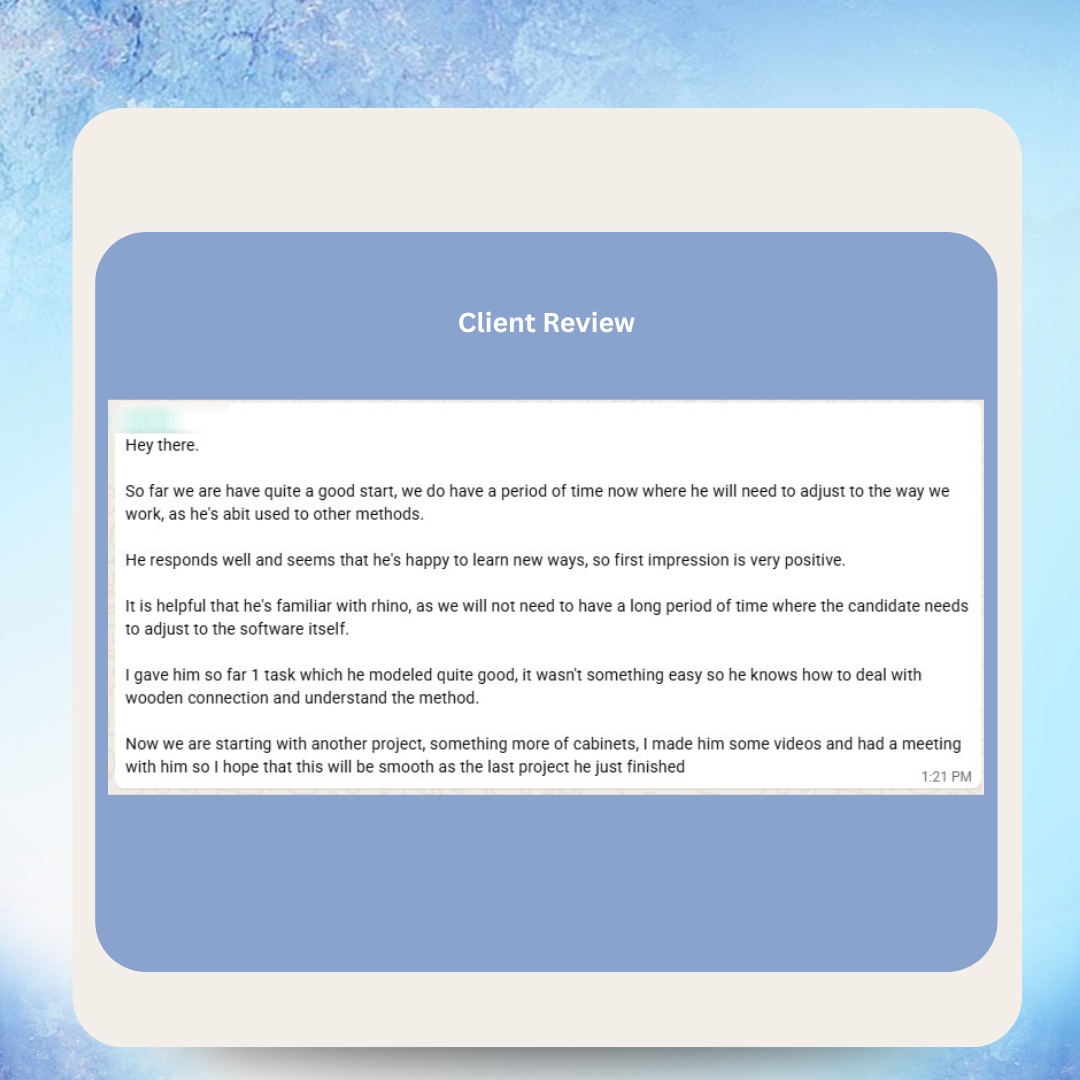
What Our Clients Say




Real Messages from Real Clients


As Featured In






Frequently Asked Questions
What is the biggest myth about outsourcing that business owners believe?
The most damaging myth is that outsourced work is inherently lower quality than local work. This confuses geographic wage differences with talent differences. Filipino VAs earning $8-12 per hour are premium professionals by local standards, educated in American-influenced universities with English as the medium of instruction. The quality of outsourced work depends on the vetting and recruitment process, not the worker's location. VA Masters' 6-stage recruitment process ensures that every candidate we present has demonstrated the skills, communication ability, and reliability your role requires.
Is outsourcing only suitable for large companies with big budgets?
No — small businesses often benefit more from outsourcing than large enterprises. A solo entrepreneur or small team outsourcing 20-40 hours per week of operational work fundamentally changes what the business can accomplish. The cost of a full-time Filipino VA ($1,200-2,000 per month) is accessible for virtually any established business. At VA Masters, small businesses with 1-50 employees represent a large portion of our clients, from solo consultants to growing startups and family businesses.
How do you ensure quality when hiring a virtual assistant from the Philippines?
Quality is ensured through rigorous recruitment, not geography. VA Masters' 6-stage process includes application screening, role-specific skills testing, English proficiency evaluation (written and verbal), practical work assessments with real-world scenarios, personality and work style evaluation, and professional reference verification. AI-powered screening efficiently processes a large candidate pool while human recruiters handle nuanced assessment. Only candidates who pass all six stages are presented to clients.
Will my customers know I am using an outsourced team?
In most cases, no. Filipino VAs communicate in fluent, natural English with professional tone and phrasing. Customer interactions — email responses, chat support, phone calls, social media engagement — are indistinguishable from those handled by a local team member. Customers evaluate your business on response speed, accuracy, and helpfulness, not on the geographic location of the person assisting them. Many businesses find that customer satisfaction actually improves after outsourcing because a dedicated VA provides faster, more consistent support.
Is my business data safe when working with a remote virtual assistant?
Yes, when proper security practices are followed. Create dedicated user accounts with role-specific permissions, enable two-factor authentication, use a password manager for secure credential sharing, and implement access logging on sensitive systems. These are standard security practices that protect your data regardless of whether team members are local or remote. VA Masters candidates undergo background verification and we guide clients through secure access setup during onboarding.
How do you handle time zone differences with Filipino VAs?
Time zone differences are manageable and often advantageous. Many Filipino VAs adjust their schedules to overlap with your business hours — a common arrangement in the Philippine VA industry. Tasks like bookkeeping, research, content creation, and data entry can be completed asynchronously while you sleep, giving your business 24-hour productivity. Daily check-ins via Slack or video call, combined with shared task management tools, ensure seamless collaboration regardless of time zone.
Can virtual assistants handle complex, specialized tasks or only basic admin work?
VAs handle the full spectrum of business operations. Through VA Masters, businesses hire Filipino professionals for full-charge bookkeeping, social media strategy and execution, customer service management, web development, graphic design, project coordination, e-commerce operations, digital marketing campaigns, and much more. The key is matching the right candidate to the role through skills-based recruitment. VA Masters tests candidates on the specific skills and tools your role requires.
What if I had a bad outsourcing experience before — should I try again?
Most bad outsourcing experiences result from unvetted hiring (freelance platforms with no quality control), unclear expectations (no SOPs or documented processes), or poor management practices — not from fundamental flaws in the outsourcing model. Using a vetted agency like VA Masters with rigorous screening, proper onboarding support, and ongoing engagement management eliminates the common failure points. The experience of working with a pre-vetted, dedicated professional is fundamentally different from gambling on the cheapest freelancer on a platform.
How much can I realistically save by outsourcing to the Philippines?
Businesses typically save up to 80% compared to equivalent local hiring costs. A US-based administrative employee costing $52,000-65,000 annually (salary plus benefits, taxes, and overhead) can be replaced by a Filipino VA at approximately $18,000-25,000 per year for the same full-time hours and comparable quality. For a three-person remote team, annual savings can exceed $100,000. These savings begin from month one with no capital investment required — there are no long-term contracts or upfront fees.
Is outsourcing a temporary solution or a long-term business strategy?
Outsourcing is a permanent strategic advantage used by companies of every size, from startups to Fortune 500 enterprises. Long-term VA relationships compound in value as your VA accumulates deep knowledge of your business, clients, and processes. VA Masters clients average over 18 months per engagement, with many lasting 3-5+ years. The businesses that treat outsourcing as a permanent component of their operational model — not a stopgap until they can hire locally — achieve the greatest sustained benefit.
Ready to Get Started?
Join 500+ businesses who trust VA Masters with their teams.
- No upfront payment required
- No setup fees
- Only pay when you are 100% satisfied with your VA

Anne is the Operations Manager at VA MASTERS, a boutique recruitment agency specializing in Filipino virtual assistants for global businesses. She leads the end-to-end recruitment process — from custom job briefs and skills testing to candidate delivery and ongoing VA management — and has personally overseen the placement of 1,000+ virtual assistants across industries including e-commerce, real estate, healthcare, fintech, digital marketing, and legal services.
With deep expertise in Philippine work culture, remote team integration, and business process optimization, Anne helps clients achieve up to 80% cost savings compared to local hiring while maintaining top-tier quality and performance.
Email: [email protected]
Telephone: +13127660301