

How to Outsource Recruitment and Sourcing: Build a Talent Pipeline at a Fraction of In-House Cost
Your recruiters spend 13 hours per week sourcing candidates for a single role. That is one-third of their working hours on one position — scrolling LinkedIn, writing InMails, reviewing resumes, cross-referencing job boards, and logging everything in your ATS. Multiply that by the 5, 10, or 20 open roles your team is managing simultaneously, and the math breaks down quickly. Your most expensive recruiting talent is buried in repetitive sourcing tasks instead of doing what actually closes hires: building relationships, selling candidates on your company, and managing offer negotiations.
This is exactly why outsourcing recruitment sourcing has become one of the fastest-growing categories in the outsourcing industry. A dedicated sourcing VA handles the upstream pipeline work — identifying candidates, researching backgrounds, sending initial outreach, screening responses, and keeping your ATS current — so your senior recruiters can focus on the high-value activities that their experience and judgment are actually needed for. Through VA Masters, a pre-vetted Filipino recruitment sourcing specialist costs $8 to $13 per hour, compared to $25 to $45 per hour for a domestic sourcing specialist. That is up to 80% savings on the function that consumes the most recruiter time.
We have placed 1,000+ virtual assistants across every business function, and recruitment sourcing consistently delivers some of the fastest ROI we see. This guide covers exactly which recruiting functions to outsource, how to structure the workflow, what tools your VA should know, and how to measure the impact on your hiring metrics. Whether you are a staffing agency trying to scale, an in-house talent team stretched thin, or a growing company that needs to hire faster without adding headcount to your recruiting team, the playbook here is proven and practical.
Why Outsource Recruitment Sourcing in 2026
The economics of recruitment have shifted dramatically. The average cost-per-hire in the US reached $4,700 in 2024, and for specialized roles it regularly exceeds $10,000. A significant portion of that cost is labor -- the recruiter hours spent sourcing, screening, and coordinating candidates before a single interview happens. When your $80,000-per-year recruiter spends half their time on sourcing tasks that a trained specialist can perform at $8 to $13 per hour, you are paying a premium for commodity work.
The Sourcing Bottleneck
Most recruiting teams hit a wall not because they cannot close candidates, but because they cannot source enough qualified candidates to keep the pipeline full. When a recruiter has 15 open requisitions, sourcing gets squeezed between interviews, hiring manager meetings, and offer negotiations. The result is inconsistent pipeline flow -- feast-or-famine cycles where some roles have a strong candidate slate and others have been sitting open for weeks with minimal activity. A dedicated sourcing VA eliminates this bottleneck by maintaining consistent outreach and pipeline building across all open positions simultaneously.
The Talent Acquisition Math
Consider a mid-size company with 50 open roles and a 3-person recruiting team. Each recruiter carries 16 to 17 requisitions. They source, screen, coordinate interviews, manage hiring manager relationships, negotiate offers, and handle onboarding paperwork. Something has to give, and it is usually sourcing -- the most time-consuming and least relationship-dependent function. Add two sourcing VAs at $8 to $13 per hour, and each recruiter gets 20+ hours per week back. Those hours go to higher-value activities: candidate selling, hiring manager consulting, and closing. The VAs cost $2,560 to $4,160 per month combined. The alternative -- hiring two more domestic recruiters -- costs $12,000 to $16,000 per month in salary and benefits alone.
Why Filipino Sourcing Specialists Excel
The Philippines produces a large pool of professionals with the research skills, English proficiency, and attention to detail that sourcing demands. Filipino recruiters and sourcing specialists commonly work for international companies, staffing agencies, and RPO providers, gaining experience with US job markets, LinkedIn Recruiter, Boolean search techniques, and the ATS platforms that US companies use. The cultural alignment -- direct communication, service orientation, and willingness to work US time zones -- makes them particularly effective in candidate-facing roles where professionalism and responsiveness matter.
By the Numbers
LinkedIn data shows that sourced candidates are 2x more likely to be hired than applicants. Yet most recruiting teams spend less than 30% of their time on proactive sourcing because of competing priorities. Outsourcing sourcing to a dedicated VA inverts this equation -- your pipeline is continuously fed with proactively identified candidates while your recruiters focus on converting those candidates into hires.
Recruitment Functions You Can Outsource
Recruitment sourcing is the most commonly outsourced function, but the adjacent tasks that support the hiring pipeline are equally outsourceable. Here is a comprehensive breakdown.
Boolean and Advanced Candidate Sourcing
Your VA identifies candidates through Boolean searches on LinkedIn, job boards, GitHub, Stack Overflow, Behance, and other platforms relevant to the roles you are filling. They build search strings tailored to each requisition, identify candidates who match the required qualifications, and compile shortlists with contact information and relevant background details. A skilled sourcing VA can identify 20 to 40 qualified candidates per role per day, building a pipeline that takes weeks for a distracted recruiter to match.
Resume Screening and Shortlisting
When applications come in from job postings, your VA screens them against the requirements for each role. They flag candidates who meet the qualifications, identify those who are close but may need further review, and reject those who clearly do not match. This initial screening eliminates 60 to 80 percent of applications that do not meet basic requirements, so your recruiters only review pre-qualified candidates.
Candidate Outreach and Follow-Up
Your VA sends personalized outreach messages to sourced candidates -- LinkedIn InMails, emails, or messages through other platforms. They follow up with candidates who have not responded, nurture passive candidates with periodic touchpoints, and track all outreach activity in your ATS. Consistent follow-up is where most sourcing efforts fail; a dedicated VA ensures that no candidate falls through the cracks because an overloaded recruiter forgot to send a second message.
Interview Scheduling and Coordination
Coordinating interviews across candidates, interviewers, and time zones is time-consuming and error-prone. Your VA manages the scheduling logistics -- sending calendar invitations, confirming attendance, rescheduling when conflicts arise, and ensuring that interviewers have the candidate information they need before each session. They handle the back-and-forth communication that eats recruiter hours without requiring recruiter judgment.
ATS Data Entry and Maintenance
A clean, current ATS is essential for recruiting operations, but maintaining it is tedious. Your VA enters candidate information, updates pipeline stages, logs communication notes, tags candidates with relevant skills and qualifications, and maintains the data hygiene that enables accurate reporting. Many recruiting teams discover that their ATS data is months out of date because no one has time to maintain it. A VA keeps it current and usable.
Job Posting Management
Your VA posts open positions to job boards, company career pages, and social media. They refresh stale postings, update descriptions when requirements change, and track which posting sources generate the most qualified candidates. This administrative function takes surprisingly little time per posting but adds up quickly across 20, 50, or 100 open positions.
Reference Checks
Once candidates reach the final stages, your VA can conduct reference checks -- calling or emailing references, asking standardized questions, documenting responses, and flagging any concerns. This is a structured process that does not require recruiter judgment but does require time and follow-through. For more on HR and recruitment outsourcing, our comprehensive guide covers the full function.
VA Masters tests every recruitment sourcing VA with practical assessments. Candidates must demonstrate Boolean search construction from a real job description, identify qualified candidates from a simulated LinkedIn search, compose personalized outreach messages, screen a set of resumes against specific criteria, and navigate popular ATS platforms. We evaluate their sourcing accuracy, outreach quality, and tool proficiency before presenting any candidate.
Building Your Sourcing Workflow
The key to successful outsourced sourcing is a structured workflow that defines inputs, processes, and outputs clearly. Here is the framework that works.
Step 1: Intake and Calibration
For each new requisition, the recruiter or hiring manager completes an intake form that defines the must-have qualifications, nice-to-have qualifications, target companies, geographic preferences, compensation range, and any specific sourcing instructions. Your VA uses this intake to calibrate their search. The first batch of sourced candidates (usually 10 to 15) serves as a calibration round -- the recruiter reviews them and provides feedback that helps the VA refine the search criteria. This calibration step is critical; it aligns the VA's understanding of the role with the recruiter's expectations and prevents wasted effort on misaligned candidate profiles.
Step 2: Daily Sourcing Cadence
Once calibrated, your VA sources candidates on a daily cadence -- typically 15 to 30 new profiles per role per day, depending on the difficulty of the search. They add each candidate to the ATS with sourcing notes, tag them with relevant qualifications, and move them into the initial outreach stage. The daily cadence maintains a steady pipeline flow that prevents the feast-or-famine dynamic that plagues most recruiting teams.
Step 3: Outreach Sequences
Your VA executes outreach sequences for each sourced candidate -- an initial message, a follow-up 3 to 5 days later, and a final touchpoint 5 to 7 days after that. Each message is personalized based on the candidate's background and the role. The VA logs all outreach in the ATS so the recruiter has full visibility into what has been sent, when, and whether the candidate has responded. Typical response rates for well-crafted outreach sequences range from 15 to 30 percent, depending on the role and candidate market.
Step 4: Response Handling and Qualification
When candidates respond, your VA handles the initial qualification -- confirming interest, verifying key qualifications against the intake requirements, checking compensation alignment, and assessing availability and timeline. Candidates who pass initial qualification are promoted to the recruiter's queue for a full screening conversation. This handoff point is where the recruiter's expertise becomes essential -- evaluating cultural fit, selling the opportunity, and assessing qualities that require judgment and experience.
Step 5: Pipeline Reporting
Your VA generates weekly pipeline reports showing candidates sourced per role, outreach sent, response rates, candidates qualified, and candidates promoted to recruiter review. These metrics enable you to identify pipeline problems early, adjust sourcing strategies for difficult roles, and demonstrate the ROI of your sourcing investment.
ATS and Recruiting Tools Your VA Should Know
Filipino recruitment sourcing VAs commonly have experience with the platforms that US recruiting teams use. Here are the tools your VA should be proficient with.
Applicant Tracking Systems
- Greenhouse: Pipeline management, candidate profiles, scorecards, reporting
- Lever: Candidate tracking, nurture campaigns, diversity analytics
- Workable: Sourcing integrations, candidate assessment, offer management
- Bullhorn: Staffing-specific CRM, candidate database, placement tracking
- iCIMS: Enterprise recruiting, career site management, onboarding
- JazzHR: Small business recruiting, interview scheduling, compliance
- Recruit CRM: Agency recruiting, pipeline management, invoicing
Sourcing Platforms
- LinkedIn Recruiter: Advanced search, InMail, candidate tracking, projects
- Indeed Resume: Resume database search, candidate outreach
- ZipRecruiter: Job distribution, resume matching, candidate search
- GitHub: Technical talent sourcing for engineering roles
- Behance/Dribbble: Design talent sourcing with portfolio review
- AngelList/Wellfound: Startup talent sourcing
Outreach and Automation
- Gem: Sourcing automation, email sequences, diversity analytics
- Lusha/Apollo: Contact information for candidate outreach
- Calendly/GoodTime: Interview scheduling automation
- Loom: Video messages for personalized candidate outreach
VA Masters verifies tool proficiency during recruitment. If your tech stack includes platforms the VA has not used, the transition period typically takes one to two weeks for any modern ATS -- the fundamental concepts (pipeline stages, candidate profiles, search filters) transfer across platforms.
Candidate Outreach and Engagement
Sourcing is only as effective as the outreach that follows. A VA who identifies 50 great candidates per day but sends generic, copy-paste messages will get a 5 percent response rate. A VA who sends thoughtful, personalized messages will get 20 to 30 percent. Here is how to structure outreach for maximum engagement.
Personalization at Scale
Effective outreach references something specific about the candidate -- a recent project, a shared connection, a skill that is particularly relevant to the role, or a career move that makes the opportunity a logical next step. Your VA should research each candidate enough to include one to two personalized elements per message. This takes 3 to 5 minutes per candidate but doubles or triples response rates compared to templated outreach. The ROI of those extra minutes is enormous when measured in candidate conversations generated.
Multi-Channel Outreach
Not every candidate responds to LinkedIn InMails. Some prefer email. Others are more active on Twitter or industry-specific platforms. Your VA should employ a multi-channel approach -- starting with LinkedIn, following up via email if available, and using alternative platforms for specific candidate populations. Engineering candidates may be more responsive on GitHub. Designers engage on Behance. Sales professionals often respond well to direct, value-focused email.
Follow-Up Cadence
The follow-up is where most sourcing efforts fail. A single message generates a 10 to 15 percent response rate. Adding two follow-ups brings the cumulative rate to 25 to 35 percent. Your VA should follow a structured sequence: initial outreach on day one, follow-up on day four with additional value or a different angle, and a final touchpoint on day ten that acknowledges the candidate may not be interested but leaves the door open. Each touchpoint should add something -- not just repeat the original message.
Employer Brand Messaging
Your VA represents your company in candidate communications. They need clear messaging about what makes your company an attractive employer -- culture, growth opportunities, compensation competitiveness, interesting projects, or whatever differentiates you. Provide your VA with employer brand talking points, employee testimonials, and company content they can share in outreach. This ensures that every candidate interaction reinforces your employer brand rather than undermining it with generic or poorly crafted messages.
Screening and Qualification
Initial screening is a high-volume task that does not require a senior recruiter's judgment for the first pass. Your VA can handle structured screening that filters candidates based on objective criteria before passing qualified candidates to the recruiter for deeper evaluation.
Structured Phone or Video Screens
Your VA conducts 15 to 20-minute initial screens with candidates who respond to outreach. Using a standardized question set, they verify work authorization, confirm compensation expectations, assess availability and timeline, validate key qualifications from the resume, and gauge interest in the opportunity. The screen results -- recorded in the ATS with structured notes -- give the recruiter enough information to decide whether to proceed without spending their own time on candidates who are clearly misaligned on compensation, timeline, or basic qualifications.
Skills-Based Pre-Qualification
For technical roles, your VA can administer pre-qualification assessments -- sending coding challenges, requesting portfolio samples, or asking candidates to complete brief skills assessments. They do not evaluate the results (that is the recruiter's or hiring manager's job), but they manage the logistics of sending assessments, tracking completion, and flagging candidates who have submitted their work.
The Handoff to Your Recruiter
The handoff from VA to recruiter should be clean and information-rich. When a candidate passes the initial screen, the VA updates the ATS with qualification notes, compensation expectations, availability, key selling points, and any concerns. The recruiter picks up with a complete picture of who the candidate is and why they are worth a full conversation. This structured handoff eliminates the information loss that occurs when candidates are passed along without context.
See What Our Clients Have to Say
Cost of Outsourcing Recruitment Sourcing
A pre-vetted Filipino recruitment sourcing specialist through VA Masters costs $8 to $13 per hour -- up to 80% savings compared to domestic sourcing specialists or recruiters performing sourcing functions.
Cost Comparison
- Filipino sourcing specialist (VA Masters): $8-$11/hour ($1,280-$1,760/month)
- Filipino recruiting coordinator (VA Masters): $9-$13/hour ($1,440-$2,080/month)
- US sourcing specialist (in-house): $25-$35/hour ($4,000-$5,600/month before benefits)
- US recruiter performing sourcing: $30-$45/hour ($4,800-$7,200/month before benefits)
- RPO provider (sourcing function): $3,000-$6,000/month per sourcer
ROI Scenario: Staffing Agency
A staffing agency places candidates at an average fee of $8,000. Their domestic recruiter fills 3 roles per month and spends 50 percent of their time on sourcing. Adding a sourcing VA at $1,600/month frees the recruiter to focus on closing, increasing placements from 3 to 5 per month. Two additional placements at $8,000 each generate $16,000 per month in additional revenue against a $1,600 per month investment -- a 10:1 ROI. Explore the full ROI of hiring a virtual assistant for detailed calculations.
ROI Scenario: In-House Talent Team
An in-house team with 30 open roles and 2 recruiters hires at a pace of 8 per month. Adding a sourcing VA at $1,500/month increases pipeline volume by 40 percent, reducing average time-to-fill from 45 to 32 days and increasing monthly hires to 11. At an average cost-of-vacancy of $500 per day, reducing time-to-fill by 13 days across 11 monthly hires saves $71,500 per month in vacancy costs. The VA costs $1,500. The math is not close.

Since working with VA Masters, my productivity as CTO at a fintech company has drastically improved. Hiring an Administrative QA Virtual Assistant has been a game-changer. They handle everything from detailed testing of our application to managing tasks in ClickUp, keeping our R&D team organized and on schedule. They also create clear documentation, ensuring our team and clients are always aligned.The biggest impact has been the proactive communication and initiative—they don’t just follow instructions but actively suggest improvements and catch issues before they escalate. I no longer have to worry about scheduling or follow-ups, which lets me focus on strategic decisions. It’s amazing how smoothly everything runs without the usual HR headaches.This has saved us significant costs compared to local hires while maintaining top-notch quality. I highly recommend this solution to any tech leader looking to scale efficiently.
For Staffing Agencies: Scaling Sourcing Without Scaling Overhead
Staffing agencies face a unique challenge: sourcing volume scales linearly with client demand, but hiring domestic sourcers takes 4 to 8 weeks and adds significant fixed overhead. When you win a new client with 20 open roles, you need sourcing capacity immediately -- not in two months when your new hire is finally productive.
The VA Advantage for Agencies
Filipino sourcing VAs through VA Masters can start within days. VA Masters delivers pre-vetted candidates within 2 business days, and sourcing specialists typically reach full productivity within 1 to 2 weeks. This gives agencies the ability to scale sourcing capacity up or down with client demand rather than maintaining fixed headcount for peak periods. When a client engagement ends, you are not carrying unused sourcing overhead.
Structuring Agency Sourcing Operations
Successful agency models typically pair one domestic recruiter with two to three sourcing VAs. The recruiter manages client relationships, conducts final candidate presentations, and handles offer negotiations. The VAs build the pipeline -- sourcing, outreach, screening, and ATS maintenance. This model allows each recruiter to manage 25 to 30 requisitions effectively rather than the 10 to 15 they can handle when also responsible for sourcing. The result is higher revenue per recruiter at lower total cost.
Maintaining Quality Across Volume
The concern with scaling is quality dilution. Structured workflows prevent this: standardized intake forms ensure clear requirements, calibration rounds align VA sourcing with recruiter expectations, daily check-ins catch misalignment early, and weekly metrics reviews identify performance trends. VA Masters screens sourcing specialists for the attention to detail and candidate evaluation skills that maintain quality at scale.
Measuring the Impact on Your Hiring Metrics
Outsourced sourcing should produce measurable improvements across your recruiting metrics. Here is what to track and what to expect.
Pipeline Volume
Expect a 40 to 60 percent increase in candidates entering your pipeline per role. A dedicated sourcing VA identifies and engages more candidates than a recruiter who is splitting time across multiple functions. More pipeline volume means more choices for hiring managers and less risk of settling for a suboptimal candidate because the pipeline was thin.
Time-to-Fill
With consistent sourcing and faster screening, time-to-fill typically decreases by 20 to 35 percent. Roles that previously took 45 to 60 days to fill start closing in 30 to 40 days because the pipeline was built proactively rather than reactively. This acceleration compounds -- faster fills mean less vacancy cost, less hiring manager frustration, and more capacity for your recruiting team to take on new requisitions.
Source of Hire Quality
Track the quality of hires from sourced candidates versus applicants. LinkedIn data consistently shows that sourced candidates outperform applicants on retention and performance metrics. By increasing the proportion of sourced candidates in your pipeline, you improve overall hire quality.
Recruiter Productivity
With sourcing delegated, your recruiters should increase their close rate -- more offers extended per recruiter per month, higher offer-to-acceptance ratios, and better hiring manager satisfaction scores. These metrics demonstrate that outsourced sourcing does not just reduce costs; it improves the effectiveness of your entire recruiting function.
Cost-Per-Hire
Adding a sourcing VA at $1,280 to $2,080/month while reducing time-to-fill and increasing hires per recruiter should decrease your blended cost-per-hire. Track this metric monthly and compare pre-VA and post-VA periods to quantify the ROI.
Detailed Job Posting
Custom job description tailored to your specific needs and requirements.
Candidate Collection
1,000+ applications per role from our extensive talent network.
Initial Screening
Internet speed, English proficiency, and experience verification.
Custom Skills Test
Real job task simulation designed specifically for your role.
In-Depth Interview
Culture fit assessment and communication evaluation.
Client Interview
We present 2-3 top candidates for your final selection.
Have Questions or Ready to Get Started?
Our team is ready to help you find the perfect match.
Get in Touch →Onboarding Your Recruitment Sourcing VA
A structured onboarding process gets your sourcing VA productive quickly and sets the foundation for long-term success.
Week 1: Tools and Processes
Grant access to your ATS, LinkedIn Recruiter (or the sourcing tools you use), communication platforms, and any internal documentation. Walk through your recruitment workflow, explain pipeline stages, and show how your team uses the ATS. Provide templates for outreach messages, intake forms, and screening questionnaires. Your VA should spend the first few days learning your systems and processes before beginning live sourcing.
Week 2: Calibrated Sourcing
Assign 2 to 3 open requisitions and have your VA source an initial batch of 10 to 15 candidates per role. Review the candidates together and provide specific feedback: "This candidate is a fit because..." and "This candidate is not a fit because..." This calibration round is the most important step in onboarding -- it aligns the VA's sourcing judgment with your expectations and prevents weeks of misaligned effort.
Week 3-4: Full Productivity
With calibration complete, expand the VA's requisition load to full capacity -- typically 8 to 15 roles, depending on search difficulty. Establish daily check-ins (15 minutes) during the first month, then transition to weekly syncs as the VA demonstrates consistent quality. Monitor pipeline metrics weekly to ensure sourcing volume and candidate quality meet expectations.
Ongoing Management
Treat your sourcing VA as a member of the recruiting team. Include them in team meetings, share company news that informs sourcing (new products, funding, culture initiatives), and invest in their development. Filipino sourcing specialists who feel connected to the team and the company's mission consistently outperform those who are treated as arms-length contractors. For broader guidance on building remote teams, see our complete guide to remote teams in the Philippines.
VA Masters provides onboarding support for all recruitment sourcing placements. Our team helps you structure the initial training period, create calibration workflows, and establish the communication cadence that ensures your sourcing VA integrates smoothly into your recruiting operations.
| Feature | VA MASTERS | Others |
|---|---|---|
| Custom Skills Testing | ✓ | ✗ |
| Dedicated Account Manager | ✓ | ✗ |
| Ongoing Training & Support | ✓ | ✗ |
| SOP Development | ✓ | ✗ |
| Replacement Guarantee | ✓ | ~ |
| Performance Reviews | ✓ | ✗ |
| No Upfront Fees | ✓ | ✗ |
| Transparent Pricing | ✓ | ~ |
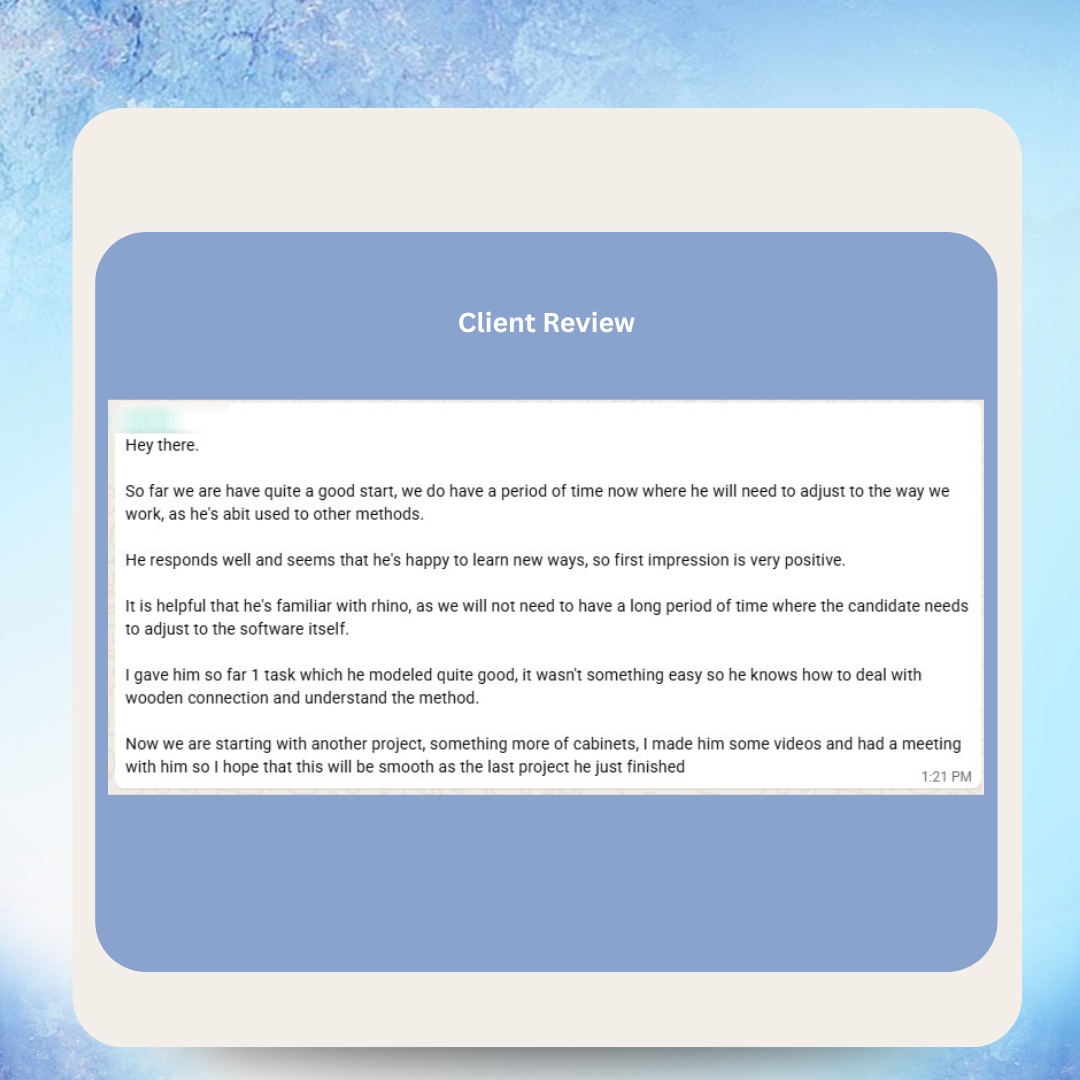
What Our Clients Say




Real Messages from Real Clients


Hear From Our VAs



As Featured In






Frequently Asked Questions
What recruitment tasks can I outsource to a Filipino VA?
Candidate sourcing (Boolean search, LinkedIn Recruiter), resume screening, initial outreach and follow-up, interview scheduling, ATS data entry and maintenance, job posting management, reference checks, and structured phone/video screens. The most commonly outsourced function is proactive sourcing, which consumes the most recruiter time.
How much does a recruitment sourcing VA cost?
Through VA Masters, a pre-vetted Filipino sourcing specialist costs $8-$13/hour ($1,280-$2,080/month). This represents up to 80% savings versus US sourcing specialists at $25-$35/hour or domestic recruiters performing sourcing at $30-$45/hour.
Can a sourcing VA use LinkedIn Recruiter?
Yes. Filipino sourcing VAs commonly have LinkedIn Recruiter experience including advanced search, Boolean queries, InMail campaigns, project management, and candidate tracking. VA Masters verifies LinkedIn proficiency as part of the recruitment assessment for sourcing roles.
What ATS platforms do your sourcing VAs know?
Our VAs have experience with Greenhouse, Lever, Workable, Bullhorn, iCIMS, JazzHR, Recruit CRM, BambooHR, and other major platforms. If your ATS is unfamiliar, the transition typically takes 1-2 weeks — the core concepts transfer across platforms.
How many candidates can a sourcing VA identify per day?
A skilled sourcing VA identifies 20-40 qualified candidates per role per day, depending on search difficulty. For niche technical roles, expect the lower end. For roles with large candidate pools, expect 30-40. This is 3-5x the sourcing output of a recruiter who is splitting time across multiple functions.
Will a sourcing VA hurt our employer brand?
No — when properly trained and equipped with your employer brand messaging. VA Masters recruits sourcing specialists with strong English communication skills. Provide your VA with brand guidelines, messaging templates, and talking points. Review initial outreach drafts before scaling. Quality-trained VAs represent your brand professionally.
How quickly can a sourcing VA reach full productivity?
Expect 1-2 weeks of onboarding and calibration. By week 3, most sourcing VAs are at full productivity on 8-15 requisitions. VA Masters delivers pre-vetted candidates within 2 business days, so the total ramp time from decision to full productivity is typically 3-4 weeks.
Is outsourced sourcing suitable for staffing agencies?
Staffing agencies are among the biggest beneficiaries. Pairing one domestic recruiter with 2-3 Filipino sourcing VAs allows each recruiter to manage 25-30 requisitions instead of 10-15. Revenue per recruiter increases while cost per placement decreases. The model scales with client demand.
How do I measure the ROI of a sourcing VA?
Track pipeline volume per role, time-to-fill, source-of-hire quality, recruiter productivity (closes per month), and blended cost-per-hire. Most teams see 40-60% more pipeline volume, 20-35% shorter time-to-fill, and significant cost-per-hire reduction within the first 60 days.
Can a VA handle confidential or executive-level sourcing?
Yes, with appropriate agreements. Filipino sourcing VAs understand confidentiality requirements and can sign NDAs for sensitive searches. For C-level or board-level searches, the VA handles initial identification and research while the senior recruiter manages all direct candidate engagement.
Ready to Get Started?
Join 500+ businesses who trust VA Masters with their teams.
- No upfront payment required
- No setup fees
- Only pay when you are 100% satisfied with your VA

Anne is the Operations Manager at VA MASTERS, a boutique recruitment agency specializing in Filipino virtual assistants for global businesses. She leads the end-to-end recruitment process — from custom job briefs and skills testing to candidate delivery and ongoing VA management — and has personally overseen the placement of 1,000+ virtual assistants across industries including e-commerce, real estate, healthcare, fintech, digital marketing, and legal services.
With deep expertise in Philippine work culture, remote team integration, and business process optimization, Anne helps clients achieve up to 80% cost savings compared to local hiring while maintaining top-tier quality and performance.
Email: [email protected]
Telephone: +13127660301