

How to Outsource Medical Billing Compliantly: HIPAA-Ready Workflows, Pre-Vetted Filipino Billers, and the Framework That Protects Your Practice
Outsourcing medical billing is not like outsourcing data entry or social media management. When a third party touches protected health information, the stakes change entirely. A single HIPAA violation can result in fines ranging from $100 to $50,000 per incident, with annual maximums reaching $1.5 million per violation category. Criminal penalties can include imprisonment. And beyond the regulatory exposure, a data breach involving patient records can destroy the trust that took your practice years to build. This is why compliance cannot be an afterthought when outsourcing medical billing — it must be the foundation of the entire arrangement.
The good news is that outsourcing medical billing compliantly is not only possible, it is increasingly common and well-established. Thousands of healthcare practices outsource billing to the Philippines and other countries while maintaining full HIPAA compliance, passing audits, and protecting patient data. The key is understanding exactly what compliance requires, building the right safeguards into your outsourcing framework, and working with a recruitment partner that takes compliance as seriously as you do. VA Masters has placed 1,000+ virtual assistants globally.
This guide walks you through every compliance requirement, from Business Associate Agreements to technical safeguards to ongoing monitoring. Whether you are considering outsourcing for the first time or looking to strengthen the compliance posture of an existing arrangement, you will find actionable frameworks you can implement immediately. At $9 to $15 per hour for a pre-vetted Filipino medical billing specialist, the financial case is compelling — but only if you build compliance into the foundation.
Why Compliance Matters More Than Ever in Medical Billing Outsourcing
The Office for Civil Rights, the federal agency responsible for HIPAA enforcement, has dramatically increased its audit activity and penalty assessments in recent years. OCR investigated over 800 breach reports involving 500 or more records in 2024 alone, and settlements regularly exceed $1 million. The agency has made clear that outsourcing does not reduce a covered entity's compliance obligations -- it extends them. When you outsource medical billing, you remain responsible for ensuring that your business associates protect PHI with the same rigor that HIPAA requires of your practice directly.
This is not theoretical risk. Healthcare data breaches affected over 133 million individuals in 2023, according to the HHS breach portal. Many of these breaches involved business associates, including outsourced billing operations, IT vendors, and clearinghouses. When a business associate experiences a breach, the covered entity faces regulatory scrutiny, must notify affected patients, and often bears reputational damage regardless of where the breach originated. The lesson is clear: your billing partner's compliance posture is your compliance posture.
The Regulatory Landscape in 2026
Several regulatory developments have heightened the importance of compliant outsourcing. The HIPAA Security Rule updates proposed by HHS require more rigorous documentation of security controls, more frequent risk assessments, and stronger encryption requirements. State privacy laws like the California Consumer Privacy Act add additional obligations for practices that treat patients in those states. And payer contracts increasingly include security requirements that go beyond HIPAA minimums, making compliance a commercial necessity as well as a regulatory one.
Why the Philippines Remains Viable for Compliant Billing
The Philippines Data Privacy Act of 2012 (Republic Act 10173) established data protection standards that align closely with international frameworks. The National Privacy Commission actively enforces these standards. Filipino billing professionals working for US healthcare clients operate within dual compliance frameworks -- Philippine data privacy law and US HIPAA requirements. Combined with the healthcare education infrastructure that produces certified medical billers and coders, the Philippines offers a compliance-ready talent pool that many practices have successfully integrated into their billing operations.
Key Compliance Principle
HIPAA does not prohibit outsourcing medical billing, including to overseas providers. What HIPAA requires is that covered entities enter into Business Associate Agreements with any entity that handles PHI on their behalf, and that appropriate administrative, technical, and physical safeguards are in place. The location of the billing professional matters less than the safeguards surrounding their access to patient data.
The HIPAA Compliance Framework for Outsourced Medical Billing
HIPAA compliance for outsourced billing rests on three pillars: the Business Associate Agreement that creates the legal framework, the technical safeguards that protect data in transit and at rest, and the administrative safeguards that govern how people interact with protected information. Each pillar must be fully implemented before a single patient record is accessed.
The HIPAA Privacy Rule
The Privacy Rule establishes standards for when and how PHI can be used and disclosed. For outsourced billing, the critical requirements include the minimum necessary standard (billing staff should only access the PHI needed to perform their specific function), patient authorization requirements (billing operations generally fall under the treatment, payment, and healthcare operations exception), and the requirement that any entity handling PHI on your behalf be bound by a Business Associate Agreement. Your billing VA does not need access to clinical notes for charge entry -- they need encounter summaries, diagnosis codes, and procedure codes. Limiting access to what is necessary for the task is both a HIPAA requirement and a practical security measure.
The HIPAA Security Rule
The Security Rule establishes standards for protecting electronic PHI (ePHI). It requires covered entities and their business associates to implement administrative, physical, and technical safeguards appropriate to their size, complexity, and risk environment. For outsourced billing, this means implementing access controls that limit who can view patient data, audit trails that log every access event, encryption for data in transit and at rest, secure authentication mechanisms, and documented security procedures that are regularly reviewed and updated. The Security Rule is technology-neutral -- it does not mandate specific products or platforms. What it requires is that the safeguards you choose effectively protect ePHI from unauthorized access, use, disclosure, or destruction.
The HIPAA Breach Notification Rule
If a breach of unsecured PHI occurs, the Breach Notification Rule requires notification to affected individuals, HHS, and in cases involving 500 or more individuals, the media. Your Business Associate Agreement must include breach notification provisions that require your billing partner to notify you within a specified timeframe (typically 24 to 72 hours) of discovering a breach. Having clear breach response procedures in place before an incident occurs is essential -- you do not want to be creating a response plan in the middle of a crisis.
Business Associate Agreements: What Must Be Included
The Business Associate Agreement is the legal cornerstone of compliant outsourcing. Without a valid BAA, any transfer of PHI to your billing partner constitutes a HIPAA violation, regardless of the safeguards in place. A compliant BAA must include the following elements.
Permitted Uses and Disclosures
The BAA must specify exactly what the business associate is permitted to do with PHI. For billing, this includes claim submission, payment posting, denial management, patient statement generation, and the specific billing functions the VA will perform. The BAA should prohibit use of PHI for any purpose other than those explicitly authorized. Your billing VA should never use patient data for marketing, research, or any purpose beyond the billing services they are engaged to provide.
Safeguard Requirements
The BAA must require the business associate to implement appropriate administrative, physical, and technical safeguards to protect PHI. This should reference specific standards: encryption requirements, access control mechanisms, audit logging, and the security measures detailed in your compliance framework. Generic language about "reasonable safeguards" is insufficient -- the BAA should be specific enough that compliance can be objectively assessed.
Breach Notification Obligations
The BAA must specify that the business associate will report any security incident or breach of unsecured PHI within a defined timeframe. Best practice is 24 to 48 hours from discovery. The notification must include the nature of the breach, the PHI involved, the individuals affected, steps taken to mitigate harm, and corrective actions planned. These provisions ensure that you can meet your own notification obligations under the Breach Notification Rule.
Subcontractor Requirements
If the business associate uses subcontractors who will access PHI, the BAA must require that those subcontractors are bound by equivalent privacy and security obligations. When working with a recruitment agency like VA Masters, this means the agreement must address the relationship between the agency, the VA, and your practice clearly.
Termination Provisions
The BAA must include provisions for termination if the business associate violates the agreement, and must specify what happens to PHI upon termination -- return, destruction, or continued protection if return or destruction is not feasible. These provisions protect you if the relationship ends and ensure that patient data does not remain accessible to a former business associate.
Technical Safeguards for Remote Medical Billing
Technical safeguards are the technology-based measures that protect ePHI from unauthorized access. For remote billing VAs, these safeguards must address data in transit, data at rest, access authentication, and activity monitoring.
Encrypted Communication Channels
All data transmission between your practice and your billing VA must use encryption that meets current standards. This means VPN connections for accessing your practice management system, TLS 1.2 or higher for web-based applications, encrypted email for any communication containing PHI, and secure file transfer protocols for batch data exchange. Standard email, messaging apps, and unsecured file sharing are never appropriate for transmitting PHI. Every communication channel that could carry patient information must be encrypted end-to-end.
Access Control and Authentication
Your billing VA should access your systems through unique user credentials with role-based permissions. They should see only the data necessary for their billing function -- not the entire patient record. Multi-factor authentication adds a critical layer of security, requiring both a password and a second factor (authenticator app, SMS code, or hardware token) before access is granted. Shared credentials are a HIPAA violation and an audit red flag. Every user who accesses PHI must have unique, traceable credentials.
Audit Logging and Monitoring
Your practice management system and EHR should log every access event -- who accessed what record, when, and what actions were taken. These logs serve multiple purposes: they deter unauthorized access (people behave differently when they know they are being monitored), they enable investigation if a breach is suspected, and they demonstrate compliance during audits. Review audit logs regularly -- monthly at minimum -- and investigate any anomalous access patterns.
Endpoint Security
The device your billing VA uses to access patient data must meet security standards: current operating system with security patches applied, antivirus and anti-malware software, full-disk encryption, screen lock after inactivity, and prohibition of PHI storage on local devices. Some practices provide company-owned devices to their remote billing staff to maintain control over endpoint security. Others use virtual desktop infrastructure (VDI) that keeps all data on your servers while the VA accesses it through a thin client -- this approach means no PHI ever resides on the remote device.
Virtual Desktop Infrastructure (VDI)
VDI is increasingly the gold standard for compliant remote billing. Solutions like Citrix, VMware Horizon, or Amazon WorkSpaces create virtual desktops hosted on your infrastructure. Your billing VA connects to a virtual session -- they can view and interact with your billing software, but no data is downloaded to their local device. If their device is lost or stolen, no PHI is at risk because none was stored locally. VDI also provides centralized management, automatic updates, and comprehensive session logging.
Administrative Safeguards and Policies
Administrative safeguards are the policies, procedures, and training programs that govern how people handle PHI. Technology alone cannot ensure compliance -- people must understand their obligations and follow documented procedures.
HIPAA Training and Certification
Every billing VA who will access PHI must complete HIPAA training before beginning work. This training should cover the Privacy Rule (what PHI is, when it can be used and disclosed, patient rights), the Security Rule (safeguard requirements, password management, device security), breach identification and reporting (what constitutes a breach, reporting procedures, timelines), and role-specific procedures (how PHI should be handled for their specific billing tasks). Training should be documented, with completion certificates retained as compliance evidence. Annual refresher training is a best practice that many HIPAA consultants recommend and some payer contracts require.
Minimum Necessary Access Policies
The minimum necessary standard requires that access to PHI be limited to the information needed to perform a specific function. For a billing VA doing charge entry, they need encounter dates, diagnosis codes, procedure codes, and patient demographics for claim submission. They do not need clinical notes, imaging results, or lab values. For a VA handling patient billing inquiries, they need account balances, payment history, and insurance information. They do not need clinical records. Document the specific data elements each role requires and configure system access accordingly.
Incident Response Procedures
Document procedures for responding to security incidents, including who to notify, what information to gather, how to contain the incident, and how to investigate root causes. Your billing VA should know exactly what to do if they suspect a breach -- who to contact, what to document, and what steps to take immediately. Practice your incident response procedures periodically so that everyone knows their role if an actual incident occurs.
Workforce Sanctions Policy
HIPAA requires a sanctions policy for workforce members who violate privacy and security policies. This applies to your billing VA as well. Document the consequences of policy violations, from verbal warnings for minor infractions to termination for serious breaches. Communicate this policy clearly during onboarding so expectations are established from the beginning.
Physical Safeguards for Remote Billing Workers
Physical safeguards address the physical environment in which PHI is accessed. For remote billing VAs, this means the workspace where they perform billing functions.
Dedicated Workspace Requirements
Your billing VA should work in a dedicated, private space where screens displaying PHI cannot be viewed by unauthorized individuals. This means a private room with a door that can be closed, positioning of the monitor away from windows and doorways, no shared workstations where others might access billing systems, and clean desk policies that prevent paper documents containing PHI from being left visible. VA Masters verifies workspace environments for medical billing VAs as part of our compliance support process.
Screen Privacy and Clean Desk Policies
Physical screen privacy filters prevent visual eavesdropping. Clean desk policies require that any printed documents containing PHI be secured when not in active use and shredded when no longer needed. For remote billing VAs, the best practice is to prohibit printing of PHI entirely -- if all work is performed digitally through secure applications, there is no paper trail to secure or destroy.
Device Security
The physical security of the device used to access PHI matters. Devices should be stored securely when not in use, protected by strong passwords or biometric locks, and never left unattended in accessible locations. If a device used for billing is lost or stolen, it should be reported immediately as a potential security incident, and remote wipe capabilities should be available to destroy any locally stored data.
Medical Billing Functions You Can Outsource Compliantly
Every major medical billing function can be outsourced compliantly with the right safeguards. Here is a function-by-function breakdown of what to outsource and the compliance considerations for each.
Insurance Verification and Eligibility
Verifying patient insurance coverage before appointments involves accessing payer portals with patient demographics. Compliance considerations include using unique portal credentials for your VA, limiting access to verification functions only, and logging all verification activities. This is often the first billing function practices outsource because the PHI exposure is limited (demographics and insurance information) and the productivity gain is immediate. Your medical billing VA can process 30 to 50 verifications per day, freeing your front office staff for patient-facing responsibilities.
Charge Entry and Medical Coding
Translating clinical encounters into ICD-10-CM and CPT codes requires access to encounter documentation. Compliance considerations include limiting access to the clinical information necessary for code assignment (not the full medical record), using certified coders who understand documentation requirements, and implementing coding quality reviews. A pre-vetted Filipino medical coder costs $9 to $15 per hour through VA Masters, compared to $25 to $40 per hour for domestic certified coders.
Claim Submission and Scrubbing
Submitting claims to insurance payers involves transmitting PHI through clearinghouses. Compliance considerations include using HIPAA-compliant clearinghouses, ensuring that claim data is transmitted through encrypted channels, and maintaining audit trails of all claim submissions. Your VA scrubs claims for errors before submission -- catching missing demographics, invalid code combinations, and payer-specific formatting requirements that cause denials.
Payment Posting and Reconciliation
Posting insurance payments and patient payments involves accessing account information. Compliance considerations include role-based access that limits what financial data the VA can view, segregation of duties for payment processing, and audit trails for all posting activity. Accurate payment posting is essential for clean accounts receivable and reliable financial reporting.
Denial Management and Appeals
Denial management requires accessing claim details, clinical documentation for appeals, and payer correspondence. Compliance considerations include documenting the minimum necessary clinical information needed for each appeal type, using secure channels for submitting appeals that include clinical documentation, and tracking all denial resolution activity. Effective denial management recovers 40 to 60 percent of initially denied revenue -- making it one of the highest-ROI billing functions to outsource.
Patient Billing and Collections
Patient billing involves communicating directly with patients about their financial obligations. Compliance considerations include training on verbal PHI disclosure rules (verifying patient identity before discussing account details), using secure communication channels, and documenting all patient interactions. Filipino VAs are known for professional, empathetic communication that reflects well on your practice during sensitive financial discussions.
Accounts Receivable Follow-Up
AR follow-up involves contacting insurance payers about unpaid or underpaid claims. Compliance considerations include using unique payer portal credentials, documenting all follow-up activities, and tracking aging reports through secure systems. Consistent AR follow-up reduces days in accounts receivable and improves cash flow. For a deeper look at accounting and bookkeeping outsourcing, our dedicated guide covers the financial operations side.
Compliance Checklist for Each Function
Before outsourcing any billing function, verify: (1) BAA is executed, (2) HIPAA training is completed and documented, (3) system access is configured with minimum necessary permissions, (4) encrypted communication channels are established, (5) audit logging is enabled, (6) workspace verification is completed. Do not allow PHI access until all six items are confirmed.
What to Look for in a Compliant Medical Billing VA
Not every medical billing professional is prepared for the compliance demands of outsourced US healthcare billing. Here are the qualifications and attributes that matter most.
Certifications
Certified medical coders and billers have demonstrated knowledge through recognized assessments. Look for CPC (Certified Professional Coder) from AAPC, CCS (Certified Coding Specialist) from AHIMA, CMRS (Certified Medical Reimbursement Specialist), and equivalent certifications that validate coding and billing knowledge. These certifications require understanding of ICD-10-CM, CPT, HCPCS, medical terminology, and payer guidelines -- the foundation of accurate, compliant billing.
US Healthcare Experience
Experience working with US insurance payers, Medicare, and Medicaid is essential. Your VA should understand the differences between commercial payer requirements, government payer rules, and the nuances that affect claim submission and payment. They should have hands-on experience with the specific software platforms your practice uses -- AdvancedMD, Athenahealth, eClinicalWorks, Kareo, DrChrono, or whichever system you rely on.
HIPAA Awareness
Before formal HIPAA training begins, your VA should demonstrate baseline awareness of healthcare data privacy. They should understand what PHI is, why it requires protection, and the general framework of HIPAA requirements. Candidates with prior US healthcare billing experience typically have this awareness already.
Attention to Detail and Accuracy
Medical billing is a precision discipline. A single transposed digit in a procedure code can change a $500 reimbursement to a denial. A missed modifier can trigger an audit. A coding error can result in compliance liability. Your VA must demonstrate exceptional attention to detail -- accuracy rates of 95 percent or higher on coding assessments are the standard VA Masters uses when screening medical billing candidates.
Communication Skills
Your billing VA will communicate with insurance payers by phone and portal, respond to patient billing inquiries, and report to your practice manager. Clear, professional English communication is non-negotiable. Filipino medical billing professionals generally have excellent English skills, but VA Masters tests communication quality specifically for healthcare contexts -- medical terminology pronunciation, patient interaction scenarios, and professional email composition.
See What Our Clients Have to Say
Cost of Compliant Medical Billing Outsourcing
A pre-vetted Filipino medical billing VA through VA Masters costs $9 to $15 per hour, representing up to 80% savings compared to domestic medical billing staff. Here is what that translates to in practice.
Cost Comparison by Role
- Medical billing specialist (Philippines, VA Masters): $9-$13/hour ($1,440-$2,080/month)
- Certified medical coder (Philippines, VA Masters): $11-$15/hour ($1,760-$2,400/month)
- Medical billing specialist (US in-house): $20-$30/hour ($3,200-$4,800/month before benefits)
- Certified medical coder (US in-house): $25-$40/hour ($4,000-$6,400/month before benefits)
- US medical billing company: 4-10% of collections (often $3,000-$10,000/month)
Annual Savings Analysis
For a practice currently spending $120,000 per year on a two-person billing team (salary plus benefits), outsourcing to two Filipino billing specialists through VA Masters costs $34,560 to $49,920 per year. Annual savings: $70,000 to $85,000. That money can fund clinical staff, equipment upgrades, facility improvements, or directly improve your bottom line. And the compliance infrastructure -- BAA, training, technical safeguards -- adds minimal cost once established. Most practices report that the compliance setup takes 2 to 4 weeks and the ongoing cost is negligible compared to the savings. For the full ROI analysis with real numbers, our dedicated guide breaks down the mathematics.
What the Pricing Includes
VA Masters pricing covers the full recruitment process: our 6-stage vetting that includes medical billing-specific assessments, coding accuracy testing, software proficiency verification, and English communication evaluation. There are no upfront placement fees, no long-term contracts, and a replacement guarantee if the match does not work out.

I have hired two virtual assistants from VA maters: one of them is helping me with video editing, and one with bookkeeping.As a solopreneur, it is extremely helpful to be able to delegate tasks to trusted assistants so that I can be free to do what matters the most. I have been very happy with the assistants provided by VA masters. They’ve been competent, attentive, and professional.I recommend VA Master's without hesitation!
Audit Readiness and Ongoing Monitoring
Compliance is not a one-time setup -- it requires ongoing monitoring, documentation, and periodic review. Here is how to maintain audit readiness with outsourced billing.
Documentation You Must Maintain
Keep the following documents current and accessible: executed Business Associate Agreement with all amendments, HIPAA training completion certificates for each billing VA, risk assessment documentation (updated annually at minimum), security policies and procedures, access authorization records (who has access to what systems), audit log review documentation, incident reports and resolution records, and BAA termination records for former billing partners. These documents are the evidence that auditors will request. If you cannot produce them, compliance cannot be demonstrated regardless of how strong your actual safeguards are.
Regular Risk Assessments
HIPAA requires periodic risk assessments to identify vulnerabilities in your PHI protection. For outsourced billing, this means evaluating the security of remote access methods, reviewing access permissions to ensure minimum necessary compliance, testing incident response procedures, assessing physical workspace security, verifying that encryption standards remain current, and identifying any new threats or vulnerabilities that have emerged since the last assessment. Conduct a formal risk assessment at least annually, and update it whenever significant changes occur -- new billing staff, new software platforms, or changes in the billing workflow.
Ongoing Monitoring Activities
Monthly audit log reviews, quarterly access permission reviews, annual risk assessments, annual HIPAA training refreshers, and periodic workspace verification checks create a monitoring cadence that maintains compliance between audits. Document every monitoring activity -- the date, what was reviewed, findings, and any corrective actions taken. This documentation demonstrates that compliance is a continuous practice, not a one-time effort.
What to Do If You Discover a Violation
If monitoring reveals a compliance violation -- unauthorized access, policy breach, or security incident -- act immediately. Document the incident, contain any ongoing risk, investigate root causes, implement corrective actions, determine whether breach notification is required, and update policies and training to prevent recurrence. The speed and thoroughness of your response matters -- OCR looks more favorably on organizations that discover and correct issues promptly than on those that ignore or minimize them.
Detailed Job Posting
Custom job description tailored to your specific needs and requirements.
Candidate Collection
1,000+ applications per role from our extensive talent network.
Initial Screening
Internet speed, English proficiency, and experience verification.
Custom Skills Test
Real job task simulation designed specifically for your role.
In-Depth Interview
Culture fit assessment and communication evaluation.
Client Interview
We present 2-3 top candidates for your final selection.
Have Questions or Ready to Get Started?
Our team is ready to help you find the perfect match.
Get in Touch →Common Compliance Mistakes When Outsourcing Medical Billing
After working with dozens of healthcare practices on billing outsourcing, VA Masters has identified the most common compliance mistakes -- and how to avoid them.
Mistake 1: Skipping the BAA
Some practices assume that because their VA is an individual contractor rather than a billing company, a BAA is not required. This is incorrect. Any individual or entity that accesses PHI on behalf of a covered entity is a business associate and must be bound by a BAA. No exceptions. The size of the business associate does not matter -- the legal requirement is the same whether your billing partner is a Fortune 500 company or a single virtual assistant.
Mistake 2: Using Unsecured Communication
Sending patient information via regular email, WhatsApp, or text message is a HIPAA violation, even if the content is just a patient name and appointment date. All communication containing PHI must use encrypted channels. Establish secure communication protocols from day one and enforce them without exception.
Mistake 3: Granting Excessive System Access
Giving your billing VA full administrative access to your EHR when they only need access to the billing module violates the minimum necessary standard and creates unnecessary risk. Configure role-based access that limits your VA to the specific functions and data they need for their billing responsibilities.
Mistake 4: Failing to Train and Document
HIPAA training must be completed before PHI access begins, and completion must be documented. Verbal instruction is insufficient -- formal, documented training with acknowledgment of policies is the standard. Annual refresher training maintains awareness and demonstrates ongoing compliance commitment.
Mistake 5: Ignoring Audit Logs
Enabling audit logging without reviewing the logs provides a false sense of security. If no one reviews access logs, unauthorized access can continue undetected. Establish a regular review cadence and actually examine the logs for anomalies -- unusual access times, excessive record views, or access to records unrelated to assigned cases.
Mistake 6: No Incident Response Plan
Practices that outsource billing without an incident response plan are unprepared for the inevitable security event. Whether it is a phishing attempt, a device theft, or an accidental disclosure, having a documented plan with clear roles and procedures enables rapid, effective response that minimizes damage and demonstrates compliance maturity. Explore our complete guide to building a remote team in the Philippines for broader operational frameworks that support compliance.
| Feature | VA MASTERS | Others |
|---|---|---|
| Custom Skills Testing | ✓ | ✗ |
| Dedicated Account Manager | ✓ | ✗ |
| Ongoing Training & Support | ✓ | ✗ |
| SOP Development | ✓ | ✗ |
| Replacement Guarantee | ✓ | ~ |
| Performance Reviews | ✓ | ✗ |
| No Upfront Fees | ✓ | ✗ |
| Transparent Pricing | ✓ | ~ |
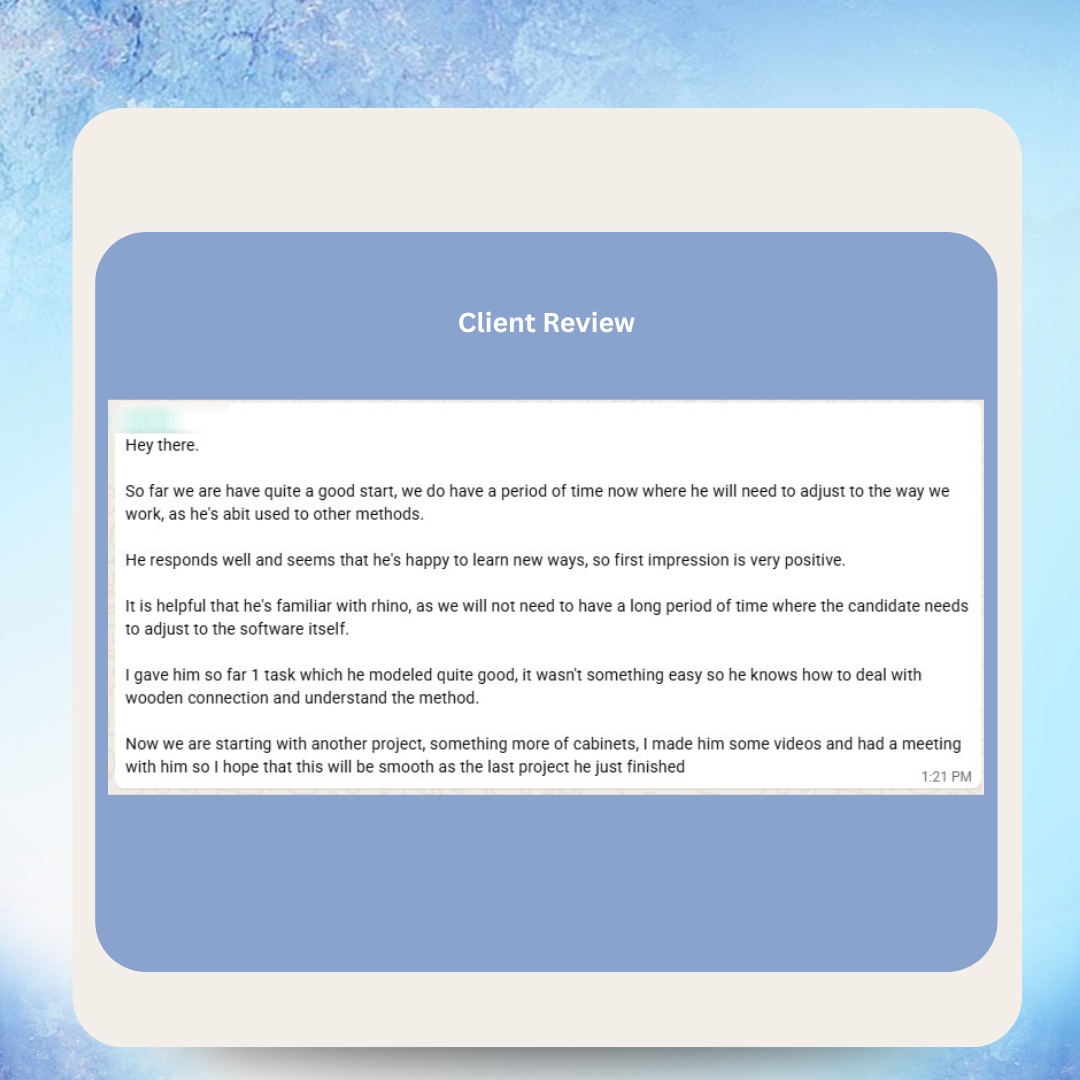
What Our Clients Say




Real Messages from Real Clients


Hear From Our VAs



As Featured In






Frequently Asked Questions
Is it legal to outsource medical billing to the Philippines under HIPAA?
Yes. HIPAA does not prohibit outsourcing medical billing to any country. What HIPAA requires is a Business Associate Agreement, appropriate safeguards (administrative, technical, physical), HIPAA training for anyone accessing PHI, and ongoing compliance monitoring. With these in place, outsourcing to the Philippines is fully compliant.
What is a Business Associate Agreement and do I need one?
A BAA is a legal contract required by HIPAA whenever a third party accesses protected health information on behalf of a covered entity. Yes, you need one for every billing VA who accesses patient data. The BAA specifies permitted uses, safeguard requirements, breach notification obligations, and termination provisions.
How much does a HIPAA-compliant medical billing VA cost?
Through VA Masters, a pre-vetted Filipino medical billing specialist costs $9-$15/hour ($1,440-$2,400/month). This represents up to 80% savings versus US billing staff at $20-$40/hour. Compliance infrastructure (BAA, training, secure access) adds minimal ongoing cost.
What technical safeguards do I need for remote billing?
VPN or VDI for secure system access, TLS 1.2+ encryption for data in transit, multi-factor authentication, unique user credentials with role-based permissions, full-disk encryption on the VA's device, audit logging enabled on all systems, and endpoint security (antivirus, automatic updates, screen lock).
Can my billing VA access our EHR system remotely?
Yes, through secure remote access methods. VPN connections or Virtual Desktop Infrastructure (VDI) solutions like Citrix or Amazon WorkSpaces provide secure, auditable access. VDI is recommended because no PHI is stored on the remote device -- the VA works within a virtual session hosted on your infrastructure.
What happens if there is a data breach with my outsourced billing?
Your BAA should require the VA or agency to notify you within 24-48 hours of discovering a breach. You then assess whether breach notification to patients and HHS is required. Having an incident response plan in place before any breach occurs enables rapid, effective response that minimizes damage.
Do Filipino medical billing VAs hold US certifications?
Many do. Filipino medical billing professionals pursue CPC (AAPC), CCS (AHIMA), and CMRS certifications -- the same certifications US billers hold. VA Masters recruits candidates with these certifications or equivalent qualifications and tests coding accuracy during our 6-stage vetting process.
How do I handle PHI when onboarding a remote billing VA?
Complete these steps before any PHI access: execute the BAA, complete HIPAA training with documented acknowledgment, configure role-based system access with minimum necessary permissions, establish encrypted communication channels, verify workspace meets physical safeguard requirements, and enable audit logging.
What medical billing software do your Filipino VAs know?
Our VAs work with AdvancedMD, Athenahealth, eClinicalWorks, Kareo/Tebra, DrChrono, NextGen, Practice Fusion, and Epic billing modules. They also use clearinghouses including Availity, Waystar, Change Healthcare, and Office Ally, plus coding tools like Encoder Pro and Find-A-Code.
Ready to Get Started?
Join 500+ businesses who trust VA Masters with their teams.
- No upfront payment required
- No setup fees
- Only pay when you are 100% satisfied with your VA

Anne is the Operations Manager at VA MASTERS, a recruitment agency specializing in Filipino virtual assistants for global businesses. She leads the end-to-end recruitment process — from custom job briefs and skills testing to candidate delivery and ongoing VA management — and has personally overseen the placement of 1,000+ virtual assistants across industries including e-commerce, real estate, healthcare, fintech, digital marketing, and legal services.
With deep expertise in Philippine work culture, remote team integration, and business process optimization, Anne helps clients achieve up to 80% cost savings compared to local hiring while maintaining top-tier quality and performance.
Email: [email protected]
Telephone: +13127660301