

How to Outsource Customer Success Management: Reduce Churn, Drive Expansion, and Scale Without the Overhead
Customer success has evolved from a support function into a revenue function. The companies that invest in customer success retain more customers, generate more expansion revenue, and achieve higher lifetime values than those that treat post-sale support as a cost center. Bain and Company research shows that increasing customer retention by just 5 percent increases profits by 25 to 95 percent. Yet building an in-house customer success team is expensive. A single US-based Customer Success Manager costs $65,000 to $95,000 in salary, plus $15,000 to $25,000 in benefits, tools, and overhead. For a SaaS company with 200 to 500 accounts, you need at least two to three CSMs to provide adequate coverage — that is $240,000 to $360,000 per year in CS team cost alone.
What if you could build that same coverage at a fraction of the cost? A pre-vetted Filipino customer success specialist through VA Masters costs $8 to $14 per hour — up to 80% savings compared to domestic CS hires. At that rate, you can afford dedicated CS coverage for every segment of your customer base, not just your enterprise accounts. You can afford proactive outreach programs that prevent churn before it starts. You can afford the health score monitoring, QBR preparation, and onboarding support that turn good customer success intentions into actual operational execution.
VA Masters has placed 1,000+ virtual assistants globally, and customer success is among our fastest-growing categories as SaaS and subscription businesses discover that Filipino CS professionals deliver the empathy, process discipline, and communication skills that the role demands. This guide covers every aspect of outsourcing customer success: which CS functions to delegate, how to structure the workflow, the tools your VA should know, how to measure impact, and the management approach that ensures your customers receive exceptional care at a sustainable cost.
Why Outsource Customer Success in 2026
The economics of customer success have reached an inflection point. As customer acquisition costs continue to rise across every channel, the relative value of retaining existing customers has increased correspondingly. The cost of acquiring a new customer is 5 to 25 times the cost of retaining an existing one. Yet many companies -- particularly SMBs and mid-market SaaS companies -- cannot afford the CS headcount needed to provide proactive success management across their entire customer base.
The Coverage Gap
Most companies with in-house CS teams provide proactive success management to their top 10 to 20 percent of accounts by revenue. The remaining 80 to 90 percent -- the long-tail SMB and mid-market customers -- receive reactive support at best. They get help when they ask for it, but nobody is proactively monitoring their usage, identifying churn risks, or driving adoption of features that would increase their value realization. This coverage gap is where the majority of churn occurs. The customers who leave are not the ones getting proactive attention -- they are the ones who silently disengage because nobody noticed.
The Cost Barrier
A US-based CSM manages 30 to 75 accounts, depending on complexity and account value. At a fully loaded cost of $80,000 to $120,000 per year, that is $1,100 to $4,000 per account per year in CS coverage cost. For accounts paying $200 to $500 per month, dedicating $100+ per month in CS cost is not economically viable. This math is why most companies under-invest in CS for their SMB segment -- the unit economics do not work with domestic labor costs.
Why Filipino CS Professionals Change the Math
At $8 to $14 per hour through VA Masters, a Filipino CS specialist costs $1,280 to $2,240 per month -- $15,360 to $26,880 per year. At a portfolio of 50 to 100 accounts, that is $150 to $540 per account per year. Suddenly, proactive CS coverage becomes economically viable for accounts at every tier. You can afford health score monitoring for your $100/month accounts. You can afford proactive outreach to at-risk customers in your SMB segment. You can afford the consistent touchpoints that prevent the silent churn that erodes your customer base month after month. For more on outsourcing the broader customer service function, our complete guide covers the full spectrum.
The Churn Math
A SaaS company with $2M ARR and 5% monthly churn loses $1.2M in revenue annually. Reducing churn by just 1 percentage point -- from 5% to 4% -- recovers $240,000 per year. A customer success VA at $1,600/month ($19,200/year) who achieves that 1-point improvement delivers a 12.5:1 ROI. In reality, well-implemented CS programs reduce churn by 2-3 points, making the ROI even more compelling.
Customer Success Functions You Can Outsource
Customer success encompasses a range of functions from reactive support to strategic account management. Here is which functions outsource effectively and which to keep in-house.
Customer Onboarding
Onboarding is the most impactful CS function to outsource because it is process-driven, repeatable, and directly affects long-term retention. Your VA follows a structured onboarding playbook: welcome emails, kickoff call scheduling, account setup verification, training session coordination, milestone tracking, and adoption check-ins at 30, 60, and 90 days. Companies that implement structured onboarding see 50 to 60 percent lower churn in the first year compared to those with ad-hoc onboarding. A dedicated onboarding VA ensures that every customer receives the same thorough introduction to your product.
Health Score Monitoring
Your VA monitors customer health scores in your CS platform -- tracking login frequency, feature adoption, support ticket volume, NPS responses, and whatever signals your health model includes. When a score drops below threshold, they trigger the appropriate intervention: an outreach email, a check-in call, a training resource, or an escalation to a senior CSM. This monitoring function is critical but tedious for senior CSMs -- it is the perfect outsourcing candidate because it requires diligence and pattern recognition rather than strategic judgment.
Proactive Outreach and Check-Ins
Regular customer touchpoints -- monthly or quarterly check-in emails, usage review calls, satisfaction surveys -- prevent the disengagement that leads to churn. Your VA executes these touchpoints according to a cadence defined by account tier. They identify customers who have not logged in recently, customers approaching renewal dates, and customers who might benefit from features they are not using. This proactive outreach is the difference between reactive support (waiting for problems) and proactive success management (preventing problems).
QBR and Business Review Preparation
Quarterly Business Reviews (QBRs) are high-value touchpoints that your senior CSMs or account managers should lead. But preparing for a QBR -- compiling usage data, creating presentation decks, summarizing support interactions, identifying growth opportunities, and drafting agenda items -- takes 2 to 4 hours per account. Your VA handles all QBR preparation so your CSM walks into the meeting with a polished deck and clear talking points. They lead the strategic conversation; your VA did the groundwork.
Renewal Management
Renewals follow a predictable process: identify upcoming renewals, assess account health, initiate renewal conversations, generate renewal quotes, track contract execution, and update systems. Your VA manages the operational side of renewals -- ensuring that no renewal date is missed, that health assessments are completed in advance, and that the renewal workflow progresses on schedule. For straightforward renewals (healthy accounts, no contract changes), your VA can manage the entire process. For at-risk or strategic renewals, they prepare the groundwork and hand off to a senior CSM.
NPS and Feedback Collection
Your VA manages the NPS survey process -- sending surveys, tracking responses, categorizing feedback, following up with detractors, and compiling results for leadership review. They identify patterns in feedback (recurring product complaints, feature requests, competitive mentions) and report trends that inform product and strategy decisions. This feedback loop is essential for customer-centric companies but often neglected because nobody has the bandwidth to manage it consistently.
Customer Advocacy and Reference Programs
Identifying promoters, requesting testimonials, coordinating case studies, managing reference databases, and facilitating peer-to-peer introductions are all CS functions that your VA can manage. These programs generate marketing value and strengthen customer relationships but require consistent effort that stretched CS teams rarely maintain.
VA Masters tests every customer success VA candidate with scenario-based assessments. Candidates must demonstrate empathetic communication in escalation scenarios, analyze a customer health dashboard and recommend interventions, draft onboarding communications, prepare a QBR summary from raw data, and handle a simulated churn-risk conversation. We evaluate their empathy, analytical skills, communication quality, and process discipline before presenting any candidate.
Customer Onboarding: The Highest-Impact CS Function to Outsource
Onboarding deserves its own section because it is the single most impactful customer success function. Research from Wyzowl shows that 86 percent of customers say they would be more likely to stay loyal to a company that invests in onboarding content. Yet many companies treat onboarding as a one-time event (a welcome email and a training session) rather than the sustained engagement process that drives long-term adoption and retention.
The Onboarding Playbook
Your VA follows a structured playbook for every new customer. Day 1: welcome email with next steps, account access confirmation, and scheduling for kickoff call. Day 3-5: kickoff call where your VA walks through account setup, key features, and immediate goals. Week 1-2: daily check-ins to ensure the customer is progressing through initial setup milestones. Week 3-4: first value milestone review -- is the customer achieving the outcomes they signed up for? Day 30: formal onboarding completion review with a satisfaction check and transition to ongoing success management. Day 60 and 90: adoption check-ins to ensure continued engagement and feature utilization.
Milestone Tracking
Define the specific milestones that indicate successful onboarding: account configured, first core action completed, team members invited, integration set up, first report generated, or whatever actions indicate that the customer has achieved initial value. Your VA tracks each customer's progress against these milestones and intervenes when progress stalls. A customer stuck at milestone 2 for two weeks gets a proactive outreach: "I noticed you have not set up the integration yet -- would you like me to walk you through it?" This proactive intervention prevents the early disengagement that is the leading predictor of first-year churn.
Scaling Onboarding with Automation and VAs
Combine automation (triggered emails, in-app messages) with your VA's personal touch. Automation handles the scalable communications; your VA handles the personal interactions that require human judgment -- answering questions, addressing concerns, providing encouragement, and escalating issues that automation cannot resolve. This hybrid approach scales efficiently while maintaining the human connection that customers value during the vulnerable onboarding period.
Health Score Monitoring and Intervention
Customer health scores aggregate multiple signals into a single metric that predicts retention risk. Your VA monitors these scores and executes intervention playbooks when scores indicate trouble.
Building Your Health Score Model
Common health score inputs include product usage frequency (daily active users, feature adoption depth), support ticket volume and severity (increasing tickets may indicate frustration), NPS or CSAT scores (direct satisfaction measurement), engagement with CS touchpoints (response to emails, attendance at reviews), contract and billing status (late payments, downgrades), and stakeholder changes (champion departures, organizational restructuring). Weight these inputs based on their predictive power for your specific customer base. Your VA does not need to build the model -- your CS leader defines it -- but your VA needs to understand what each component means and how changes in the score translate to customer risk.
Intervention Playbooks by Risk Level
Define specific actions for each risk level. Green (healthy): standard touchpoint cadence, share relevant content, identify expansion opportunities. Yellow (at risk): increase touchpoint frequency, schedule a check-in call, investigate the root cause of the score decline. Red (critical): immediate escalation to senior CSM, executive sponsor outreach, create a save plan with specific actions and timelines. Your VA executes green and yellow playbooks independently. Red accounts are escalated with the context and data the senior CSM needs to engage effectively.
Pattern Recognition Across Accounts
As your VA monitors dozens or hundreds of accounts, they develop pattern recognition that individual account management misses. They notice when a product update correlates with score drops across multiple accounts. They identify customer segments that consistently struggle with specific features. They spot seasonal patterns in engagement. These patterns, reported to your CS leader, inform strategic decisions about product, onboarding, and resource allocation.
See What Our Clients Have to Say
Renewal Management and Expansion Revenue
Renewals and expansion are where CS directly impacts revenue. Your VA manages the operational infrastructure that ensures renewals happen on time and expansion opportunities are identified and pursued.
Renewal Pipeline Management
Your VA maintains a renewal pipeline -- tracking every account's contract end date, starting renewal outreach 90 days in advance, and managing the workflow through completion. They generate renewal quotes, track contract execution, and update your CRM and billing systems. For standard renewals with healthy accounts, your VA handles the entire process. For at-risk renewals, they prepare a briefing for the senior CSM who manages the save conversation.
Expansion Opportunity Identification
Your VA identifies expansion signals: customers approaching usage limits, customers requesting features available in higher tiers, customers with growing teams that could benefit from additional licenses, and customers achieving strong ROI who might be receptive to upsell conversations. They flag these opportunities in your CRM and schedule conversations with the appropriate team member (CSM, account manager, or sales representative) to pursue them.
Net Revenue Retention
The ultimate measure of CS effectiveness is net revenue retention (NRR) -- the percentage of recurring revenue retained after accounting for churn, contraction, and expansion. Best-in-class SaaS companies achieve NRR above 110 percent, meaning expansion revenue exceeds churn and contraction. Your outsourced CS team contributes to NRR by reducing churn through proactive health monitoring, preventing contraction through value demonstration, and driving expansion through opportunity identification. For related reading on customer service outsourcing costs, see our guide on outsourcing customer service to the Philippines.
CS Tools and Platforms Your VA Should Know
Customer success operations depend on specialized tools. Here are the platforms your VA should be proficient with.
Customer Success Platforms
- Gainsight: Health scores, playbooks, journey orchestration, revenue intelligence
- ChurnZero: Real-time alerts, usage tracking, in-app communication, renewal management
- Totango: Customer segments, SuccessPlays, health scoring, engagement tracking
- Vitally: Product analytics, health scores, project management for CS teams
- Planhat: Revenue management, health scoring, playbooks, dashboards
CRM and Communication
- Salesforce: Account management, opportunity tracking, reporting
- HubSpot: Contact management, email sequences, deal tracking
- Intercom: In-app messaging, customer communication, knowledge base
- Zendesk: Support ticket management, customer satisfaction tracking
- Calendly/Chili Piper: Meeting scheduling for customer calls
Analytics and Reporting
- Mixpanel/Amplitude: Product usage analytics
- Looker/Tableau: Custom dashboards and reporting
- Google Sheets/Excel: Ad-hoc analysis and tracking
VA Masters verifies tool proficiency during our recruitment process. If your CS tech stack includes platforms the VA has not used before, the fundamental concepts (health scores, customer segments, playbook execution) transfer across platforms with a 1 to 2 week learning curve.
Cost of Outsourcing Customer Success
A pre-vetted Filipino customer success specialist through VA Masters costs $8 to $14 per hour -- up to 80% savings compared to domestic CS professionals.
Cost Comparison
- Filipino CS associate (VA Masters): $8-$11/hour ($1,280-$1,760/month)
- Filipino CS manager (VA Masters): $11-$14/hour ($1,760-$2,240/month)
- US Customer Success Manager: $35-$50/hour ($5,600-$8,000/month before benefits)
- US Senior CSM: $45-$65/hour ($7,200-$10,400/month before benefits)
- US VP of Customer Success: $60-$90/hour ($9,600-$14,400/month before benefits)
Team Cost Scenarios
- Starter CS team (1 VA, 50-100 accounts): $1,280-$2,240/month
- Growth CS team (2 VAs, 150-300 accounts): $2,560-$4,480/month
- Scale CS team (3-4 VAs + 1 domestic CS leader): $5,000-$8,500/month
The scale CS team model is particularly powerful: a domestic CS leader provides strategic oversight and handles escalations while Filipino CS associates manage the operational portfolio. The total cost is $60,000 to $102,000 per year -- less than the cost of a single US-based CSM -- for coverage across 200 to 400 accounts. For the full financial analysis, explore our ROI of hiring a virtual assistant guide.

Hiring Cris as our SEO Specialist completely changed everything. She handles WordPress management, technical SEO, and creates high-quality travel content that actually converts. She's launched new destination sites in two months, each ranking faster than I expected.What I love most is how proactive Cris is. She doesn't just execute tasks; she comes with SEO strategies and continuously improves our performance. VA Masters made the process seamless, finding someone who truly understands the tourism industry.Our organic traffic increased, and we're ranking for competitive keywords. Cris was able to finish projects on time, and writes good content even if it's in a foreign language.If you need someone who understands both technical and creative SEO, I can't recommend VA Masters enough. It's been a game-changer for scaling our operations.
Segmenting Customer Success by Account Tier
Effective CS outsourcing requires a segmentation strategy that matches the level of service to the value of each account. Here is how to structure it.
Enterprise Tier (Top 10-20% by Revenue)
These accounts justify dedicated, strategic CS engagement. Your domestic CS leader or senior CSM owns the relationship, conducts QBRs, and manages strategic conversations. Your Filipino VA handles the operational support: QBR preparation, health score monitoring, meeting scheduling, data compilation, and follow-up action tracking. The VA amplifies the senior CSM's effectiveness by handling 60 to 70 percent of the time-consuming operational work.
Mid-Market Tier (Next 30-40%)
Your Filipino CS associate manages these accounts directly, following structured playbooks for onboarding, health monitoring, and renewal management. They conduct regular check-in calls, respond to account inquiries, and escalate issues that exceed their scope. Each VA manages 30 to 60 mid-market accounts, providing the proactive coverage that this segment typically lacks.
SMB Tier (Bottom 40-50%)
Your VA manages SMB accounts through a tech-touch model with personal intervention at key moments. Automated email sequences handle routine touchpoints. Your VA monitors health scores across the segment and personally reaches out when accounts show risk signals, approach renewal dates, or exhibit expansion potential. One VA can effectively manage 80 to 150 SMB accounts in this hybrid model.
The Coverage Revolution
Before outsourcing, most companies provide proactive CS to 10 to 20 percent of accounts. After outsourcing, they provide it to 100 percent. That coverage revolution is where the churn reduction and expansion revenue growth come from. The accounts that were previously ignored -- the ones quietly churning because nobody noticed their declining engagement -- now receive the attention that prevents disengagement.
Detailed Job Posting
Custom job description tailored to your specific needs and requirements.
Candidate Collection
1,000+ applications per role from our extensive talent network.
Initial Screening
Internet speed, English proficiency, and experience verification.
Custom Skills Test
Real job task simulation designed specifically for your role.
In-Depth Interview
Culture fit assessment and communication evaluation.
Client Interview
We present 2-3 top candidates for your final selection.
Have Questions or Ready to Get Started?
Our team is ready to help you find the perfect match.
Get in Touch →Measuring Customer Success Outsourcing Impact
Customer success outsourcing should produce measurable improvements in retention, expansion, and customer satisfaction. Here are the metrics to track and the benchmarks to target.
Retention Metrics
- Gross revenue retention (GRR): Revenue retained excluding expansion. Target improvement: 2-5 points in the first year.
- Logo retention: Percentage of customers who renew. Target: 85-95% depending on segment.
- Time-to-churn extension: Average customer lifetime should increase as proactive CS prevents early churn.
Expansion Metrics
- Net revenue retention (NRR): Revenue retained including expansion. Target: 100-110%+ for SaaS.
- Expansion opportunities identified: Track opportunities your VA flags per month.
- Expansion conversion rate: Percentage of identified opportunities that convert to revenue.
Operational Metrics
- Onboarding completion rate: Percentage of new customers who complete all onboarding milestones. Target: 85%+.
- Time to first value: How quickly new customers achieve their first meaningful outcome. Target: reduce by 20-30%.
- Health score distribution: Percentage of accounts in green/yellow/red. Target: increasing green, decreasing red over time.
- Touchpoint cadence compliance: Percentage of scheduled touchpoints completed on time. Target: 95%+.
Customer Satisfaction
- NPS: Net Promoter Score should improve as proactive engagement increases.
- CSAT for CS interactions: Satisfaction with specific CS touchpoints. Target: 4.5+/5.0.
- Customer effort score: How easy it is for customers to get help. Should improve with proactive outreach.
Managing Your Customer Success VA
Customer success requires a blend of empathy, process discipline, and analytical thinking. Managing your CS VA to excel in all three areas requires intentional coaching and structured operations.
Playbook-Driven Operations
Document playbooks for every CS scenario: new customer onboarding, health score decline, approaching renewal, expansion signal detected, customer complaint, stakeholder change, and product issue. Each playbook defines the trigger, the steps, the communication templates, the escalation criteria, and the expected outcome. Your VA follows these playbooks consistently, ensuring that every customer receives the appropriate response regardless of which VA is managing the account.
Empathy Training
Customer success requires genuine empathy -- understanding the customer's perspective, acknowledging their challenges, and communicating with warmth and care. Filipino CS professionals generally excel in empathy (cultural emphasis on hospitality and interpersonal harmony), but specific training on your customer base's challenges, language, and emotional triggers enhances their effectiveness. Role-play scenarios where customers are frustrated, confused, or considering churning, and coach your VA on the communication approach that turns negative situations into positive outcomes.
Escalation Protocols
Define clear escalation criteria: when to handle independently, when to consult with you, and when to escalate to senior leadership. Typical escalation triggers include churn threats, legal or contract disputes, product issues affecting multiple customers, executive stakeholder complaints, and situations that exceed the VA's authority or expertise. Over-escalation wastes your time; under-escalation risks customer relationships. Calibrate the threshold over the first month based on real situations. For broader guidance on managing remote teams in CS roles, see our complete remote team guide.
VA Masters supports customer success placements with CS-specific onboarding resources, including playbook templates, health score monitoring frameworks, and communication best practices for customer-facing roles. Our recruitment process screens specifically for the empathy, communication quality, and analytical skills that customer success demands.
| Feature | VA MASTERS | Others |
|---|---|---|
| Custom Skills Testing | ✓ | ✗ |
| Dedicated Account Manager | ✓ | ✗ |
| Ongoing Training & Support | ✓ | ✗ |
| SOP Development | ✓ | ✗ |
| Replacement Guarantee | ✓ | ~ |
| Performance Reviews | ✓ | ✗ |
| No Upfront Fees | ✓ | ✗ |
| Transparent Pricing | ✓ | ~ |
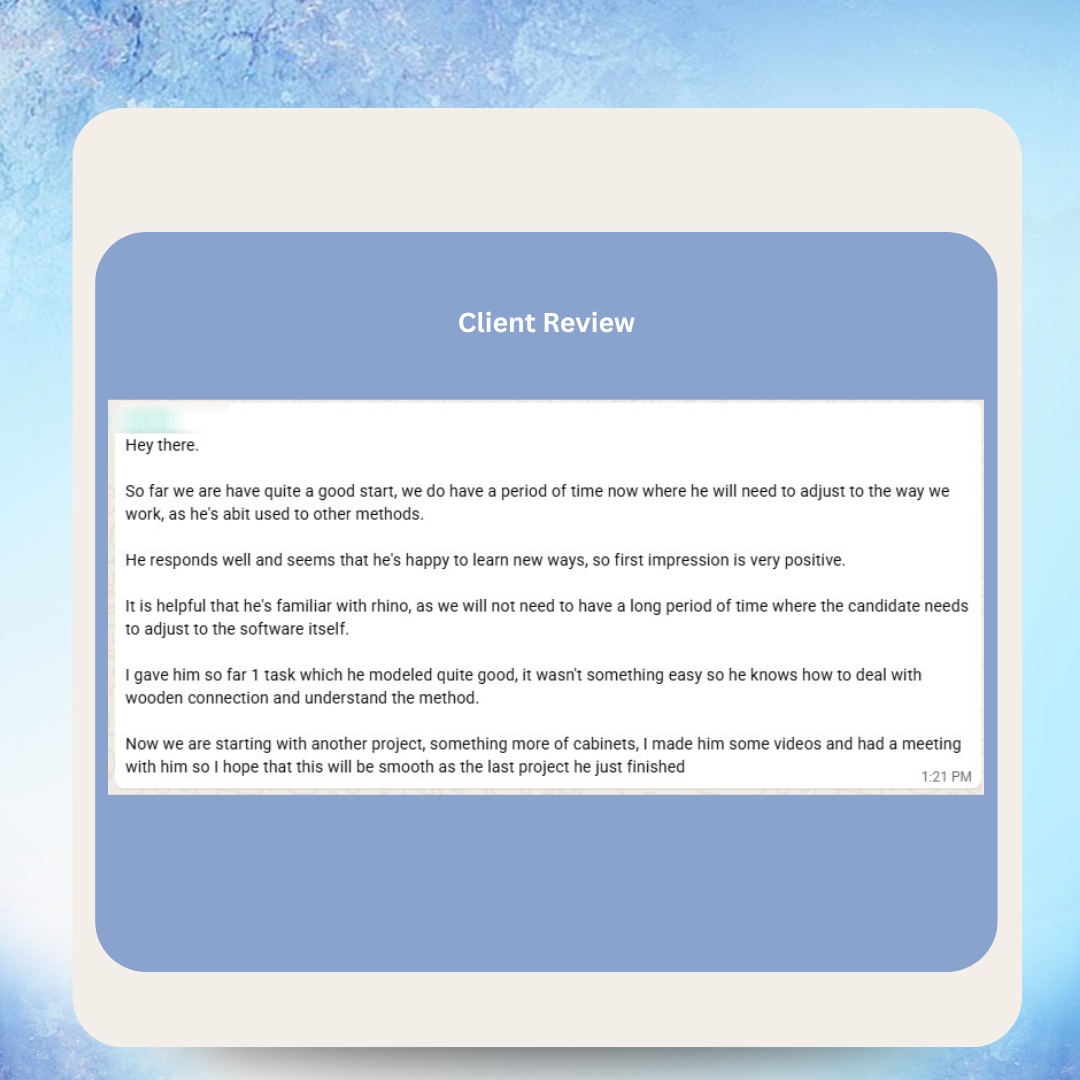
What Our Clients Say




Real Messages from Real Clients


Hear From Our VAs


As Featured In






Frequently Asked Questions
What customer success tasks can I outsource?
Customer onboarding, health score monitoring, proactive check-in calls and emails, QBR preparation, renewal pipeline management, NPS/CSAT survey management, expansion opportunity identification, and customer advocacy programs. Most companies start with onboarding and health monitoring, then expand.
How much does a customer success VA cost?
Through VA Masters, a pre-vetted Filipino CS specialist costs $8-$14/hour ($1,280-$2,240/month). This represents up to 80% savings versus US CSMs at $35-$65/hour. A 2-person CS team costs $2,560-$4,480/month and covers 150-300 accounts.
How many accounts can one CS VA manage?
It depends on the tier. Enterprise accounts with intensive engagement: 15-25. Mid-market with structured playbooks: 30-60. SMB with tech-touch plus intervention: 80-150. The right ratio depends on your product complexity and customer expectations.
Can a Filipino VA conduct customer calls and QBRs?
Filipino CS VAs conduct regular check-in calls and operational reviews with customers. For strategic QBRs with enterprise accounts, your VA prepares all materials and data; your senior CSM leads the conversation. For mid-market QBRs, trained Filipino VAs can lead them independently.
Will outsourcing CS affect my customer relationships?
When done correctly, it improves them. Customers who were previously receiving no proactive outreach now get regular check-ins, health monitoring, and timely support. The key is positioning your VA as a dedicated team member, not a third-party contractor.
What CS platforms do your VAs know?
Gainsight, ChurnZero, Totango, Vitally, Planhat, Salesforce, HubSpot, Intercom, Zendesk, and standard analytics tools. VA Masters verifies tool proficiency during recruitment. Platform transitions typically take 1-2 weeks for experienced CS professionals.
How do I maintain CS quality with an outsourced team?
Playbook-driven operations ensure consistency. Weekly call reviews maintain communication quality. Customer satisfaction scores (CSAT after CS interactions) provide direct feedback. Health score improvements and retention metrics demonstrate impact. Regular calibration sessions keep the team aligned with your standards.
How quickly can a CS VA impact churn?
Onboarding improvements show impact within 60-90 days (reduced early churn). Health score monitoring and intervention start preventing churn within 30-60 days. Renewal management improvements are visible at the first renewal cycle your VA manages. Most companies see measurable churn reduction within the first quarter.
Should I keep any CS functions in-house?
Keep strategic functions in-house: CS strategy, enterprise relationship ownership, executive escalation management, and product feedback synthesis. Outsource operational functions: onboarding execution, health monitoring, data preparation, renewal operations, and routine touchpoints. One domestic CS leader plus 2-3 Filipino CS VAs is a powerful model.
What is the ROI of outsourcing customer success?
A CS VA at $1,600/month who reduces churn by 1 percentage point on $2M ARR saves $240,000/year — a 12.5:1 ROI. Including expansion revenue from opportunities the VA identifies, the total impact often exceeds 15:1 to 20:1 ROI within the first year.
Ready to Get Started?
Join 500+ businesses who trust VA Masters with their teams.
- No upfront payment required
- No setup fees
- Only pay when you are 100% satisfied with your VA

Anne is the Operations Manager at VA MASTERS, a boutique recruitment agency specializing in Filipino virtual assistants for global businesses. She leads the end-to-end recruitment process — from custom job briefs and skills testing to candidate delivery and ongoing VA management — and has personally overseen the placement of 1,000+ virtual assistants across industries including e-commerce, real estate, healthcare, fintech, digital marketing, and legal services.
With deep expertise in Philippine work culture, remote team integration, and business process optimization, Anne helps clients achieve up to 80% cost savings compared to local hiring while maintaining top-tier quality and performance.
Email: [email protected]
Telephone: +13127660301