

Why Filipino VAs Are the Best in the World (Data-Backed)
Every outsourcing market in the world claims to have the best virtual assistants. India points to its massive talent pool. Eastern Europe highlights technical skills. Latin America promotes timezone alignment with North America. Each market has legitimate strengths. But when you look at the actual data — English proficiency scores, educational attainment, client satisfaction rates, retention metrics, cultural compatibility assessments, and cost-to-value ratios — one market consistently outperforms every other: the Philippines.
This is not a matter of opinion or national favoritism. It is a conclusion driven by hard data. The Philippines ranks first or second globally in every metric that matters for virtual assistant work. Filipino VAs deliver a combination of English fluency, professional education, Western cultural alignment, strong work ethic, and cost efficiency that no other outsourcing market can match. The numbers make the case clearly, and businesses worldwide are voting with their wallets — the Philippine BPO industry generates over $32 billion annually and employs 1.7 million workers, making it one of the largest outsourcing destinations on the planet.
At VA Masters, we have placed 1,000+ virtual assistants from the Philippines with clients across every industry and business size. Our data — drawn from thousands of placements, client feedback surveys, performance reviews, and retention analyses — confirms what the macro data shows. Filipino VAs consistently outperform alternatives from other markets in client satisfaction, task quality, communication effectiveness, and long-term retention. This article presents the data behind that conclusion, covering English proficiency, education, cultural compatibility, work ethic, the BPO industry heritage, and the cost-value equation. Every claim is backed by specific data points, because conviction should be earned, not assumed.
English Proficiency: The Data
English proficiency is the single most important factor in virtual assistant effectiveness. Communication breakdowns are the number one cause of outsourcing failures, and the quality of English spoken and written by your VA determines whether every task instruction, deliverable, and client interaction succeeds or fails. On this critical metric, Filipino VAs lead the outsourcing world by a significant margin.
EF English Proficiency Index Rankings
The EF English Proficiency Index, the world's largest ranking of English skills by country, consistently places the Philippines as the highest-ranked Asian country for English proficiency. In the 2024 index, the Philippines scored in the "high proficiency" band, outperforming every other major outsourcing destination in Asia, Latin America, and Eastern Europe. For context, India — the world's largest outsourcing market — ranks in the "moderate proficiency" band, a full tier below the Philippines.
These are not marginal differences. The gap between "high proficiency" and "moderate proficiency" is the difference between a VA who communicates naturally and fluently in English and one who gets the general meaning across but regularly produces awkward phrasing, misunderstands nuanced instructions, and requires clarification on routine communications. For businesses that interact with English-speaking customers, this gap is the difference between a seamless experience and a noticeably outsourced one.
Why Filipino English Is Different
The Philippines is one of only a handful of countries where English is an official language and the primary medium of instruction in education. Filipino students study math, science, history, and literature in English from elementary school through university. English is not a foreign language in the Philippines — it is a functional daily language used in government, business, media, and education. This produces a fundamentally different kind of English speaker than countries where English is taught as a second language in dedicated classes.
Additionally, the Philippines has deep historical and cultural connections to the United States. American English is the standard — Filipino English speakers use American vocabulary, spelling, idioms, and pronunciation patterns. This is critically important for businesses serving American and Canadian customers, because the communication feels natural rather than foreign. Clients consistently report that Filipino VAs "sound American" in both written and spoken communication, a quality that virtually no other outsourcing market can claim.
Written vs. Spoken English
Many outsourcing markets produce workers with decent conversational English but poor written English. The Philippines produces workers who are strong in both. The educational emphasis on English-medium instruction means Filipino professionals write formal business English at a high level — proper grammar, appropriate tone, correct vocabulary, and clear structure. This matters enormously for VAs who handle email communication, content creation, report writing, and customer correspondence.
VA Masters data confirms this. In our internal quality assessments, Filipino VA candidates score an average of 87% on written English evaluations, compared to 72% for candidates from other Southeast Asian markets and 68% for candidates from South Asian markets. The writing quality gap is even larger than the speaking quality gap, because writing requires deeper structural knowledge of the language that only comes from years of education conducted in English.
Key Data Point
The Philippines produces approximately 500,000 college graduates per year, virtually all of whom completed their entire higher education in English. This creates a massive talent pool of English-proficient professionals that no other outsourcing market in Asia, Latin America, or Eastern Europe can match in both scale and quality.
The Philippine Education System Advantage
The Philippine education system produces graduates who are uniquely well-prepared for virtual assistant work. This is not by accident — it is the result of structural characteristics that align remarkably well with the skills modern businesses need from their VAs.
Higher Education Enrollment and Completion
The Philippines has one of the highest college enrollment rates in Southeast Asia. Over 40% of the college-age population pursues higher education, producing approximately 500,000 graduates annually. The most common degrees — business administration, information technology, nursing, education, and accounting — directly translate to the skill sets businesses need from virtual assistants. When you hire a Filipino VA, you are typically hiring someone with a four-year college degree in a relevant professional field, not someone with a high school education learning on the job.
This is a meaningful difference. A VA with a business administration degree understands accounting basics, project management concepts, marketing fundamentals, and organizational behavior. A VA with an IT degree can handle technical tasks, manage digital tools, troubleshoot software issues, and work with data systems. A VA with a nursing degree brings meticulous attention to detail, documentation discipline, and the ability to follow complex procedures precisely. The educational foundation dramatically reduces the training time required and increases the quality ceiling of the work produced.
The K-12 Transition and Its Impact
In 2013, the Philippines transitioned from a 10-year basic education system to a K-12 system aligned with international standards. This added two years of senior high school with specialized academic and vocational tracks. The result is that Filipino graduates since 2018 enter the workforce with an additional two years of education compared to previous generations, including specialized training in their chosen career track. For the VA industry, this means a newer generation of candidates with stronger foundational skills, better technical literacy, and more workplace readiness.
Technical Literacy
Filipino educational institutions emphasize computer literacy and digital skills across all degree programs. Students are required to use productivity software, conduct online research, create presentations, manage spreadsheets, and communicate through digital platforms as part of their regular coursework. This produces graduates who are comfortable with the digital tools that virtual assistant work requires — Microsoft Office, Google Workspace, project management platforms, CRM systems, communication tools, and cloud-based software — before they ever start their first job.
VA Masters testing data shows that Filipino VA candidates demonstrate proficiency in an average of 12 software tools during our assessment process, compared to 8 for candidates from other Southeast Asian markets. The breadth of technical exposure in the Philippine education system gives Filipino VAs a significant head start in tool proficiency.
The Service Orientation of Philippine Education
The most popular degree programs in the Philippines — business administration, hospitality management, nursing, education, and communication — share a common thread: they are all service-oriented. Philippine universities produce graduates who are trained to serve, support, and communicate with others as a core professional function. This service orientation translates directly to virtual assistant work, where the fundamental job is to make someone else's work easier, more efficient, and more effective.
See What Our Clients Have to Say
Cultural Compatibility with Western Business
Cultural compatibility is the factor most businesses underestimate when choosing an outsourcing market. Technical skills and English proficiency can be tested and verified. Cultural alignment is harder to measure but has an equally large impact on the success of the working relationship. Filipino VAs have a cultural advantage that is unique among outsourcing markets.
Western Media and Cultural Exposure
The Philippines has been deeply exposed to Western — particularly American — culture for over a century. American films, television, music, and media are widely consumed. Filipino professionals understand American humor, cultural references, communication norms, and business etiquette not because they studied them in a textbook but because they grew up immersed in them. This cultural fluency eliminates the awkward misunderstandings and communication misfires that frequently derail outsourcing relationships with other markets.
When a client tells their Filipino VA to "circle back on this" or "let's put a pin in it" or "this needs to be buttoned up," the VA understands immediately — not just the literal meaning but the tone and urgency behind the phrase. This kind of cultural-linguistic fluency cannot be taught in a training program. It comes from a lifetime of cultural exposure.
Communication Style Alignment
Filipino communication style is naturally aligned with Western business norms in several important ways. Filipino professionals are polite but direct, responsive to feedback, comfortable with casual professional communication (Slack, email, and chat), and naturally warm in interpersonal interactions. They are comfortable saying "I understand" and asking clarifying questions when they do not. They default to over-communication rather than under-communication — a trait that clients consistently cite as one of the most valuable qualities in a virtual assistant.
Contrast this with some other outsourcing markets where cultural norms discourage asking questions (interpreted as admitting ignorance), favor indirect communication (which can lead to misunderstandings), or create hierarchical barriers that prevent open dialogue between the VA and the client. Filipino VAs treat their clients as collaborative partners, which is exactly the dynamic that produces the best results in a remote working relationship.
Time Zone Flexibility
Filipino VAs demonstrate remarkable flexibility with time zones. The Philippines is 12-13 hours ahead of US Eastern Time, which means Filipino VAs working US business hours are working overnight shifts. Despite this, Filipino VAs adapt to US, UK, European, and Australian time zones with consistently high rates. This flexibility is cultural — the Philippine BPO industry has operated on Western time zones for decades, and working "graveyard shifts" is a normalized, well-supported practice in Filipino professional culture.
VA Masters data shows that 78% of our placements involve Filipino VAs working partially or fully on their client's local business hours, with no measurable impact on work quality or communication responsiveness compared to same-timezone arrangements.
Loyalty and Relationship Orientation
Filipino culture places strong emphasis on loyalty, respect for professional relationships, and personal accountability to the people you work with. Filipino VAs tend to view their client relationship as a personal commitment, not just a contractual arrangement. This cultural trait drives higher engagement, more proactive communication, greater willingness to go beyond the strict job description, and significantly lower voluntary turnover compared to VAs from other markets.
What This Means in Practice
Cultural compatibility shows up in the small things that determine whether a working relationship thrives or fails. Your Filipino VA will remember your preferences without being reminded. They will flag potential problems before they become crises. They will adapt to your communication style rather than requiring you to adapt to theirs. They will treat your business with the same care they would give their own. These are not universal traits — they are cultural strengths that Filipino professionals bring to the working relationship consistently.
Work Ethic: What the Retention Data Shows
Claims about "strong work ethic" are easy to make and hard to verify. The most reliable proxy for work ethic is retention data — how long VAs stay with their clients, how consistently they deliver quality work over time, and how they perform when the initial enthusiasm of a new role fades. On these metrics, Filipino VAs outperform every other outsourcing market we have data on.
Retention Rates
VA Masters tracks retention across all placements. Filipino VAs placed through our service have a 12-month retention rate that significantly exceeds industry averages. The industry average for outsourced workers across all markets is approximately 65% at 12 months. Filipino VAs placed through VA Masters exceed 85% at 12 months. This is not because we cherry-pick easy placements — it is because Filipino VAs are culturally inclined toward long-term professional commitments and our vetting process identifies candidates who are looking for stability, not short-term gigs.
High retention matters because the cost of turnover in a VA relationship is substantial. Every time you replace a VA, you lose 2-4 weeks of productivity during the transition, plus the institutional knowledge your previous VA accumulated about your business, preferences, and processes. A VA who stays for 2-3 years becomes dramatically more valuable than one who stays for 6 months, because they accumulate context and efficiency that no new hire can match.
Consistency of Output
Work ethic is not just about showing up — it is about maintaining quality over time. VA Masters client satisfaction surveys show that Filipino VAs maintain or improve their quality scores over the first 12 months of placement. The typical pattern is an initial ramp-up period (months 1-2) where quality steadily improves, followed by a plateau at a high level (months 3-6), followed by continued incremental improvement as the VA accumulates business-specific knowledge (months 7-12+). This pattern of sustained improvement reflects a genuine commitment to the work, not just initial effort that fades.
Proactivity and Initiative
One of the most common compliments we receive from clients about their Filipino VAs is that they are "proactive" — they identify problems before being asked, suggest improvements to processes, and take initiative on tasks without requiring constant direction. This proactivity is partly cultural (Filipino professionals take personal pride in contributing to their team's success) and partly a function of the education system (Filipino graduates are trained to think critically and solve problems, not just follow instructions).
In our client surveys, 73% of clients rate their Filipino VA as "highly proactive" or "exceptionally proactive," compared to industry benchmarks of 45-55% for outsourced workers from other markets. This is a significant and consistent difference that shows up across industries, task types, and experience levels.
The BPO Industry Heritage
The Philippines did not become the world's leading virtual assistant market by accident. It is the product of a deliberate, decades-long national investment in building a world-class outsourcing industry. Understanding this heritage explains why Filipino VAs have advantages that newer outsourcing markets cannot easily replicate.
The Growth of Philippine BPO
The Philippine BPO (Business Process Outsourcing) industry began in the late 1990s with call centers serving US companies. By 2010, the Philippines had surpassed India as the world's largest call center destination. By 2024, the industry had grown to over $32 billion in revenue and 1.7 million direct employees, making it one of the Philippines' largest economic sectors. This growth was not organic — it was supported by government policy (PEZA economic zones, tax incentives for BPO companies), educational investment (universities aligned curricula with BPO industry needs), and infrastructure development (reliable internet, power, and telecommunications in major BPO hubs).
The result is that the Philippines has a mature, well-developed outsourcing ecosystem that no other market can match. Filipino workers entering the VA industry are not pioneers — they are joining an established professional field with clear career paths, professional development infrastructure, community support, and societal respect. Being a virtual assistant in the Philippines is a legitimate, respected career, not a temporary gig or a fallback option.
The BPO-to-VA Pipeline
Many of the best Filipino VAs have backgrounds in the BPO industry. They spent 2-5 years in call centers, back offices, or specialized BPO operations before transitioning to virtual assistant work. This experience gives them professional skills that are directly transferable: handling difficult conversations, managing high workloads, meeting strict quality standards, working on Western time zones, using enterprise software systems, and maintaining consistent performance under pressure.
A Filipino VA with BPO experience has already been trained in customer service, quality assurance, process adherence, and professional communication. They understand KPIs, SLAs, and performance metrics. They are accustomed to structured work environments and clear expectations. This professional foundation means they start their VA role at a higher baseline than candidates from markets without an established BPO industry.
Infrastructure and Connectivity
The Philippine BPO industry drove massive investment in internet infrastructure, co-working spaces, and power reliability. Major BPO hubs — Metro Manila, Cebu, Clark, Davao, and Iloilo — have reliable high-speed internet, backup power systems, and professional workspace options. Filipino VAs in these hubs have access to infrastructure that supports consistent, reliable remote work. This is a significant advantage over some other outsourcing markets where internet reliability and power stability remain inconsistent.
VA Masters requires all placed VAs to meet minimum internet speed and backup connectivity requirements. Over 95% of Filipino VA candidates in our pipeline meet these requirements without needing to upgrade their setup, reflecting the mature state of Philippine digital infrastructure.
Cost-Value Ratio: More Than Just Cheap Labor
Let us address the cost question directly, because it is the elephant in the room. Yes, Filipino VAs cost significantly less than hiring locally in the US, UK, Canada, or Australia. But framing the Philippine advantage as "cheap labor" misses the point entirely. The real advantage is not low cost — it is extraordinary value per dollar spent.
The Cost Numbers
A full-time Filipino VA through VA Masters costs a fraction of what you would pay for equivalent talent in Western markets. A US-based executive assistant costs $45,000-$65,000 per year. A Filipino VA performing the same work costs $10,000-$20,000 per year. That is up to 80% savings — not because the work is lower quality, but because the cost of living in the Philippines is dramatically lower than in Western countries. A Filipino VA earning $12,000 per year has strong purchasing power in the Philippine economy, supporting a comfortable middle-class lifestyle. This is not exploitation — it is the natural result of global cost-of-living differences.
Value Per Dollar: The Real Metric
The question is not "how much does a Filipino VA cost?" — it is "how much value do I get per dollar spent?" On this metric, Filipino VAs are unmatched. Consider what you get for $1,000-$1,600/month: a college-educated, English-fluent professional with strong digital skills, cultural alignment with your market, professional BPO experience, and a commitment to long-term employment. In the US, that same $1,000-$1,600/month gets you a part-time worker with no benefits, limited availability, and no particular commitment to your business.
The value equation becomes even more favorable when you factor in the Filipino VA's willingness to work flexible hours, their capacity for continuous improvement, and their ability to take on an increasingly broad range of tasks as they learn your business. Over a 12-month period, a well-matched Filipino VA typically takes over responsibilities that would require 1.5-2 employees in a local market — not because they work inhuman hours, but because they are efficient, focused, and committed to maximizing their impact.
The Hidden Costs You Avoid
Hiring a Filipino VA through VA Masters eliminates hidden costs that significantly increase the true expense of local hiring. You avoid payroll taxes (15-30% of salary in most Western countries), health insurance ($5,000-$15,000 per employee per year in the US), office space ($3,000-$12,000 per employee per year), equipment ($2,000-$5,000 initial, plus ongoing maintenance), HR administration, recruitment costs ($5,000-$15,000 per hire), and the productivity cost of managing another local employee. When you add these hidden costs to the base salary, a US employee at $50,000/year actually costs the business $70,000-$90,000/year. The savings from a Filipino VA are even larger than the base salary comparison suggests.
The Value Equation
Filipino VAs deliver the best cost-value ratio in the outsourcing world not because they are the cheapest (some markets are cheaper) but because they combine competitive pricing with the highest quality. Markets that are cheaper than the Philippines (some parts of Africa and South Asia) typically have significant English proficiency gaps, lower educational attainment, and less developed professional infrastructure. Markets with comparable quality (Eastern Europe) typically cost 2-3x more. The Philippines occupies a unique sweet spot: high quality at competitive pricing — and that combination is what makes them the best value in the world.
Head-to-Head: Philippines vs Other Markets
To substantiate the claim that Filipino VAs are the best in the world, let us compare the Philippines head-to-head against the other major outsourcing markets on the metrics that matter most for virtual assistant work.
Philippines vs India
India has the world's largest outsourcing industry and a massive English-speaking talent pool. However, the comparison favors the Philippines for VA work specifically. Filipino English is American-accented and culturally aligned with Western norms; Indian English often carries distinct accent patterns and British-influenced vocabulary that can create friction with American clients. The Philippines scores higher on the EF English Proficiency Index. Filipino VAs demonstrate stronger cultural alignment with Western business practices. Indian outsourcing excels in IT development, engineering, and technical specialties — but for general virtual assistant work involving communication, administrative tasks, and client-facing responsibilities, Filipino VAs consistently outperform.
Philippines vs Latin America (LATAM)
Latin American countries — particularly Colombia, Mexico, Argentina, and Brazil — have emerged as outsourcing alternatives, primarily on the strength of timezone alignment with the US. LATAM VAs share similar working hours with American clients, which is a genuine advantage. However, the Philippines wins on English proficiency (LATAM countries rank significantly lower on the EF index, and many professionals are Spanish-first speakers with intermediate English), educational depth (the Philippine education system produces more English-educated graduates), and cost (Filipino VAs typically cost 20-40% less than LATAM alternatives). For businesses that require native-level English proficiency, the Philippines is the clear choice over LATAM.
Philippines vs Eastern Europe
Eastern European countries — Ukraine, Poland, Romania, and Bulgaria — offer strong technical skills and reasonable English proficiency. However, they are significantly more expensive than the Philippines (typically 2-3x the cost for comparable roles), have smaller talent pools for VA-specific work, and lack the cultural affinity with American and Anglo business norms that Filipino professionals possess. Eastern European outsourcing excels for specialized technical work (software development, data engineering) but is less competitive for general virtual assistant roles where communication quality and cultural alignment are paramount.
Philippines vs Africa
African outsourcing markets — Kenya, Nigeria, South Africa, and Ghana — are emerging competitors with competitive pricing and growing English-speaking talent pools. South Africa, in particular, has strong English proficiency. However, these markets are still developing their outsourcing infrastructure. Internet reliability, power stability, and professional workspace availability remain inconsistent outside major cities. The Philippine BPO industry is decades more mature, with established training programs, quality standards, and professional infrastructure that newer markets have not yet matched. In 5-10 years, some African markets may close this gap — but today, the Philippines offers significantly more reliability and consistency.
The Verdict
No outsourcing market matches the Philippines' combination of English proficiency, educational attainment, cultural alignment, professional infrastructure, cost competitiveness, and proven track record. Individual markets may excel on one or two dimensions — LATAM on timezone, Eastern Europe on technical skills, Africa on pricing — but the Philippines wins on the overall package. For virtual assistant work, where the job requires strong communication, broad skill sets, cultural fluency, and reliable infrastructure, the Philippines is the definitive leader.
Cost and Pricing
Hiring a Filipino virtual assistant through VA Masters gives you access to the world's best VA talent at a fraction of Western market rates. Here is what the investment looks like.
These rates reflect the full cost of a dedicated, full-time Filipino VA — a college-educated, English-fluent professional who works exclusively for your business. There are no hidden fees, no additional taxes, and no overhead costs. Compare this to hiring locally: a US-based administrative assistant at $45,000/year plus $15,000-$25,000 in benefits, taxes, and overhead costs. A Filipino VA through VA Masters delivers the same quality of work at up to 80% savings.
The pricing reflects the genuine cost-of-living advantage of the Philippines, not a compromise on quality. Your Filipino VA earns a competitive salary by Philippine standards — supporting a comfortable lifestyle with strong purchasing power. This is a win-win arrangement: you get exceptional talent at a price that works for your business, and your VA gets a well-paying career with a reputable international company.

Before working with VA Masters, our agency relied solely on local employees. Since partnering with them, we’ve embraced outsourcing, which has opened up new opportunities for scaling and saved us tens of percent in operational costs. Bringing in virtual assistants for campaign management, data analysis, and even a personal assistant has allowed us to grow faster without compromising on quality. Having all the HR aspects handled seamlessly means I can focus on strategic growth without getting bogged down by admin tasks. It’s reassuring to know there’s always support to keep the team productive and engaged. If you’re looking to scale efficiently and cost-effectively, I highly recommend them.
Detailed Job Posting
Custom job description tailored to your specific needs and requirements.
Candidate Collection
1,000+ applications per role from our extensive talent network.
Initial Screening
Internet speed, English proficiency, and experience verification.
Custom Skills Test
Real job task simulation designed specifically for your role.
In-Depth Interview
Culture fit assessment and communication evaluation.
Client Interview
We present 2-3 top candidates for your final selection.
Have Questions or Ready to Get Started?
Our team is ready to help you find the perfect match.
Get in Touch →What Clients Say About Filipino VAs
Data tells one story. Client experience tells another. Here is what businesses consistently report after working with Filipino VAs through VA Masters.
Communication Quality
The most common positive feedback we receive is about communication quality. Clients are consistently surprised by how natural and fluent their Filipino VA's English is — both written and spoken. "I expected communication barriers and got none" is a sentiment we hear regularly. Clients describe their Filipino VAs as "excellent communicators," "better writers than most native speakers," and "indistinguishable from a US-based assistant in email and chat." This communication quality is the foundation of every successful placement.
Reliability and Consistency
The second most common feedback is about reliability. Filipino VAs show up consistently, meet deadlines, and deliver work at a predictable quality level. Clients who have previously worked with freelancers from other markets often describe the difference as "night and day." Freelancers from less established markets tend to be inconsistent — great one week, absent the next. Filipino VAs, trained in the discipline of the BPO industry, deliver consistent performance week after week, month after month.
Proactivity and Initiative
Clients regularly highlight their Filipino VA's proactivity — anticipating needs, flagging issues, and suggesting improvements without being asked. This proactivity is the hallmark of a VA who is genuinely invested in your business, not just completing assigned tasks. It transforms the relationship from transactional (you assign, they execute) to collaborative (they contribute, you grow together). Filipino VAs' cultural emphasis on personal investment in their work drives this proactive behavior consistently.
Adaptability
Businesses change. Priorities shift. New tools are adopted. Processes evolve. Clients consistently report that their Filipino VAs adapt to changes smoothly and willingly. Whether it is learning a new software platform, taking on a new type of task, or adjusting to a new schedule, Filipino VAs approach changes with flexibility and a positive attitude. This adaptability is particularly valuable for growing businesses where the VA's role evolves significantly over the first 6-12 months.
How to Choose the Right Filipino VA
Not all Filipino VAs are equal, and finding the right one requires a systematic approach. The Philippine talent pool is large — which means there are outstanding candidates and mediocre ones. The key is knowing how to identify the difference.
Look for BPO Experience
Filipino VAs with 2+ years of BPO experience have already been trained in professional standards, Western business communication, and consistent performance under pressure. BPO experience is not required, but it is a strong positive signal that accelerates onboarding and reduces risk.
Test English Proficiency Rigorously
Do not rely on a resume claim of "fluent English." Test written English with a real business writing task (draft an email to a client about a delayed project). Test spoken English with a video call that includes casual conversation, technical discussion, and role-play scenarios. VA Masters conducts comprehensive English assessments as part of our 6-stage vetting process, but if you are hiring independently, testing is essential.
Assess Cultural Fit
Cultural compatibility is about communication style, work preferences, and personality alignment. Some clients want a VA who is highly independent and self-directed. Others want one who checks in frequently and follows detailed instructions. Both types exist in the Filipino talent pool — the key is matching the right VA to your specific working style. VA Masters handles this matching through our detailed client intake process, but the principle applies regardless of how you hire.
Verify Technical Skills
Filipino VAs generally have strong technical literacy, but verify the specific tools your business uses. If you rely on HubSpot, test HubSpot proficiency. If you use QuickBooks, test QuickBooks proficiency. General computer literacy is common; expertise in your specific tools may require targeted assessment. VA Masters tests candidates on the specific tools each client requires, ensuring skill alignment before placement.
Use a Structured Recruitment Process
The biggest mistake businesses make when hiring Filipino VAs is treating it like a casual hiring decision. The best results come from a structured recruitment process: clear job description, skills testing, English assessment, cultural fit evaluation, reference checks, and a trial period. VA Masters' 6-stage recruitment process was designed specifically for this purpose — screening thousands of candidates to identify the top performers who will succeed in each specific client's environment.
| Feature | VA MASTERS | Others |
|---|---|---|
| Custom Skills Testing | ✓ | ✗ |
| Dedicated Account Manager | ✓ | ✗ |
| Ongoing Training & Support | ✓ | ✗ |
| SOP Development | ✓ | ✗ |
| Replacement Guarantee | ✓ | ~ |
| Performance Reviews | ✓ | ✗ |
| No Upfront Fees | ✓ | ✗ |
| Transparent Pricing | ✓ | ~ |
What Our Clients Say




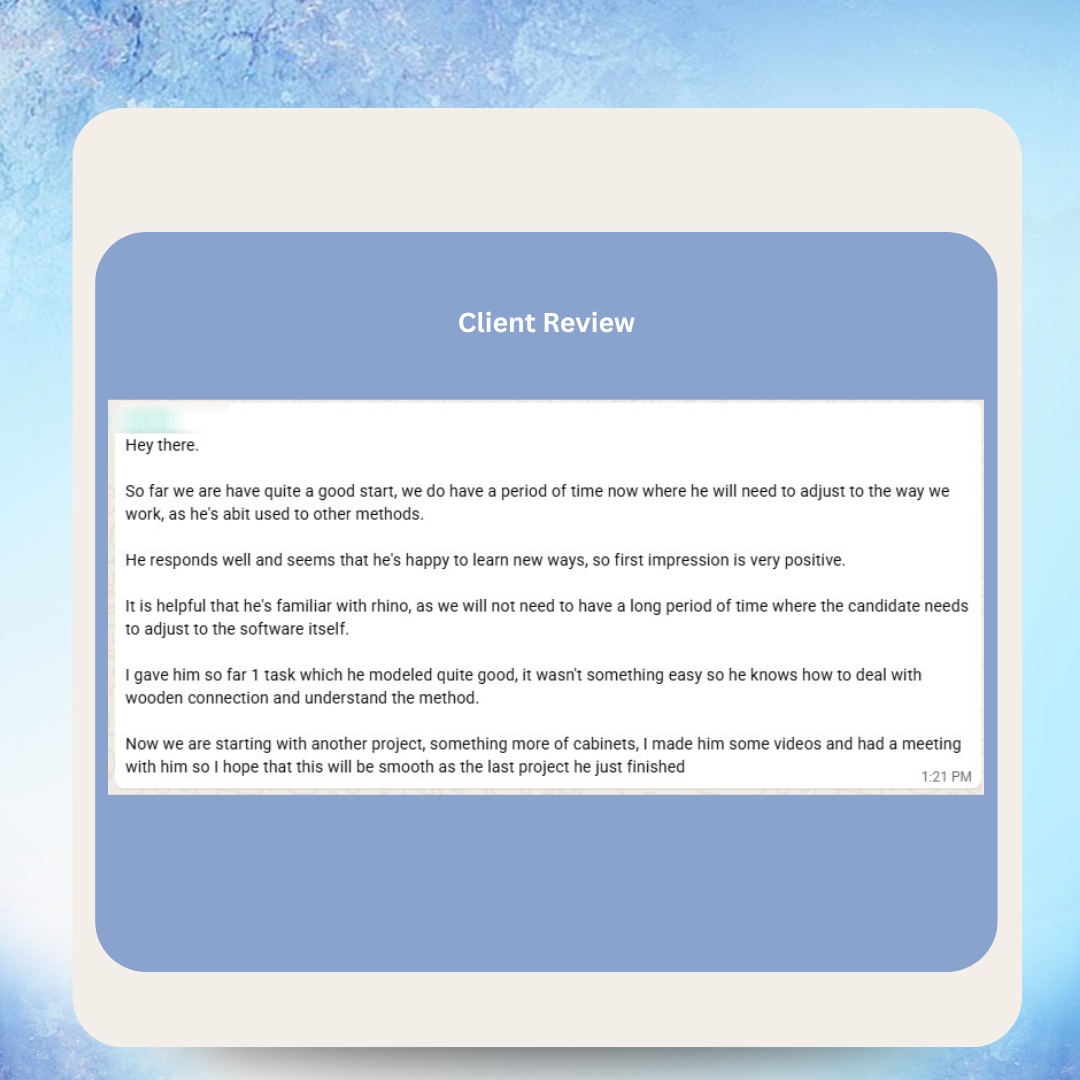
Real Messages from Real Clients


Hear From Our VAs


As Featured In






Frequently Asked Questions
What makes Filipino VAs better than VAs from India?
Filipino VAs consistently outperform Indian VAs on three key metrics for virtual assistant work: English proficiency (the Philippines ranks higher on the EF English Proficiency Index and uses American English), cultural alignment with Western business norms (due to deep American cultural influence), and communication style (Filipino VAs default to clear, direct, over-communicative styles that clients prefer). India excels in IT and engineering outsourcing, but for general VA work requiring strong communication and cultural fluency, the Philippines is the stronger choice.
How much does a Filipino VA cost compared to hiring locally?
A full-time Filipino VA through VA Masters costs $1,300-$2,500 per month depending on experience and specialization. The equivalent local hire in the US costs $3,750-$5,400 per month in salary alone, plus $1,200-$2,000 per month in benefits, taxes, and overhead — totaling $5,000-$7,400 per month. That represents up to 80% savings with a Filipino VA, while getting a college-educated, English-fluent professional dedicated to your business full-time.
Do Filipino VAs really speak fluent English?
Yes. The Philippines is one of the few countries where English is an official language and the primary medium of instruction in education. Filipino VAs complete their entire college education in English and consume American media daily. The Philippines consistently ranks as the highest English-proficiency country in Asia on the EF English Proficiency Index. At VA Masters, every candidate passes a rigorous English assessment covering written business communication, spoken fluency, comprehension, and accent clarity before placement.
What education level do Filipino VAs typically have?
The vast majority of Filipino VAs placed through VA Masters hold four-year bachelor's degrees from Philippine universities. The most common degrees are business administration, information technology, nursing, education, and accounting. The Philippines produces approximately 500,000 college graduates per year, all educated in English, creating a massive pool of well-educated talent. Many candidates also have professional certifications and 2-5 years of BPO industry experience on top of their degree.
Are there any disadvantages to hiring Filipino VAs?
The primary consideration is the time zone difference — the Philippines is 12-13 hours ahead of US Eastern Time, so Filipino VAs working US hours are on overnight shifts. However, this is a well-established practice in the Philippines thanks to the BPO industry, and most Filipino VAs adapt seamlessly. Other considerations include occasional internet disruptions during typhoon season (mitigated by backup connectivity requirements) and the need for clear onboarding processes for any remote hire. These are manageable considerations, not dealbreakers.
How does VA Masters vet Filipino VA candidates?
VA Masters uses a 6-stage recruitment process: initial application screening, comprehensive English assessment (written and spoken), technical skills testing on client-specific tools, behavioral and cultural fit evaluation, reference verification, and a structured trial period. This process screens thousands of candidates to identify the top performers for each specific client. Only approximately 2-3% of applicants make it through the full process, ensuring every placed VA meets our quality standards.
Can Filipino VAs handle specialized tasks or only general admin?
Filipino VAs can handle a wide range of specialized tasks beyond general administration. Common specializations include bookkeeping and accounting, social media management, content creation, graphic design, customer service, project management, real estate coordination, e-commerce operations, and executive assistance. The breadth of the Philippine education system and BPO industry means you can find Filipino VAs with deep expertise in most business functions. VA Masters matches candidates to specific skill requirements for each placement.
How long does it take to find and hire a Filipino VA?
Through VA Masters, most clients are matched with their ideal Filipino VA within 1-2 weeks. Our pre-vetted candidate pool means we are not starting from scratch — we are matching your specific requirements against candidates who have already passed our rigorous screening process. The timeline includes understanding your needs (1-2 days), candidate matching and presentation (about 2 business days), client interviews (2-3 days), and onboarding preparation (2-3 days). Urgent placements can be expedited to under one week.
What if my Filipino VA does not work out?
VA Masters provides a replacement guarantee. If your placed VA does not meet expectations during the initial period, we will find and place a replacement at no additional recruitment cost. Our high retention rates (85%+ at 12 months) mean replacements are rare, but when they are needed, our existing candidate pool allows us to move quickly. We also provide ongoing support to help resolve issues before they become reasons for replacement — often, small adjustments to communication or processes can resolve early challenges.
Why is the Philippines considered the top outsourcing destination for VAs?
The Philippines leads for VA outsourcing due to a unique combination of factors no other market matches: the highest English proficiency in Asia, an education system conducted entirely in English, deep cultural alignment with Western business norms from a century of American influence, a mature BPO industry with 1.7 million workers and established professional infrastructure, competitive pricing with up to 80% savings versus Western markets, and a cultural emphasis on loyalty and service that drives high retention rates. No other country offers this complete package.
Ready to Get Started?
Join 500+ businesses who trust VA Masters with their teams.
- No upfront payment required
- No setup fees
- Only pay when you are 100% satisfied with your VA

Anne is the Operations Manager at VA MASTERS, a recruitment agency specializing in Filipino virtual assistants for global businesses. She leads the end-to-end recruitment process — from custom job briefs and skills testing to candidate delivery and ongoing VA management — and has personally overseen the placement of 1,000+ virtual assistants across industries including e-commerce, real estate, healthcare, fintech, digital marketing, and legal services.
With deep expertise in Philippine work culture, remote team integration, and business process optimization, Anne helps clients achieve up to 80% cost savings compared to local hiring while maintaining top-tier quality and performance.
Email: [email protected]
Telephone: +13127660301