

What Makes a Great VA (Lessons from 1,000+ Placements)
After placing 1,000+ virtual assistants with businesses across every industry and size, VA Masters has accumulated a dataset that most companies in this space simply do not have. We know which VAs succeed and which struggle. We know which traits predict long-term high performance and which look good on paper but fail in practice. We know what clients actually value most — and it is often not what they think they want when they start the hiring process.
This article distills the patterns from those 1,000+ placements into a practical guide. We are not theorizing about what makes a great VA — we are reporting what the data shows. Every insight here is drawn from real placement outcomes, client feedback surveys, VA performance reviews, and retention analyses. Some of these findings will confirm your intuition. Others will challenge it. All of them will help you identify, hire, and develop a virtual assistant who genuinely transforms your business.
The stakes are significant. A great VA saves you 20-30 hours per week, reduces operational costs by up to 80% compared to local hiring, and becomes increasingly valuable over time as they accumulate knowledge about your business. A mediocre VA creates more work than they eliminate, requiring constant supervision, correction, and re-doing. The difference between a great VA and a mediocre one is not incremental — it is transformational. Understanding what makes the difference is the most important investment you can make in your outsourcing strategy.
The Top 7 Traits of High-Performing VAs
When we analyze our top-performing VAs — the ones who receive the highest client satisfaction scores, the longest retention, and the most enthusiastic referrals — seven traits appear consistently. These are not theoretical qualities. They are patterns that emerge from thousands of data points across 1,000+ placements.
1. Proactive Communication
The single strongest predictor of VA success is proactive communication. VAs who communicate before being asked — providing status updates, flagging potential issues, confirming understanding of instructions, and asking clarifying questions early — consistently outperform VAs who only communicate when directly prompted. In our data, VAs rated as "highly proactive communicators" have a 92% client satisfaction rate, compared to 61% for VAs rated as "reactive communicators."
Proactive communication is not about sending more messages. It is about sending the right messages at the right time. A great VA sends a brief update at the end of each day summarizing what was completed, what is in progress, and what needs input. They flag a potential issue on Tuesday rather than letting it become a problem by Friday. They confirm understanding of a complex task before starting work, not after delivering the wrong result. This communication pattern builds trust faster than any other single behavior.
2. Ownership Mentality
Great VAs treat your business as if it were their own. They do not wait for instructions when something obviously needs to be done. They do not say "that's not my job" when they encounter a task adjacent to their role. They do not drop a task at 5 PM if completing it would only take another 15 minutes. This ownership mentality is fundamentally different from the "clock in, do assigned tasks, clock out" approach that characterizes mediocre VAs.
In practical terms, ownership mentality shows up as: catching errors in documents they were not asked to proofread, researching solutions to problems instead of just reporting them, creating organizational systems without being asked, and remembering client preferences and deadlines without reminders. VA Masters data shows that VAs with strong ownership mentality are retained 2.3x longer than those without it, because clients quickly recognize and deeply value this trait.
3. Adaptability
Business priorities change. Tools change. Processes change. Clients' needs evolve. Great VAs adapt to these changes seamlessly. They learn new software without complaining. They adjust to new processes without resistance. They shift priorities without losing productivity on other tasks. Adaptability is the trait that determines whether a VA becomes more valuable over time or becomes obsolete as the business evolves.
Our placement data shows a clear pattern: VAs who demonstrate high adaptability in their first 90 days (measured by their speed in learning new tools and adjusting to process changes) have a 12-month retention rate of 89%, compared to 67% for VAs with low initial adaptability scores. The first 90 days are a strong predictor because they reveal how the VA responds to the inevitable adjustments that every new working relationship requires.
4. Attention to Detail
In virtual assistant work, the details matter enormously. A small error in a financial report, a typo in a client-facing email, a missed deadline on a calendar event, or an incorrect data entry can have cascading consequences. Great VAs have a natural orientation toward precision. They double-check their work before submitting it. They verify information rather than assuming. They catch inconsistencies that others would miss.
This trait is easier to test than most. VA Masters includes detail-oriented tasks in our assessment process — tasks that contain deliberate errors, inconsistencies, or ambiguities. Candidates who catch these issues consistently become our highest-rated VAs. Candidates who miss them consistently, regardless of their other strengths, tend to struggle with the accuracy requirements of professional VA work.
5. Emotional Intelligence
Virtual assistant work is inherently interpersonal. VAs interact with clients, customers, team members, and vendors daily. Great VAs read emotional context accurately — they sense when a client is stressed and adjust their communication accordingly, they handle frustrated customers with genuine empathy, they navigate team dynamics with diplomatic awareness, and they manage their own emotions under pressure rather than letting stress affect their work quality.
Emotional intelligence is particularly important in remote work environments where communication happens primarily through text. A great VA understands the difference between a client's message that says "fine, go ahead" (meaning they genuinely approve) and one that says "fine, go ahead" (meaning they are frustrated but does not want to argue). This nuanced reading of text-based communication is a skill that separates exceptional VAs from merely competent ones.
6. Technical Learning Speed
Every client uses a different combination of tools — CRM systems, project management platforms, communication tools, industry-specific software, and custom internal systems. Great VAs learn new tools quickly and proficiently. They do not need days of training to become functional in a new platform. They explore, experiment, watch tutorials, and reach working proficiency rapidly.
VA Masters tracks "time to proficiency" for every placement — how long it takes a VA to reach independent working capability on the client's tool stack. Our top-performing VAs achieve proficiency in an average of 5-7 business days. Average performers take 12-15 business days. This speed difference compounds over time because fast learners accumulate more capabilities, take on more diverse tasks, and deliver more value to their clients.
7. Reliability Under Pressure
Every business has peak periods, urgent deadlines, and unexpected crises. Great VAs maintain their quality and composure when the pressure increases. They do not crack under tight deadlines. They do not make more errors when the workload spikes. They do not disappear when things get difficult. This reliability under pressure is what transforms a VA from a nice-to-have convenience into a critical business asset that clients cannot imagine operating without.
Our data shows that client satisfaction scores are most strongly differentiated during high-pressure periods. Almost all VAs perform well when workloads are normal. The great ones maintain performance when workloads are heavy. The difference is most visible during month-end closes, product launches, busy seasons, and client emergencies — these are the moments that either cement trust or destroy it.
See What Our Clients Have to Say
Skill vs Attitude: What Matters More
One of the most debated questions in hiring is whether to prioritize skills or attitude. After 1,000+ placements, our data provides a clear answer: attitude wins, and it is not even close.
The Data on Skills vs. Attitude
We tracked the outcomes of placements where we prioritized candidates with the strongest technical skills versus placements where we prioritized candidates with the strongest attitudinal markers (proactivity, ownership mentality, adaptability, and communication quality). The results were striking: skill-prioritized placements had a 12-month satisfaction rate of 71%. Attitude-prioritized placements had a 12-month satisfaction rate of 88%. The difference is 17 percentage points — a massive gap in placement outcomes.
The explanation is straightforward. Skills can be taught. Attitude cannot. A VA with strong technical skills but a reactive, passive attitude will execute assigned tasks competently but never grow beyond that baseline. A VA with moderate technical skills but a proactive, ownership-oriented attitude will rapidly learn the specific skills needed and continuously expand their contribution. Within 3-6 months, the attitude-first VA is consistently outperforming the skills-first VA because they have learned all the necessary skills AND they bring the drive, initiative, and commitment that no amount of technical training can instill.
Which Skills Actually Matter
That said, certain baseline skills are non-negotiable. Strong written and spoken English is required — you cannot teach fluency. Basic computer literacy is required — a VA who is not comfortable with digital tools will struggle regardless of attitude. And functional skills in core productivity tools (email, calendar, spreadsheet, document management) are required because they are the foundation of almost every VA task.
Beyond these baselines, the specific skills a client needs are teachable. A VA who has never used HubSpot can learn HubSpot. A VA who has never done bookkeeping can learn bookkeeping. A VA who has never managed social media can learn social media management. These are all learnable skills with clear training paths. But a VA who does not take initiative, does not communicate proactively, and does not take ownership of outcomes? That is not a training issue — that is a personality mismatch that no amount of development will fix.
The Sweet Spot
The ideal hire — and the candidate profile VA Masters specifically screens for — is a VA with the right attitude AND strong baseline skills. They have excellent English, strong technical literacy, relevant professional experience, AND the proactive, ownership-oriented attitude that drives long-term success. Our 6-stage vetting process is designed to identify this combination, which is why our placement satisfaction rates consistently exceed industry averages.
The VA Masters Formula
After 1,000+ placements, our formula is clear: hire for attitude, verify baseline skills, train on specifics. Attitude is the multiplier that determines how far skills will take the VA. A VA with a 10/10 attitude and 6/10 skills will reach 9/10 overall within 90 days. A VA with a 6/10 attitude and 10/10 skills will plateau at 7/10 and stay there. The attitude-first approach produces better outcomes in every measurable dimension: client satisfaction, retention, task quality, and long-term value.
Communication Patterns That Predict Success
Communication is not a single skill — it is a collection of specific patterns and behaviors. Our data reveals which communication patterns predict VA success and which predict problems.
Patterns of Successful VAs
Daily summaries without being asked. The best VAs send a brief end-of-day summary — what was completed, what is in progress, what needs input. This takes 5 minutes and eliminates hours of follow-up communication. Clients rate VAs who do this consistently as 40% more satisfactory than those who do not, because it creates a sense of visibility and control that clients crave in remote working relationships.
Clarifying questions at the start, not the end. Great VAs ask questions before they begin a task, not after they have completed it incorrectly. They identify ambiguities in instructions and resolve them immediately. This pattern dramatically reduces rework — our data shows that VAs who ask clarifying questions upfront produce work that requires revisions 60% less often than VAs who proceed with assumptions.
Acknowledging receipt of instructions. A simple "Got it, I'll have this done by 3 PM" is enormously valuable. It confirms the VA received the instruction, understood it, and has committed to a delivery time. VAs who consistently acknowledge instructions build trust faster and experience fewer miscommunications than those who silently begin working without confirmation.
Flagging issues early. Great VAs tell you about potential problems before they become actual problems. "I noticed the spreadsheet has some inconsistent formatting in column D — should I standardize it or leave it?" This early flagging prevents small issues from becoming expensive mistakes and demonstrates the kind of attentiveness that clients value most highly.
Patterns of Struggling VAs
Radio silence between task assignments. VAs who only communicate when they receive instructions or deliver completed work create anxiety in their clients. The client wonders: are they working? Did they understand the task? Are they stuck? This communication vacuum leads to micromanagement, which leads to frustration on both sides, which leads to failed placements.
Completing tasks incorrectly rather than asking questions. Some VAs view asking questions as a sign of weakness or incompetence. So they guess instead, often incorrectly. The result is wasted time for both parties — the VA spends hours on work that needs to be redone, and the client spends additional time explaining what they actually wanted. This pattern is the single most frustrating communication behavior clients report.
Over-communicating trivial details. There is a difference between proactive communication and noise. VAs who send messages about every minor decision ("Should I use blue or green for this cell?" "Should I save this as PDF or Word?") create a different kind of burden. Great communication is about sending the right amount of information — enough to keep the client informed and in control, not so much that managing the VA becomes a full-time job.
Red Flags: What to Watch For
Over 1,000+ placements, we have identified the red flags that consistently predict poor outcomes. Recognizing these early saves significant time and money.
During the Hiring Process
Vague answers about previous work. When asked "What was your biggest accomplishment in your previous role?", a strong candidate gives a specific, detailed answer. A red flag candidate gives generalities: "I helped the company grow" or "I handled various tasks." Vagueness in interviews consistently predicts vagueness in work output.
Inability to describe failures. Everyone has failed at something. A strong candidate can describe a specific failure, what they learned from it, and how they changed their approach. A red flag candidate either claims they have never failed (unrealistic) or describes a failure without any reflection or learning (indicating low self-awareness). Our placement data shows that candidates who describe failures thoughtfully have a 23% higher 12-month retention rate than those who deflect failure questions.
Overselling skills. A candidate who claims expert-level proficiency in 15+ software tools is almost certainly exaggerating. Strong candidates are honest about their skill levels — "I'm proficient in Excel and intermediate in QuickBooks, but I haven't used Xero before" is a much stronger answer than "I'm an expert in all accounting software." Honest self-assessment predicts realistic expectations and faster genuine skill development.
Slow response times during the interview process. How a candidate communicates during the hiring process is a preview of how they will communicate as your VA. If they take 48 hours to respond to an email during the interview phase (when motivation is highest), response times will only get worse after they are hired. VA Masters tracks candidate response times throughout the recruitment process as a predictive signal.
During the First 30 Days
Consistently delivering late without notification. Missing an occasional deadline is normal during onboarding. Missing deadlines without communicating about it in advance is a red flag. A great VA says "This is taking longer than expected — I'll have it by 2 PM instead of noon." A red flag VA simply delivers late with no explanation.
Resistance to feedback. The first 30 days involve frequent corrections and adjustments — this is normal and expected. A great VA receives feedback with grace and implements it immediately. A red flag VA becomes defensive, makes excuses, or implements the same feedback selectively (fixing the specific instance but not the underlying pattern).
Declining quality over the first month. Most VAs produce their best work in the first two weeks (high motivation, extra effort to impress). If quality declines noticeably after the initial period, it suggests the VA's sustainable performance level is lower than their showcase performance. Quality should improve over the first 90 days as the VA learns your preferences, not decline as the honeymoon period ends.
Inconsistent availability. A VA who is occasionally unreachable during agreed working hours — without prior notice or explanation — is signaling a reliability problem. Occasional emergencies are understandable. Repeated unexplained absences during the first 30 days predict chronic availability issues that rarely improve on their own.
Pro Tip
The strongest predictor of long-term VA success is their behavior in weeks 3-6 of the placement. By this point, the initial excitement has faded, the reality of the work is clear, and the VA has settled into their natural patterns. If their communication, quality, and reliability are strong during this critical window, the placement is highly likely to succeed. If these metrics are declining during weeks 3-6, address the issues immediately — they will not resolve themselves.
What Clients Actually Value Most
We survey every client at 30, 90, and 180 days after placement. The results reveal what clients value most in their VAs — and the ranking is consistently different from what clients say they want before hiring.
Before Hiring: What Clients Think They Want
When we ask prospective clients to rank their priorities for a VA, the typical order is: 1) Technical skills relevant to their industry, 2) Years of experience, 3) English proficiency, 4) Cost, 5) Availability/timezone. This is the rational, resume-based assessment that most hiring decisions are built on.
After Hiring: What Clients Actually Value
When we survey clients at 180 days about what they value most about their VA, the ranking shifts dramatically: 1) Communication quality and proactivity, 2) Reliability and consistency, 3) Initiative and problem-solving, 4) Adaptability and learning speed, 5) Technical skills. Notice that technical skills — the top pre-hiring priority — drops to the bottom of the post-hiring ranking. And communication quality — which many clients barely mention before hiring — rises to the number one position.
This shift happens because technical skills are a baseline requirement that clients stop noticing once they are met. You do not wake up every morning grateful that your VA knows how to use Google Calendar. But you do wake up grateful that your VA anticipated a scheduling conflict, proactively rescheduled the affected meetings, and emailed you a summary of the changes before you finished your coffee. The human qualities — communication, initiative, reliability — are what clients actually experience and value in their daily interactions with their VA.
The Trust Factor
Underlying all of these valued qualities is trust. Clients who trust their VA delegate more tasks, provide less oversight, and experience greater time savings. Clients who do not trust their VA micromanage, double-check everything, and ultimately conclude that "having a VA doesn't save me any time." Trust is built through consistent demonstration of the top-valued qualities: proactive communication, reliability, initiative, and adaptability. It cannot be shortcut, but it can be accelerated by VAs who understand that every interaction is either building or eroding trust.
VA Masters data shows that it takes an average of 6-8 weeks for a client to develop full trust in their VA. During this period, the VA's communication patterns and reliability are under close scrutiny. VAs who perform well during this trust-building window unlock the full potential of the relationship — more responsibilities, more autonomy, and more impact. VAs who stumble during this window often never recover, because the client's default shifts to low-trust oversight that limits what the VA can contribute.
The Retention Equation: Why Great VAs Stay
Finding a great VA is only half the challenge. Keeping them is the other half. Our retention data reveals what makes great VAs stay — and what drives them to leave.
Why Great VAs Stay
Meaningful work and growing responsibilities. The number one factor in VA retention is whether the VA feels their role is growing. Great VAs want to take on more, learn more, and contribute more. Clients who progressively expand their VA's responsibilities — from basic admin to project management, from data entry to data analysis, from scheduling to executive strategy support — retain their VAs dramatically longer than clients who keep their VA in a narrow, unchanging role.
Respectful, collaborative relationship. Filipino VAs, in particular, place enormous value on the quality of the working relationship. Clients who treat their VA as a valued team member — not as a replaceable service provider — build loyalty that transcends the transactional nature of the arrangement. Simple gestures matter: acknowledging good work, asking about the VA's career goals, including them in team communications, and treating them with the same professional respect you would give an in-house employee.
Fair compensation and growth. Great VAs know their market value. Clients who provide regular raises (even modest ones) that reflect the VA's growing contribution retain their VAs much longer than clients who keep compensation flat regardless of performance. A 5-10% annual raise is a small investment that signals to the VA that their growth is recognized and valued.
Clear communication and expectations. VAs who understand what is expected of them, receive regular feedback, and know how their performance is evaluated are more satisfied and more likely to stay. Ambiguity is stressful — great VAs want to know what success looks like so they can achieve it.
Why Great VAs Leave
Stagnant responsibilities. The fastest way to lose a great VA is to give them the same narrow set of tasks month after month with no opportunity for growth. High-performing VAs are ambitious — they want to develop their skills and expand their impact. If your business does not provide that growth, another client will.
Micromanagement. Great VAs thrive on autonomy. They want to be trusted to manage their work, make decisions within their scope, and deliver results without constant oversight. Clients who micromanage — checking every task, requiring approval for every decision, monitoring every hour — drive away their best VAs while retaining only those who lack the initiative to leave.
Poor communication from the client. Communication is a two-way street. VAs who receive unclear instructions, contradictory priorities, or infrequent feedback become frustrated and disengaged. Clients who are consistently unresponsive to their VA's questions and updates create a working environment that great VAs will not tolerate long-term.
Below-market compensation. The Filipino VA market is competitive. Great VAs receive regular offers from other clients and agencies. If your compensation falls significantly below market rates and you do not provide the non-financial value (growth, respect, meaningful work) that compensates for the pay gap, your VA will eventually accept a better offer.
Cost and Pricing
Hiring a great VA through VA Masters gives you access to the top tier of Filipino virtual assistant talent — pre-vetted through our 6-stage process and matched to your specific needs. Here is what the investment looks like.
These rates represent the full cost of a dedicated Filipino VA — a college-educated, English-fluent professional working exclusively for your business. Compare this to the cost of hiring locally: a US-based administrative assistant at $45,000-$65,000 per year in salary, plus $15,000-$25,000 in benefits, taxes, office space, and overhead. A Filipino VA through VA Masters delivers equivalent or superior quality at up to 80% savings.
The investment in a great VA is one of the highest-ROI decisions a business can make. A VA who saves you 20-30 hours per week at these rates effectively gives you 1,000-1,500 productive hours per year at a cost that is a fraction of your own hourly value. If your time is worth $100/hour and your VA saves you 25 hours/week, that is $130,000 in recovered time value per year — from an investment of $15,000-$25,000.

As a digital marketing agency specializing in SEO and online strategy, finding the right talent is crucial for our success. Working with VA Masters to recruit Clarissa was remarkably efficient and aligned perfectly with our fast-paced environment. The recruitment process was streamlined beyond our expectations. Instead of spending weeks posting job listings, filtering through unqualified applicants, and conducting multiple interview rounds, VA Masters presented us with pre-vetted candidates who genuinely matched our specific technical requirements. Within just a few days, we connected with Clarissa, who demonstrated the exact SEO expertise and analytical skills we needed. What impressed us most was how VA Masters understood our agency's unique culture and work style. This careful attention to both technical qualifications and team fit saved us countless hours that we could instead dedicate to serving our clients. For a boutique agency like ours where every minute counts, this efficient recruitment approach has been invaluable to maintaining our growth momentum.
Detailed Job Posting
Custom job description tailored to your specific needs and requirements.
Candidate Collection
1,000+ applications per role from our extensive talent network.
Initial Screening
Internet speed, English proficiency, and experience verification.
Custom Skills Test
Real job task simulation designed specifically for your role.
In-Depth Interview
Culture fit assessment and communication evaluation.
Client Interview
We present 2-3 top candidates for your final selection.
Have Questions or Ready to Get Started?
Our team is ready to help you find the perfect match.
Get in Touch →How Good VAs Become Great VAs
Greatness is not just about hiring the right person — it is about developing them after they are hired. Our data shows clear patterns in how good VAs evolve into great ones.
The 90-Day Development Arc
Days 1-14: Foundation. The VA learns your tools, processes, communication preferences, and initial task set. Quality is variable as they build understanding. Communication should be frequent and bidirectional. This is the phase where the VA-client relationship pattern is established.
Days 15-30: Stabilization. The VA reaches consistent quality on core tasks. Response times normalize. The VA begins to anticipate your needs based on observed patterns. This is when you can start identifying the VA's strengths and areas for development.
Days 31-60: Expansion. The VA should be taking on additional responsibilities beyond their initial task set. They should be suggesting improvements to processes they manage. Quality should be consistently high with minimal oversight. This is the phase where a good VA begins distinguishing themselves from an average one.
Days 61-90: Independence. A great VA at this stage manages their responsibilities independently, communicates proactively, anticipates your needs, and occasionally surprises you with initiative that adds unexpected value. If your VA is not at this stage by day 90, it may indicate a mismatch rather than a development issue.
The Investment in Training
The best client-VA relationships involve intentional investment in the VA's development. This does not mean formal training programs — it means progressive delegation of more complex tasks, constructive feedback that helps the VA improve, access to industry resources and learning materials, and explicit career development conversations. Clients who invest in their VA's development retain them longer, get more value from them, and build a working relationship that compounds in value over time.
Feedback as a Development Tool
Our highest-performing VA-client pairs share a common characteristic: frequent, specific feedback in both directions. The client provides clear feedback on what the VA does well and what needs improvement. The VA provides feedback on what is working in their workflow and what could be improved. This bidirectional feedback loop creates continuous improvement that makes the VA more valuable every month.
The most effective feedback is specific ("The formatting on yesterday's report was excellent — the highlighted summary section was exactly what I needed") rather than general ("Good job"). Specific feedback teaches the VA exactly what you value, enabling them to replicate and build on their successes.
Hiring for Greatness: A Data-Driven Approach
Based on our 1,000+ placements, here is the data-driven approach to hiring a great VA.
Step 1: Define the Role Precisely
Vague job descriptions attract vague candidates. The best placements start with a detailed description of the specific tasks the VA will handle, the tools they will use, the communication cadence you expect, and the outcomes you are measuring. "I need a VA" is not a job description. "I need a VA to manage my email inbox, schedule meetings, prepare weekly sales reports in HubSpot, and coordinate with my 3-person sales team using Slack" is a job description that attracts the right candidates.
Step 2: Test for the Right Traits
Do not rely on interviews alone. Test for the traits that matter: give candidates a real task (not a hypothetical scenario) and evaluate their output. Include a communication component — how quickly they respond, how they handle ambiguous instructions, and how they present their completed work. VA Masters builds these assessments into our 6-stage vetting process, but if you are hiring independently, creating practical tests is essential.
Step 3: Prioritize Attitude Over Resume
A candidate with 5 years of VA experience and a passive, reactive approach will underperform a candidate with 1 year of experience and a proactive, ownership-oriented attitude. Look for candidates who ask thoughtful questions during the interview, who demonstrate curiosity about your business, who provide examples of times they went beyond their job description, and who communicate with energy and clarity.
Step 4: Start with a Trial Period
No matter how thorough your assessment, you cannot fully evaluate a VA until you work with them. A structured trial period (typically 2-4 weeks) with clear success criteria gives both parties the opportunity to evaluate fit before making a long-term commitment. VA Masters includes trial periods in our placement process because our data shows they significantly improve long-term satisfaction.
Step 5: Invest in Onboarding
The first two weeks set the trajectory for the entire relationship. Invest time in proper onboarding: provide written SOPs for key processes, schedule daily check-ins during the first week (tapering to weekly after the first month), give immediate feedback on initial tasks, and establish clear communication norms (response time expectations, preferred channels, meeting cadence). VA Masters provides onboarding frameworks for every placement, because structured onboarding is the single most impactful investment in VA success.
| Feature | VA MASTERS | Others |
|---|---|---|
| Custom Skills Testing | ✓ | ✗ |
| Dedicated Account Manager | ✓ | ✗ |
| Ongoing Training & Support | ✓ | ✗ |
| SOP Development | ✓ | ✗ |
| Replacement Guarantee | ✓ | ~ |
| Performance Reviews | ✓ | ✗ |
| No Upfront Fees | ✓ | ✗ |
| Transparent Pricing | ✓ | ~ |
What Our Clients Say




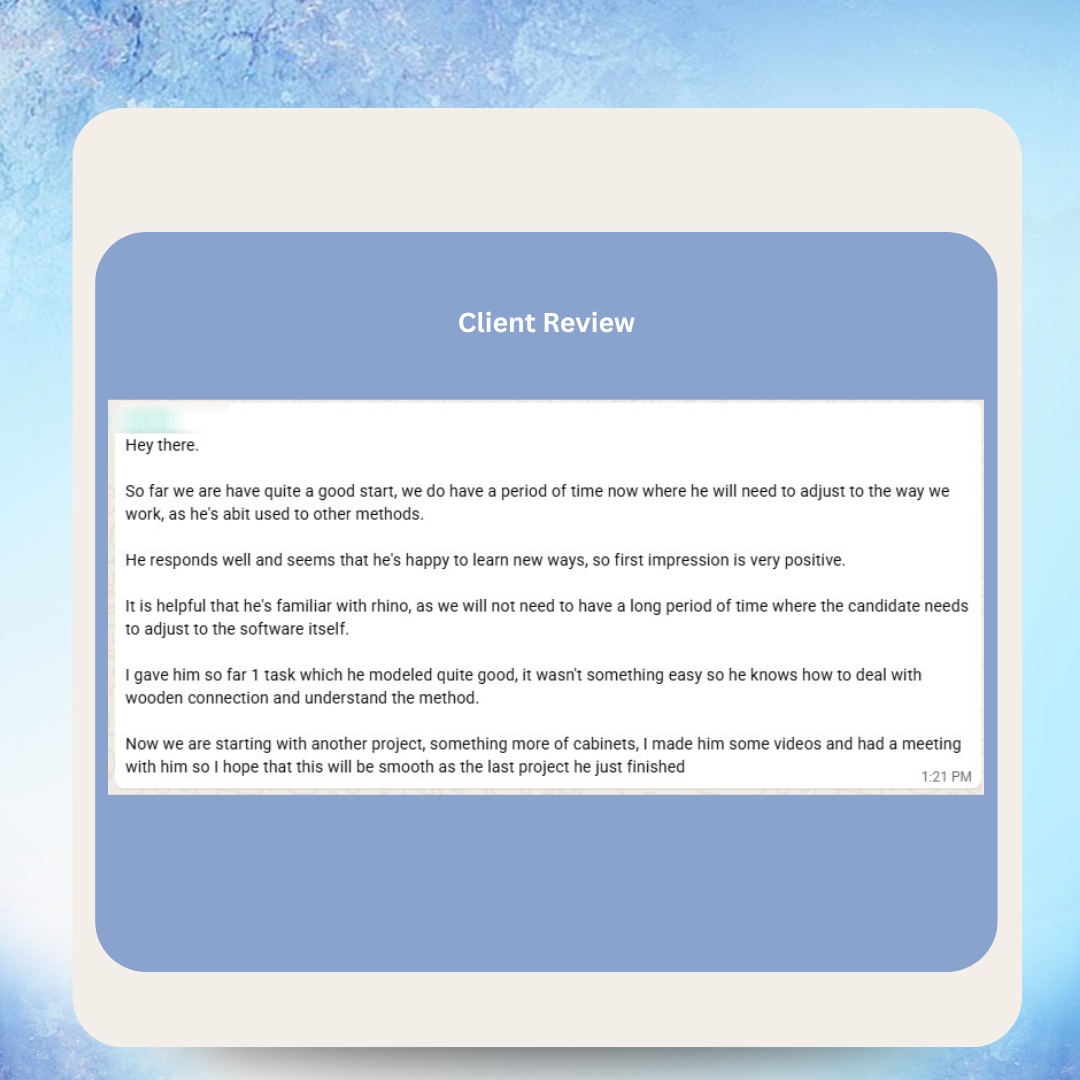
Real Messages from Real Clients


Hear From Our VAs



As Featured In






Frequently Asked Questions
What is the single most important trait in a great VA?
Proactive communication. Our data from 1,000+ placements shows that VAs rated as highly proactive communicators have a 92% client satisfaction rate, compared to 61% for reactive communicators. Proactive communication means providing status updates without being asked, flagging issues early, confirming understanding of instructions, and asking clarifying questions before starting work rather than after delivering incorrect results. This single trait predicts success more reliably than any other.
Should I prioritize skills or attitude when hiring a VA?
Attitude, decisively. Our placement data shows that attitude-prioritized placements have an 88% satisfaction rate at 12 months, compared to 71% for skill-prioritized placements. Skills can be taught — proactivity, ownership mentality, and adaptability cannot. The ideal hire has both strong baseline skills AND the right attitude, but when you must choose, always choose attitude. A motivated VA with moderate skills will outperform a skilled-but-passive VA within 3-6 months.
How long does it take for a VA to reach full productivity?
Based on our placement data, most VAs reach consistent quality on core tasks within 2-4 weeks and full productivity on their complete task set within 60-90 days. The timeline varies based on the complexity of the role, the quality of onboarding, and the VA's prior experience. VAs with relevant industry experience or BPO backgrounds typically ramp up 30-40% faster than those entering the field for the first time.
What are the biggest red flags when hiring a VA?
The top red flags from our 1,000+ placement dataset: vague answers about previous work accomplishments, inability to describe and reflect on failures, overselling skills with claimed expertise in 15+ tools, slow response times during the interview process (48+ hours), and inconsistent availability during the first 30 days. Any one of these is a concern. Two or more in combination strongly predict a problematic placement.
How do I keep a great VA from leaving?
Our retention data identifies four key factors: progressively expanding responsibilities (great VAs want growth), respectful collaborative relationships (treating the VA as a valued team member), fair compensation with regular raises reflecting growing contribution, and clear communication with consistent feedback. The fastest way to lose a great VA is stagnant responsibilities combined with flat compensation — they will accept a better offer from another client within 6-12 months.
What do clients value most about their VAs after 6 months?
Our 180-day client surveys consistently rank these qualities: 1) Communication quality and proactivity, 2) Reliability and consistency, 3) Initiative and problem-solving, 4) Adaptability and learning speed, 5) Technical skills. Notably, technical skills — the top priority for most clients before hiring — drops to last place after 6 months. Clients realize that the human qualities drive the actual day-to-day value of the relationship far more than technical capabilities.
How does VA Masters identify great VA candidates?
Our 6-stage vetting process screens for both skills and the attitudinal traits our data shows predict success. Stage 1: Application screening for baseline qualifications. Stage 2: Comprehensive English assessment (written and spoken). Stage 3: Technical skills testing on relevant tools. Stage 4: Behavioral assessment for proactivity, ownership mentality, adaptability, and communication patterns. Stage 5: Reference verification. Stage 6: Structured trial period. Approximately 2-3% of applicants pass all six stages.
Can a mediocre VA become a great one with the right development?
It depends on which qualities are mediocre. A VA with strong attitude but weak technical skills can absolutely develop into a great VA with proper training and progressive responsibility. A VA with strong technical skills but weak attitudinal traits (passive communication, low initiative, resistance to feedback) very rarely improves significantly, because these traits are personality-driven rather than skill-driven. Our data shows that attitude-related issues present at 90 days are still present at 12 months in over 80% of cases.
What is the ROI of hiring through an agency vs hiring independently?
VA Masters placement data shows that agency-vetted VAs have a 12-month retention rate of 85%+ compared to approximately 55-65% for independently hired VAs. Each replacement costs 2-4 weeks of lost productivity plus recruitment time. Agency-vetted placements also reach full productivity 30-40% faster due to better candidate-client matching. The agency fee pays for itself through higher retention, faster ramp-up, and reduced risk of a failed placement that costs far more than the fee saved.
How many hours per week should I dedicate to managing my VA?
During the first two weeks, expect to invest 5-7 hours per week in onboarding, training, and daily check-ins. During weeks 3-8, this drops to 2-3 hours per week as the VA becomes more independent. After 90 days with a great VA, ongoing management typically requires 1-2 hours per week — a weekly check-in meeting plus periodic task assignment and feedback. The management investment decreases as trust builds and the VA takes on more independent responsibility.
Ready to Get Started?
Join 500+ businesses who trust VA Masters with their teams.
- No upfront payment required
- No setup fees
- Only pay when you are 100% satisfied with your VA

Anne is the Operations Manager at VA MASTERS, a boutique recruitment agency specializing in Filipino virtual assistants for global businesses. She leads the end-to-end recruitment process — from custom job briefs and skills testing to candidate delivery and ongoing VA management — and has personally overseen the placement of 1,000+ virtual assistants across industries including e-commerce, real estate, healthcare, fintech, digital marketing, and legal services.
With deep expertise in Philippine work culture, remote team integration, and business process optimization, Anne helps clients achieve up to 80% cost savings compared to local hiring while maintaining top-tier quality and performance.
Email: [email protected]
Telephone: +13127660301