

How to Scale an Outsourced Team from 1 to 50
Hiring your first virtual assistant is a leap of faith. Scaling from one to fifty is an engineering problem. The businesses that scale outsourced teams successfully treat growth as a series of deliberate phase transitions — each requiring different management structures, communication systems, hiring strategies, and cultural investments. The businesses that fail try to run a fifty-person operation with the same informal approach that worked when it was just them and their first VA.
Scaling is not simply hiring more people. At each growth threshold, the entire operating system of your outsourced team needs to evolve. The processes that carried you from one to five will break at ten. The management structure that worked at ten will collapse at twenty-five. The cultural fabric that held at twenty-five will fray at fifty unless you have been intentionally weaving it from the very first hire. Understanding these transitions before you hit them is what separates companies that scale smoothly from those that grow into chaos.
VA Masters has helped hundreds of businesses navigate this exact journey — from tentative first hires to thriving outsourced departments with dozens of team members. We have placed 1,000+ virtual assistants and watched the patterns repeat across industries: the same inflection points, the same growing pains, the same solutions. This playbook captures those patterns into a practical, stage-by-stage guide for scaling your outsourced team from one person to fifty, with up to 80% savings compared to building the same team locally.
Stage 1: Your First Hire (1 Person)
The first hire is the most important one you will make in your entire scaling journey. Not because this person will still be with you at fifty (though ideally they will be), but because this hire establishes the patterns, expectations, and culture that everything else builds on. Get stage one right and you create a template for success. Get it wrong and you embed problems that compound with every subsequent hire.
Choosing the Right First Role
Your first outsourced hire should be a role that delivers immediate, measurable value while being relatively straightforward to manage remotely. The most successful first hires are typically general virtual assistants handling email management, scheduling, research, and basic admin work. These tasks are easy to define, easy to measure, and easy to hand off without extensive domain knowledge. Avoid making your first hire a highly specialized role (like a senior developer or financial analyst) that requires deep business context and extensive training. Start simple, prove the model works, then expand into complexity.
Building the Foundation
Before your first VA starts, set up the infrastructure they will need: a project management tool (Asana, Monday.com, or ClickUp), a communication platform (Slack or Microsoft Teams), a document management system (Google Workspace or Notion), a time tracking tool (Time Doctor, Hubstaff, or Toggl), and a password manager (1Password or LastPass). These tools will serve you from one person to fifty — the investment you make in stage one pays dividends through every subsequent stage.
Your Management Role at Stage 1
At this stage, you are the manager, the trainer, the quality reviewer, and the culture setter. Plan to invest 30-60 minutes per day in direct management during the first month, tapering to 15-30 minutes per day as the VA becomes self-sufficient. Your daily rhythm should include a brief morning check-in (5 minutes via Slack or video), task assignment and prioritization, quality review of completed work, and end-of-day wrap-up. Document everything from the start — every process you explain verbally should also be captured in writing or video (Loom is invaluable here). These documents become your SOP library, which is the single most important asset for scaling.
The Critical First 30 Days
The first month determines whether the relationship thrives or fails. Provide clear onboarding documentation, set expectations explicitly (hours, communication norms, quality standards, reporting cadence), give frequent feedback (daily in week one, then every other day), and check in on how the VA is feeling — not just about the work, but about the working relationship. Filipino professionals are often reluctant to raise concerns proactively. Create space for honest communication by asking specific questions: "What is the most confusing part of this process?" is better than "Is everything clear?" VA Masters provides onboarding support during this critical period to help both parties establish a strong working rhythm.
The mistake most businesses make at stage one is treating it as a trial rather than a commitment. If you approach the first hire with the mindset of "let us see if outsourcing works," you will under-invest in onboarding, provide vague instructions, and then conclude that outsourcing does not work when results are mediocre. Approach the first hire with the same seriousness and investment you would bring to a local hire. That commitment is what makes outsourcing deliver transformative results. For a deeper dive into onboarding best practices, see our VA onboarding framework.
Stage 2: The Small Team (2-5 People)
Once your first hire is performing well (typically after 2-3 months), you are ready to scale to a small team. This stage introduces the first real management complexity: you are no longer managing a single person but coordinating multiple people with potentially different roles, skills, and schedules.
When to Hire Person Number Two
The right time to make your second hire is when your first VA is consistently at capacity (working their full hours with a full task load), the quality of their work meets your standards, and you have tasks that either exceed your first VA's skill set or exceed their available time. Do not hire a second person to fix problems with the first. If your first VA is underperforming, address that before adding complexity. A second hire should be additive — expanding your capacity — not compensatory.
Role Specialization Begins
At two to five people, you have a choice: hire generalists who can cover for each other, or begin specializing roles. The right answer depends on your business needs, but most companies benefit from some specialization at this stage. A common structure is one administrative VA (email, scheduling, research) and one specialized VA (social media, bookkeeping, customer service, or data entry). Specialization increases quality — a dedicated social media VA produces better content than a generalist splitting attention across five task categories.
Communication Starts to Need Structure
With one VA, communication is simple — everything goes through a single channel between you and them. With three to five people, communication pathways multiply. Without structure, you will find yourself repeating the same information to multiple people, fielding the same questions from different team members, and discovering that team members are duplicating work because they did not know what the others were doing. Implement these structures early: a shared Slack channel where all team-wide announcements go, individual channels or DMs for person-specific tasks, a weekly team meeting (30 minutes on video) where everyone shares updates and priorities, and a shared task board where everyone can see who is working on what.
SOPs Become Non-Negotiable
If you skipped documentation at stage one, you cannot skip it at stage two. Every process your team performs needs a written SOP with step-by-step instructions, screenshots or video walkthroughs, quality standards and examples, and common errors and how to avoid them. When you hire person three, four, or five, you hand them the SOP library instead of personally training each one from scratch. SOPs transform scaling from a linear problem (your time invested per hire stays constant) to a sublinear one (your time per hire decreases as the library grows).
Your Management Role at Stage 2
You are still the direct manager of everyone, but your management time increases to 45-90 minutes per day. The key shift is from doing-and-delegating to managing-and-reviewing. You spend less time explaining tasks and more time reviewing work, giving feedback, and coordinating priorities across people. If you find yourself spending more than 90 minutes per day on management at this stage, you likely have a documentation problem — invest in SOPs to reduce the amount of live instruction needed.
Stage 3: Team Lead Era (6-10 People)
The transition from five to six people is the first major inflection point in scaling. At six or more people, direct management by a single business owner becomes unsustainable. You need a team lead, and the decision you make about who fills this role will shape the trajectory of your team for years to come.
Why a Team Lead Is Necessary
The math is straightforward: if each team member requires 15-20 minutes of management attention per day, six people require 90-120 minutes. Add team coordination, quality review, and issue resolution, and you are spending 2-3 hours daily on team management. For most business owners, that is time taken from strategic work, client relationships, and revenue-generating activities. A team lead absorbs the operational management load, freeing you to focus on business growth while maintaining (or improving) team performance.
Promoting From Within vs. Hiring Externally
The best team leads are usually promoted from within your existing team. They already understand your processes, have earned the team's respect, and are culturally aligned with how you work. Look for: natural leadership tendencies (do other team members already go to this person with questions?), strong communication skills in English, proactive problem-solving (do they identify issues before you do?), reliability and consistency in their own work, and the desire to lead (not everyone wants management responsibility — ask before assuming). If no internal candidate is ready, hire an experienced team lead externally. Filipino professionals with BPO supervisory experience bring established management skills, but they will need time to learn your specific processes and culture.
Defining the Team Lead Role
Your team lead should own: daily task assignment and prioritization, first-line quality review (you shift to spot-checking), time and attendance tracking, SOP creation and maintenance, new member onboarding (guided by your SOP library), daily standup facilitation, and issue escalation (they handle routine issues and escalate only what requires your attention). Be explicit about what the team lead can decide independently and what requires your input. The clearer the decision-making boundaries, the fewer bottlenecks you create.
The Management Handoff
Transitioning from direct management to managing through a team lead is uncomfortable. You lose the granular visibility you had when you managed everyone directly. Work you used to review personally now passes through someone else's filter first. Resisting this transition — continuing to manage individual contributors while also managing the team lead — undermines the lead's authority and defeats the purpose of the role. Trust the process: brief the team lead thoroughly, give them authority, hold them accountable for team outcomes, and resist the urge to bypass them.
Your Management Role at Stage 3
Your daily management time drops to 30-45 minutes, spent primarily on: a daily check-in with the team lead (15 minutes), weekly one-on-one with the team lead (30 minutes), monthly team-wide meeting, and strategic planning for team growth. You manage one person — the team lead — and they manage the team. This is the management model that scales.
Key Insight
The most common scaling failure happens at the five-to-ten transition. Business owners who cannot let go of direct management create bottlenecks that limit team growth, burn themselves out with excessive management overhead, and prevent team leads from developing into effective managers. If you want to reach fifty people, you must master the art of managing through others. The team lead transition is where you learn that skill.
Stage 4: Departmental Structure (11-25 People)
At eleven people, a single team lead managing everyone becomes as unsustainable as you managing everyone was at six. The solution is departmental structure: organizing your outsourced team into functional groups, each with its own lead, with clear reporting lines and coordination mechanisms.
How to Structure Departments
Organize by function, not by project. Typical departments for outsourced teams include: Customer Support (handling client inquiries, complaint resolution, ticket management), Marketing and Content (social media, email marketing, content creation, digital marketing), Operations and Admin (data entry, scheduling, document management, process support), Finance and Accounting (bookkeeping, invoicing, expense tracking, financial reporting), and Technical (web development, IT support, systems administration). Each department gets a team lead who reports to you (or to an operations manager, once you reach stage five). The number of departments depends on your business — you might have three departments at twelve people or five departments at twenty-five.
Cross-Department Coordination
Departments create a new coordination challenge: how do marketing and customer support share customer feedback? How does operations support finance during month-end close? How does the technical team prioritize requests from multiple departments? Establish cross-department coordination through: a weekly leads meeting where all department leads meet together (30-45 minutes), shared Slack channels for cross-functional topics, documented request processes (how does department A request support from department B?), and a shared project management workspace where cross-department projects are tracked. Without these coordination mechanisms, departments become silos that duplicate work, contradict each other, and create friction.
Standardizing Across Departments
Each department will develop its own rhythms and processes, which is healthy. But certain standards should be consistent across the entire team: communication norms (response times, meeting etiquette, escalation procedures), documentation standards (SOP format, storage location, update cadence), quality review processes (even if the specific metrics differ by department), performance evaluation criteria and cadence, and security and confidentiality protocols. Standardization prevents the team from fragmenting into disconnected units and ensures that transferring someone between departments (a valuable flexibility tool) is feasible.
Hiring Velocity Increases
At this stage, you are not hiring one person every few months — you might be hiring two or three people per month. Your recruitment process needs to be formalized: standardized job descriptions for each role type, a structured interview process (not ad hoc conversations), skills assessments specific to each department, reference checks, and onboarding checklists that department leads can execute independently. VA Masters supports this accelerated hiring by providing pre-vetted candidates within 2 business days, handling the sourcing, screening, and skills assessment stages that consume the most time.
Your Management Role at Stage 4
You now manage department leads, not individual contributors. Your weekly rhythm includes: a brief daily check-in with each department lead (5-10 minutes each, or a single 30-minute group standup), a weekly one-on-one with each lead (30 minutes each), a monthly all-hands meeting where the entire team hears from you directly, and quarterly planning sessions to align departmental priorities with business goals. Your total management time is 60-90 minutes per day — about the same as stage two, but now overseeing twenty-five people instead of five.
Stage 5: The Organization (26-50 People)
At twenty-six people and above, you are no longer running a team — you are running an organization. The transition from team to organization requires a dedicated management layer, formal HR processes, and an operational infrastructure that can function without your daily involvement in tactical decisions.
The Operations Manager
Between twenty-five and thirty people, you need an operations manager — a senior professional who manages the entire outsourced organization on your behalf. This is the most important hire in your scaling journey after your first VA. The operations manager owns: all department leads (they manage the leads, who manage the teams), recruitment and onboarding (working with VA Masters or executing your recruitment process), performance management across all departments, process improvement and efficiency optimization, budget management for the outsourced team, culture and retention initiatives, and escalation handling for issues that department leads cannot resolve. Hire a Filipino operations manager with BPO supervisory or management experience. They understand both Filipino work culture and the expectations of international clients, making them the ideal bridge between your vision and your team's execution.
Formal HR Processes
At this scale, informal HR practices become risky. Implement formal processes for: structured performance reviews (quarterly, with documented goals, ratings, and development plans), compensation management (a rate structure with defined levels, clear criteria for advancement, and annual review cycles), conflict resolution (a documented process for handling interpersonal conflicts, performance disputes, and grievances), attendance and leave management (a system for tracking time off, approving leave requests, and managing coverage), and exit management (structured offboarding including knowledge transfer, exit interviews, and access revocation). These processes protect both the business and the team members, creating a professional environment that attracts and retains top talent.
Organizational Communication
Communication at scale requires different channels for different purposes. Implement: company-wide announcements (a dedicated Slack channel or email list for important news from leadership), department channels (for day-to-day departmental communication), project channels (for cross-functional project collaboration), social channels (for non-work conversation, celebrations, and culture building), and leadership channels (for department leads and operations manager to coordinate). Hold a monthly all-hands meeting where you address the entire team, share business updates, celebrate achievements, and reinforce culture and values. At fifty people, many team members rarely interact with you directly — the all-hands is how you maintain a personal connection with the organization.
Retention Becomes Strategic
At fifty people, losing a single team member is routine. Losing five in a month is a crisis. Retention at scale requires: competitive compensation that keeps pace with the Philippine outsourcing market (VA Masters provides annual market rate benchmarks), career development paths (team members need to see where they can grow), recognition programs (monthly awards, performance bonuses, public praise), team building events (virtual and, if budget allows, in-person gatherings), and regular engagement surveys to identify satisfaction issues before they become resignations. The cost of replacing a trained team member — including recruitment, onboarding, and the productivity dip during the transition — is 3-6 months of their compensation. Every dollar invested in retention saves multiples in replacement costs.
Your Management Role at Stage 5
You manage one person: the operations manager. Your weekly investment includes a daily 15-minute check-in with the operations manager, a weekly strategic review (60 minutes), a monthly all-hands presentation (30-60 minutes), and quarterly business reviews with the operations manager and department leads. Your total management time is 30-45 minutes per day — overseeing fifty people with less daily time investment than you spent managing three people in stage two. This is the power of scalable management structure.
Pro Tip
At fifty people, you are the CEO of a small company within your company. Your job is not to manage tasks or even manage managers — it is to set the vision, establish the culture, allocate resources, and make the strategic decisions that shape the organization's future. If you find yourself reviewing individual task assignments or answering process questions at this stage, something is broken in your management layer. Fix the layer, do not patch around it.
Hiring at Scale Without Sacrificing Quality
The biggest risk of rapid scaling is quality dilution. The first five people you hire go through rigorous evaluation and extensive personal attention. By the time you are hiring person forty, the temptation to shortcut the process is overwhelming. Resist it. Quality compromise at any stage creates problems that cascade through the entire organization.
Building a Recruitment Pipeline
At scale, you need a continuous recruitment pipeline — not a reactive scramble every time you need a new hire. Work with VA Masters to maintain an ongoing understanding of your future hiring needs: roles you will need in 30, 60, and 90 days, skill requirements for each anticipated role, and any seasonal fluctuations in demand. This forward planning allows us to pre-screen candidates and present them when you are ready, reducing time-to-hire from weeks to days.
Standardized Assessment Process
Every candidate, whether they are person five or person forty-five, should go through the same assessment process: English proficiency evaluation (written and verbal), technical skills assessment specific to the role, cultural fit evaluation (do they align with your team's values and working style?), reference verification, and a practical trial task that simulates real work they would perform. VA Masters' 6-stage screening process provides this standardization. For businesses hiring directly, invest in building an assessment framework that department leads can execute consistently. Consistency is what prevents quality dilution as you scale.
Batch Hiring vs. Sequential Hiring
When scaling rapidly, you will face the choice between hiring people one at a time or in batches. Both approaches have merits. Sequential hiring allows more individual attention during onboarding and lets each new person be mentored by the previous hire. Batch hiring (bringing on 3-5 people simultaneously) is more efficient for training and creates a cohort that bonds through the shared onboarding experience. The optimal approach depends on your management capacity: batch hire only if your team leads have the bandwidth to onboard multiple people simultaneously without sacrificing quality.
The 90-Day Evaluation
Implement a structured 90-day evaluation for every new hire. At 30 days, assess basic competence and cultural fit. At 60 days, evaluate independent performance and initiative. At 90 days, make a definitive keep-or-release decision. This structured evaluation catches mismatches early — before the new hire is embedded in processes and relationships that make separation more disruptive. Be willing to release people who are not meeting standards, even at scale. One underperforming team member lowers the standard for everyone around them.
Internal Mobility
As your organization grows, some of the best "hires" for new roles come from within your existing team. A customer support VA who shows talent for content writing might transition to your marketing department. An admin VA who demonstrates analytical skills might move into a finance role. Internal mobility is the most efficient form of hiring at scale — the person already understands your culture, processes, and business context. Build a framework for internal transfers and encourage team members to express interest in new roles.
Processes and Documentation That Scale
Documentation is the invisible infrastructure that makes scaling possible. Companies that invest in documentation from day one scale smoothly. Companies that treat documentation as an afterthought hit a wall somewhere between ten and twenty people where growth becomes chaotic.
The SOP Library
Your SOP library is the most important asset for scaling. Every recurring task, process, and workflow should have a documented SOP that includes: purpose (why this task exists and what business value it serves), step-by-step instructions with screenshots or video, quality standards (what "done well" looks like, with examples), common errors and troubleshooting steps, tools and access requirements, and the owner (who is responsible for keeping this SOP current). Store SOPs in a central, searchable location — Notion is the most popular choice among our clients, though Confluence, Google Drive, and SharePoint all work. The key is a single source of truth that everyone can access.
Process Versioning and Updates
SOPs are living documents, not static artifacts. Processes change as tools evolve, business needs shift, and team members discover better methods. Implement a process for updating SOPs: assign an owner for each SOP (typically the department lead or the person who performs the task most frequently), schedule quarterly SOP reviews where owners verify accuracy and make updates, use version tracking so the team always knows which version is current, and notify affected team members when an SOP changes. Outdated SOPs are worse than no SOPs — they create confusion and erode trust in the documentation system.
Onboarding Documentation
Create a comprehensive onboarding playbook that covers: company overview (what the business does, who the customers are, what the mission is), team structure (org chart, who does what, who to go to for different questions), tool setup guide (step-by-step instructions for accessing and configuring every tool), communication norms (expected response times, meeting schedule, escalation procedures), role-specific SOPs (the subset of the SOP library relevant to the new hire's role), and cultural guide (team values, how we give feedback, what success looks like). A new hire should be able to read through the onboarding playbook and start their first tasks with minimal hand-holding. At scale, personal onboarding by the business owner is not feasible — the documentation must carry the weight.
Decision Documentation
As the team grows, decisions made in one department affect others. Document significant decisions — the decision itself, the reasoning behind it, who made it, and when. This prevents the "why do we do it this way?" confusion that plagues growing organizations, gives new team members context for existing processes, and creates an institutional memory that survives personnel changes. Use a simple decision log (date, decision, rationale, owner) in your central documentation system.
Knowledge Base vs. SOP Library
Distinguish between your SOP library (how to do things) and your knowledge base (what we know). The knowledge base includes: product and service documentation, customer FAQs and common inquiries, competitor information, industry knowledge relevant to the team's work, and historical context (why decisions were made, what was tried before). As you scale, new team members need both procedural knowledge (SOPs) and contextual knowledge (knowledge base) to perform at the level of experienced team members. Building both early pays compounding dividends.
Common Mistake
The most expensive documentation mistake is waiting until you need to scale before creating documentation. By the time you are at ten people and realize you have no SOPs, you are already drowning in management overhead. Every process you explain verbally and fail to document is a debt you will pay with interest at every subsequent stage of growth. Start documenting on day one, with your very first hire. Make SOP creation a non-negotiable part of how your team operates.
Building Culture That Survives Growth
Culture is what holds a team together when processes and structures are still catching up to growth. It is easy to maintain culture with five people who all joined in the same month and share a Slack channel. Maintaining culture with fifty people spread across five departments, hired over two years, is a deliberate, ongoing effort that requires as much attention as any operational function.
Defining Your Culture Early
Culture happens whether you plan it or not. If you do not define the culture you want, a culture will emerge organically — and it might not be the one you need. By stage two (2-5 people), document your team values. Keep them concrete and actionable, not abstract and aspirational. "We respond to questions within two hours" is a culture statement. "We value excellence" is not. Good cultural values for outsourced teams include: we document everything we do, we flag problems early rather than hoping they resolve, we give and receive feedback with respect, we help each other even across department lines, and we celebrate wins publicly and learn from mistakes privately.
Culture Carriers
Your first five to ten hires become the culture carriers for the entire organization. They set the norms that every subsequent hire absorbs through observation. This is why hiring for cultural fit at early stages is disproportionately important. A brilliant performer who undermines team collaboration, hoards knowledge, or treats colleagues poorly will replicate those behaviors across the organization as it grows. Conversely, early hires who embody your values — proactive communication, mutual support, accountability, and respect — establish norms that become self-reinforcing.
Rituals and Traditions
Create team rituals that reinforce culture: a weekly team standup where everyone shares a personal and professional highlight, monthly recognition awards voted on by the team, quarterly virtual social events (game nights, trivia, cooking classes), birthday celebrations in the team chat, anniversary acknowledgments for team tenure milestones, and welcome messages when new members join. These rituals are not frivolous. They create the connective tissue that turns a group of remote individuals into a team. Filipino professionals are naturally social and community-oriented, and they thrive in environments that invest in relationship building.
Communication From Leadership
As the team grows, the distance between you and individual team members increases. At fifty people, most team members have never had a direct conversation with you. Bridge this gap through: monthly all-hands meetings where you share business updates and vision, personal messages acknowledging significant achievements, an open-door policy (even if the "door" is a Slack DM) where any team member can reach you directly, and transparency about business performance (sharing wins and challenges builds trust and ownership). The most effective leaders of large outsourced teams communicate more, not less, as the team grows. Silence from leadership breeds uncertainty, and uncertainty breeds turnover.
Handling Cultural Growing Pains
Expect cultural friction at every growth stage. The informal, family-like culture of a five-person team will resist the structure needed at twenty-five. Long-tenured team members may resent new hires who did not "earn" the culture the same way they did. Department leads may develop competing sub-cultures that conflict with each other. Address these tensions directly: acknowledge that growth requires change, explain why new structures are necessary, involve long-tenured team members in shaping the evolution (their buy-in is critical), and never sacrifice cultural values for operational convenience. The businesses that scale successfully are the ones that evolve their culture intentionally rather than letting it drift.
See What Our Clients Have to Say
Technology Infrastructure for Growing Teams
The technology stack that supports a fifty-person outsourced team looks different from what supports a one-person operation. Plan your infrastructure transitions proactively rather than upgrading reactively when things break.
Communication Platform (All Stages)
Slack or Microsoft Teams serves as your communication backbone from stage one through stage five. At scale, invest in channel architecture: departmental channels for each team, project-specific channels for cross-functional work, an announcements channel for leadership communication, social channels for team bonding, and a help channel where anyone can ask questions. Establish channel naming conventions (e.g., dept-support, proj-website-redesign, social-random) so the workspace stays organized as channels multiply.
Project Management (Stage 2+)
Your project management tool becomes more critical as the team grows. At one to five people, a simple Asana or Trello board suffices. At ten to twenty-five, you need workspace organization with department-specific projects, task templates for recurring workflows, reporting dashboards that show workload distribution and completion rates, and integration with your communication and time-tracking tools. At twenty-five to fifty, consider enterprise project management tools (Monday.com, ClickUp, or Asana Business) that offer portfolio views, workload management, and custom automation.
Identity and Access Management (Stage 3+)
At ten people, managing individual access to dozens of tools becomes complex. Implement: a centralized identity provider (Google Workspace or Microsoft 365) for single sign-on, a password manager with shared vaults organized by department, documented access levels for each role, an onboarding checklist that provisions all required access on day one, and an offboarding checklist that revokes all access immediately upon departure. Security incidents at scale can be catastrophic. Invest in access management before an incident forces you to.
HR and People Management (Stage 4+)
At fifteen people and above, you need dedicated people management tools: a performance management platform for reviews and goal tracking (15Five, Lattice, or even structured Google Sheets), a leave management system for tracking time off and managing coverage, a people directory that includes each team member's role, department, start date, and key contact information, and a compensation management tool or spreadsheet that tracks rates, review dates, and adjustment history. These tools reduce the administrative burden on department leads and the operations manager, freeing them to focus on people rather than paperwork.
Analytics and Reporting (Stage 4+)
At scale, you need data to make management decisions. Implement reporting for: team productivity metrics (tasks completed, hours tracked, output per person), quality metrics (error rates, customer satisfaction, revision rates), financial metrics (cost per department, cost per output, budget vs. actual), and retention metrics (turnover rate, average tenure, engagement survey scores). The specific tools depend on your stack — many project management and time-tracking tools include built-in analytics. For custom reporting, Google Sheets or Looker Studio connected to your data sources works well at this scale.
Budget Planning and Cost Management
Scaling from one to fifty people requires deliberate financial planning. The per-person cost of outsourcing decreases slightly at scale (through operational efficiencies), but total spending increases substantially and needs to be managed proactively.
Cost Components at Each Stage
Your total outsourcing cost includes several components that evolve as you scale. VA compensation is the largest cost — typically $7-$15 per hour per person depending on skill level, or $1,120-$2,400 per person per month for full-time. Management overhead increases at stages three and above when you add team leads and an operations manager — budget an additional 15-20% for management roles that command higher rates. Tools and software scale linearly: plan for $30-$60 per person per month covering communication, project management, time tracking, and specialized tools. Recruitment costs spike during rapid growth phases — VA Masters' placement fees are the most cost-efficient option for maintaining quality while scaling quickly. And retention investments including 13th month bonuses, performance bonuses, and team building events add approximately 10-15% to base compensation costs annually.
Budget by Team Size
Here is a realistic budget framework for each stage, assuming a mix of general and specialized VAs at mid-range rates. A team of 5 costs approximately $8,000-$14,000 per month (all-in including tools and management overhead). A team of 10 costs approximately $16,000-$30,000 per month. A team of 25 costs approximately $42,000-$78,000 per month. A team of 50 costs approximately $85,000-$160,000 per month. Compare these figures to the cost of building equivalent teams locally. A fifty-person team in the US would cost $300,000-$500,000 per month in fully loaded compensation. At the outsourcing rates above, you are saving up to 80% while accessing a talent pool that is experienced, English-fluent, and culturally aligned with Western business practices. For role-specific cost breakdowns, see our outsourcing cost by function guide.
Financial Controls at Scale
At twenty-five people and above, implement financial controls: monthly budget reviews comparing actual spending to plan, approval workflows for new hires and rate changes, quarterly rate benchmarking against the Philippine outsourcing market, and cost-per-output tracking to measure efficiency (cost per support ticket resolved, cost per blog post published, cost per transaction processed). These controls prevent budget creep and ensure that your outsourcing investment continues to deliver strong ROI as it grows. For a deeper analysis of the return on your VA investment, see our ROI analysis with real numbers.
When Cost Optimization Matters
In the early stages (one to ten people), focus on quality over cost. Paying an extra $2 per hour for a significantly better VA is always worthwhile when you have a small team and each person's performance is magnified. At scale (twenty-five to fifty people), even small per-person savings compound significantly. A $1 per hour reduction across fifty full-time people saves $8,000 per month. At this stage, negotiate volume-based pricing with VA Masters, optimize your tool stack to eliminate redundant subscriptions, and invest in automation for repetitive tasks that currently consume human hours.
Cost and Pricing
VA Masters provides transparent, predictable pricing that supports you from your first hire through your fiftieth. Here is what to expect at every scale.
These rates apply consistently whether you have one VA or fifty. As your team grows, VA Masters provides volume-based support including priority candidate sourcing for large-scale hiring, dedicated account management for teams of ten or more, market rate guidance to keep your compensation competitive, and retention advisory to minimize turnover and training costs. The result is a per-person cost that is a fraction of local hiring, with the contractual protections, recruitment quality, and ongoing support that make scaling feasible and sustainable.

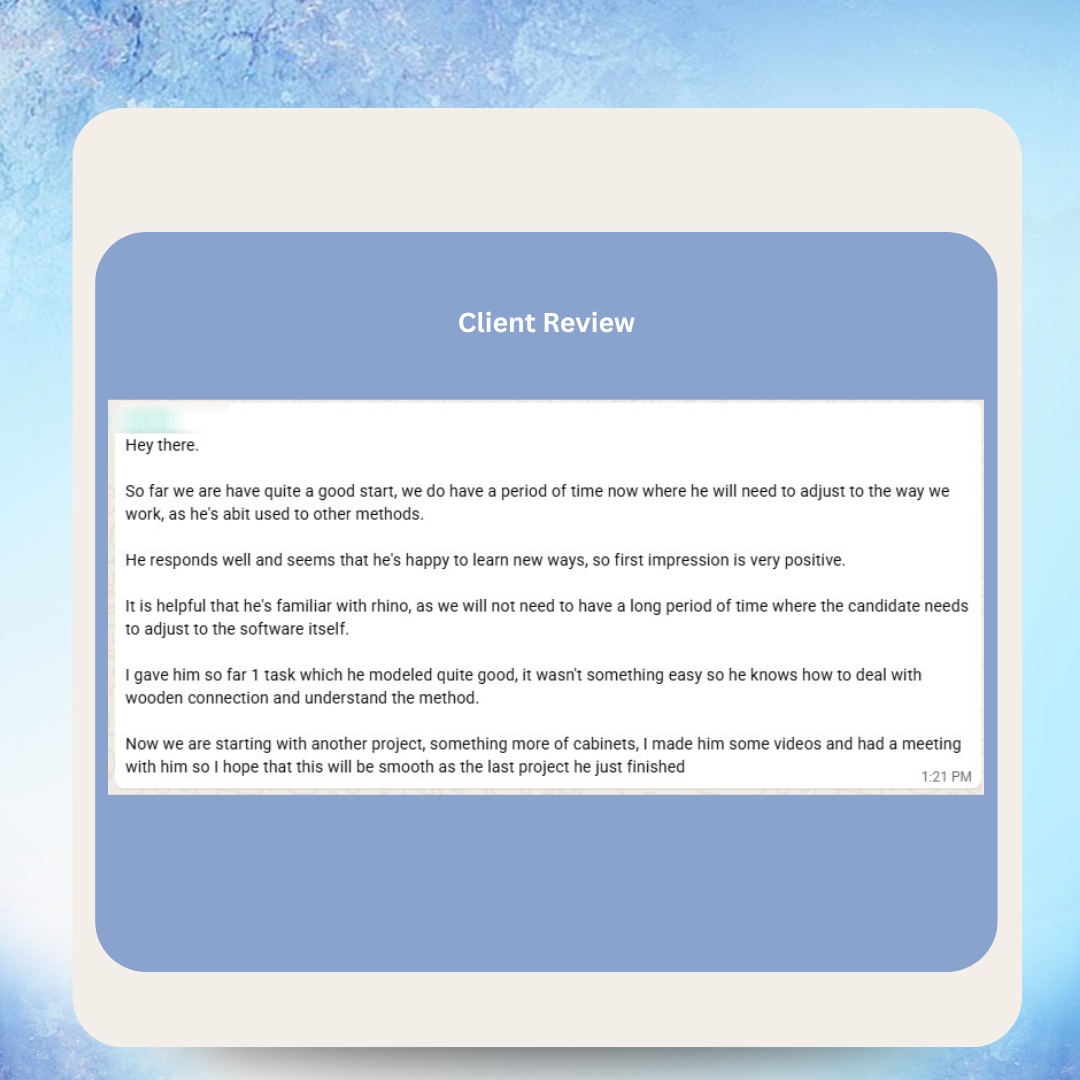
Before working with VA Masters, our agency relied solely on local employees. Since partnering with them, we’ve embraced outsourcing, which has opened up new opportunities for scaling and saved us tens of percent in operational costs. Bringing in virtual assistants for campaign management, data analysis, and even a personal assistant has allowed us to grow faster without compromising on quality. Having all the HR aspects handled seamlessly means I can focus on strategic growth without getting bogged down by admin tasks. It’s reassuring to know there’s always support to keep the team productive and engaged. If you’re looking to scale efficiently and cost-effectively, I highly recommend them.
Detailed Job Posting
Custom job description tailored to your specific needs and requirements.
Candidate Collection
1,000+ applications per role from our extensive talent network.
Initial Screening
Internet speed, English proficiency, and experience verification.
Custom Skills Test
Real job task simulation designed specifically for your role.
In-Depth Interview
Culture fit assessment and communication evaluation.
Client Interview
We present 2-3 top candidates for your final selection.
Have Questions or Ready to Get Started?
Our team is ready to help you find the perfect match.
Get in Touch →| Feature | VA MASTERS | Others |
|---|---|---|
| Custom Skills Testing | ✓ | ✗ |
| Dedicated Account Manager | ✓ | ✗ |
| Ongoing Training & Support | ✓ | ✗ |
| SOP Development | ✓ | ✗ |
| Replacement Guarantee | ✓ | ~ |
| Performance Reviews | ✓ | ✗ |
| No Upfront Fees | ✓ | ✗ |
| Transparent Pricing | ✓ | ~ |
What Our Clients Say





Real Messages from Real Clients


Hear From Our VAs



As Featured In






Frequently Asked Questions
When should I make my first outsourced hire?
Make your first outsourced hire when you have clearly defined tasks that consume significant time but do not require your personal expertise, the tasks are recurring and can be documented in SOPs, and you have budget for at least a 3-month commitment. The ideal first role is a general virtual assistant handling admin, email, scheduling, and research. Start with a single full-time VA to prove the model before scaling further.
How do I know when it is time to add a team lead?
You need a team lead when your team reaches 5-6 people and your daily management time exceeds 90 minutes. The signs include spending more time coordinating tasks than doing strategic work, team members waiting for your input before proceeding, and quality review becoming inconsistent due to your limited bandwidth. Promote your most capable existing team member or hire an experienced lead with BPO supervisory background.
What is the biggest mistake companies make when scaling outsourced teams?
The biggest mistake is failing to document processes before scaling. Without SOPs, every new hire requires personal training from the business owner or an experienced team member, which creates a bottleneck that limits growth and degrades quality. Start documenting on day one — every process explained verbally should also exist as a written SOP. Companies that invest in documentation from the start scale two to three times faster than those that treat it as an afterthought.
How fast should I scale my outsourced team?
Scale at the pace your management infrastructure supports. A common cadence is one new hire every 4-6 weeks for the first five people, then 2-3 new hires per month once you have a team lead and SOPs in place. Never add people faster than you can onboard them properly. A poorly onboarded hire creates more work than they absorb. If your team lead says they cannot manage another person right now, listen.
How much does it cost to scale an outsourced team to 50 people?
A fully loaded budget for a 50-person outsourced team through VA Masters is approximately $85,000-$160,000 per month, including VA compensation ($7-$15/hour), management overhead (team leads and operations manager at 15-20% premium), tools and software ($30-$60/person/month), and retention investments (13th month bonus, performance bonuses). This represents up to 80% savings compared to a local team of equivalent size and capability.
Should I hire an operations manager from the Philippines or my home country?
Hire a Filipino operations manager. They understand Filipino work culture, can communicate with your team in both English and Filipino, are available during your team's working hours, command rates that are competitive with the Philippine market, and bring BPO management experience that is directly relevant. A US or European operations manager costs three to five times more and lacks the cultural context that makes managing Filipino teams effective.
How do I maintain quality as my team grows?
Quality at scale depends on three things: comprehensive SOPs that define standards clearly, a management layer (team leads and operations manager) that reviews work before it reaches you, and structured 90-day evaluations for every new hire with a willingness to release people who do not meet standards. Also conduct regular quality audits where you personally review a random sample of work from each department to ensure standards are maintained.
What tools do I need for a 50-person outsourced team?
At 50 people, your core tech stack should include Slack or Microsoft Teams for communication, an enterprise project management tool like Monday.com or ClickUp, Google Workspace or Microsoft 365 for identity and document management, a time tracking tool like Time Doctor or Hubstaff, a password manager like 1Password with shared vaults, and a performance management platform. Budget $30-$60 per person per month for the full tool stack.
How do I prevent high turnover as I scale?
Retention at scale requires competitive compensation that keeps pace with market rates, clear career development paths so team members see a future, consistent recognition and appreciation from leadership, a 13th month bonus and performance bonuses, regular engagement surveys to identify issues early, and genuine investment in culture through team events and social connection. The cost of retaining a team member is always less than the cost of replacing them — typically 3-6 months of their compensation.
Can VA Masters support hiring at scale?
Yes. VA Masters supports teams from a single VA to organizations with dozens of team members. For large-scale hiring, we provide priority candidate sourcing from our pre-vetted talent pool, batch recruitment for multiple positions simultaneously, dedicated account management for teams of ten or more, ongoing retention support including market rate guidance and engagement advisory, and replacement guarantees to minimize the impact of any turnover. Our 6-stage screening process maintains consistent quality regardless of hiring volume.
Ready to Get Started?
Join 500+ businesses who trust VA Masters with their teams.
- No upfront payment required
- No setup fees
- Only pay when you are 100% satisfied with your VA

Anne is the Operations Manager at VA MASTERS, a recruitment agency specializing in Filipino virtual assistants for global businesses. She leads the end-to-end recruitment process — from custom job briefs and skills testing to candidate delivery and ongoing VA management — and has personally overseen the placement of 1,000+ virtual assistants across industries including e-commerce, real estate, healthcare, fintech, digital marketing, and legal services.
With deep expertise in Philippine work culture, remote team integration, and business process optimization, Anne helps clients achieve up to 80% cost savings compared to local hiring while maintaining top-tier quality and performance.
Email: [email protected]
Telephone: +13127660301