

Outsource Executive Assistance to the Philippines — The Definitive Guide to Hiring a Pre-Vetted Executive Virtual Assistant in 2026
The most valuable resource any executive has is time. Every hour spent coordinating calendars, triaging email, booking travel, preparing meeting materials, processing expense reports, and managing the administrative logistics of leadership is an hour not spent on strategy, decision-making, business development, and the high-leverage activities that drive organizational growth. Yet most executives — CEOs, founders, VPs, and managing directors — spend 15 to 25 hours per week on administrative tasks that require organizational skill rather than executive judgment. That is 40 to 65 percent of their working week consumed by activities that someone else could handle better, faster, and at a fraction of the cost.
The challenge is that qualified executive assistants are expensive and increasingly difficult to recruit domestically. An experienced executive assistant in the United States costs $55,000 to $85,000 per year in salary. A senior EA supporting C-suite leadership commands $75,000 to $120,000. Add benefits, payroll taxes, and office overhead, and the all-in cost reaches $75,000 to $160,000 annually. For founders and executives at growing companies — where every dollar of overhead is scrutinized against growth investment — this cost creates a tension between the support they need and the budget they can justify.
The Philippines has become the premier source of executive virtual assistants for a compelling reason: Filipino professionals combine exceptional English communication skills, deep organizational capability, a service-oriented cultural disposition, and professional polish that meets the exacting standards of C-suite support — at up to 80% savings compared to domestic hiring. At VA Masters, we have placed 1,000+ virtual assistants globally, and executive assistance is our flagship category. The executives and founders we support consistently report that their Filipino EA is the single highest-ROI hire they have ever made. This guide covers everything you need: which executive functions to outsource, how to structure the EA role, realistic cost comparisons, the gatekeeper function, implementation best practices, and the mistakes that prevent executives from fully leveraging their VA investment.
Why the Philippines Is the Premier Choice for Executive Assistance
Executive assistance requires a unique combination of skills — organizational precision, communication excellence, discretion, anticipatory thinking, and the professional polish to represent a leader effectively. The Philippines produces this combination in abundance, for reasons rooted in culture, education, and professional experience.
Service Excellence as a Cultural Value
Filipino culture places a high value on service, hospitality, and attention to the needs of others. In the context of executive assistance, this cultural orientation translates into VAs who naturally anticipate their executive's needs, take ownership of tasks without being micromanaged, communicate proactively about potential issues, and derive genuine professional satisfaction from making their executive's life run smoothly. This is not learned behavior — it is cultural DNA that produces EA professionals who are attentive, proactive, and deeply invested in their executive's success.
Professional English Communication
An executive assistant communicates on behalf of the executive — drafting emails, making calls, coordinating with board members, clients, and partners, and representing the executive's brand in every interaction. Filipino EAs write and speak professional English that meets the standards of C-suite communication. They can draft board meeting agendas, compose client correspondence, communicate with investors, and manage stakeholder relationships with the linguistic precision and professional tone that executive leadership demands. The Philippines' American-influenced education system and English-as-official-language status produce communication skills that are virtually indistinguishable from native English speakers in professional contexts.
Organizational Capability and Tech Savviness
Modern executive assistance is a technology-dependent function. Your EA manages your calendar in Google Calendar or Outlook, triages email in complex inbox ecosystems, books travel through online platforms, manages tasks in project management tools, prepares documents in Google Workspace or Microsoft 365, coordinates across Slack and Teams, and navigates the dozen or more tools that comprise a modern executive's operational stack. Filipino EAs bring strong technical proficiency across these platforms, combined with the organizational thinking that turns tool proficiency into operational efficiency.
Cost Efficiency for Growing Companies
Through VA Masters, a pre-vetted Filipino executive VA costs $8 to $14 per hour — representing up to 80% savings compared to a domestic EA. For a founder running a $5 million company, this cost structure means world-class executive support at $16,600 to $29,100 per year instead of $75,000 to $120,000. The savings alone often fund another strategic hire or marketing investment. And because the cost barrier is lower, executives who previously could not justify a full-time EA can now access dedicated support that transforms their daily productivity.
Key Insight
A study by the Harvard Business Review found that CEOs spend an average of 72 percent of their time in meetings — and the quality of those meetings depends almost entirely on preparation and follow-up that someone other than the CEO should be managing. An executive VA does not just schedule meetings; they prepare briefing documents, compile relevant data, draft agendas, coordinate with attendees, take notes, and track action items. This preparation and follow-up infrastructure is what makes the difference between a CEO who runs effective meetings and one who attends a blur of unprepared conversations.
Executive Functions You Can Outsource to the Philippines
An executive virtual assistant handles the operational infrastructure that allows a leader to focus exclusively on the strategic work that only they can do. Here is a comprehensive breakdown of every function that generates the highest ROI when outsourced.
Calendar Management
Your EA owns your calendar — scheduling meetings based on your priorities, blocking focus time for deep work, managing the back-and-forth of multi-party scheduling, handling reschedules and cancellations, protecting your time from low-value meetings, and ensuring that your calendar reflects your strategic priorities rather than whoever emailed you last. They understand which meetings you attend personally, which can be delegated, and which should be declined. Over time, they develop the judgment to make scheduling decisions autonomously, only escalating genuinely ambiguous situations.
Email Triage and Management
Executive email is a firehose. Most CEOs and founders receive 100 to 300 emails per day, the vast majority of which do not require their personal attention. Your EA triages your inbox — identifying emails that require your personal response, drafting responses for routine messages that you review and approve with a click, handling informational emails that just need acknowledgment, routing emails to the appropriate team member when you are not the right respondent, flagging urgent items for immediate attention, and ensuring that nothing important falls through the cracks. Effective email triage recovers 1 to 3 hours per day that executives currently spend processing messages.
Document Drafting and Editing
Your EA prepares and edits documents across the full range of executive communication — board meeting presentations, investor updates, internal memos, client proposals, strategic planning documents, and the miscellaneous reports and communications that executive leadership produces. They format documents to your standards, proofread for accuracy and professionalism, incorporate data and visuals, and ensure that every document that goes out under your name reflects well on your leadership.
Research and Information Gathering
Executives constantly need information — competitor analysis, industry trends, potential partner backgrounds, market data, regulatory updates, and the contextual knowledge that informs strategic decisions. Your EA conducts research and prepares briefing documents that give you the information you need in a format you can consume quickly. Before a meeting with a potential partner, your EA prepares a one-page brief covering the company's recent news, key personnel, financial position, and relevant background. Before a board meeting, they compile the performance data, market context, and competitive intelligence that informs your strategic narrative.
Personal Task Management
Executive effectiveness extends beyond business operations. Your EA manages personal tasks that consume mental bandwidth — scheduling personal appointments, coordinating household logistics, managing subscriptions and services, handling personal correspondence, and the miscellaneous life administration tasks that compete for your attention during business hours. Many executives report that personal task management is one of the most impactful EA functions because it eliminates the mental context-switching between personal logistics and professional leadership that fragments focus and reduces cognitive performance throughout the day.
Project Coordination
Executives drive projects that span teams, departments, and external partners. Your EA provides the project coordination that keeps these initiatives on track — maintaining project timelines, scheduling status meetings, tracking deliverables and milestones, following up with responsible parties on overdue items, preparing project status reports, and ensuring that the executive always has current visibility into project progress. They do not replace a project manager for complex technical projects, but they provide the organizational backbone for the strategic initiatives that executives personally champion.
VA Masters tests every executive VA candidate with role-specific assessments that simulate real executive support scenarios. Candidates must manage a complex calendar with competing priorities and limited availability, triage a realistic email inbox of 50+ messages and correctly categorize, respond to, or route each one, draft professional correspondence including board-level communication, research and prepare a briefing document on an unfamiliar company, and coordinate a multi-party event with logistics, attendee management, and materials preparation. We evaluate judgment, prioritization, communication quality, and the proactive thinking that distinguishes a true executive assistant from an administrative task executor.
Calendar Management and Email Triage
Calendar and email are the two functions where executive VA support delivers the most immediate, tangible impact. They are also the two functions that consume the most executive time when unmanaged.
Strategic Calendar Architecture
Your EA does not just schedule meetings — they architect your week for maximum productivity. They block focus time for strategic thinking and deep work, group similar meetings to minimize context-switching, build buffer time between high-intensity meetings, protect recurring time blocks for exercise, family, and personal renewal, and ensure that your calendar supports your energy management rather than depleting it. They understand that a CEO who has back-to-back meetings from 8am to 6pm every day is not productive — they are busy. Your EA builds a calendar that makes the distinction.
Scheduling Protocols and Prioritization
Your EA follows your scheduling protocols — who gets priority access to your calendar, how far in advance meetings can be booked, which meeting types have maximum duration limits, when you prefer different types of meetings (creative work in the morning, calls in the afternoon, for example), and which invitations can be declined without consulting you. These protocols evolve as your EA learns your preferences and develops the judgment to handle scheduling decisions that align with your priorities.
Email Triage System
Your EA implements an email triage system that turns your inbox from a source of stress into a managed communication channel. They categorize incoming messages into actionable tiers: Tier 1 (requires your personal response — flagged for your attention with context notes), Tier 2 (routine response — EA drafts a reply for your one-click approval), Tier 3 (informational — EA acknowledges or files), and Tier 4 (irrelevant — EA unsubscribes or archives). The result is that when you open your email, you see only the messages that need your brain, and each one has the context notes that allow you to respond in seconds rather than minutes.
Communication Management Across Channels
Executive communication extends beyond email — Slack messages, LinkedIn DMs, text messages, voicemails, and direct messages across multiple platforms all compete for attention. Your EA monitors these channels according to your preferences, ensuring that urgent messages from priority contacts reach you immediately regardless of channel, while routine messages are handled within the appropriate communication management framework.
Pro Tip
During the first week, have your EA shadow your email and calendar behavior. Do not have them take action — just have them observe how you handle messages, which meetings you accept versus decline, and what your natural scheduling preferences are. After one week of observation, they have a behavioral model of your preferences that accelerates the transition to autonomous management far faster than any written protocol can achieve.
See What Our Clients Have to Say
Travel Booking and Expense Management
Travel planning and expense management are time-intensive tasks that executives universally dislike but cannot avoid. Your EA handles the complete lifecycle of business travel, from planning through post-trip expense reconciliation.
Travel Planning and Booking
Your EA plans and books business travel according to your preferences — preferred airlines and seating, hotel chains and room types, ground transportation preferences, timing and scheduling constraints, and budget parameters. They research options, present recommendations, book confirmed itineraries, and make adjustments as schedules change. For complex multi-city trips involving meetings in different locations across different time zones, your EA builds the travel itinerary that optimizes both your schedule and your comfort.
Travel Itinerary Management
Your EA prepares comprehensive travel itineraries that include every detail — flight times and confirmation numbers, hotel addresses and reservation details, ground transportation arrangements, meeting locations with addresses and contact information, restaurant reservations, and contingency information (alternative flights, nearby hotels, 24-hour support contacts). They share itineraries through TripIt, Google Calendar, or your preferred format, and update them in real time as changes occur.
Expense Report Processing
After travel (and for ongoing monthly expenses), your EA processes expense reports — organizing receipts, categorizing expenses, completing expense report forms in Expensify, SAP Concur, Brex, or your company's expense system, reconciling corporate card charges, and submitting reports for approval. They maintain records of recurring expenses, track reimbursement status, and ensure that expense reports are submitted on time and in compliance with company policy. For executives who currently let expense reports pile up for weeks, a dedicated EA ensures they are processed within days of incurrence.
Vendor and Subscription Management
Executives accumulate subscriptions, memberships, and vendor relationships — software tools, industry memberships, travel loyalty programs, conference registrations, and personal services. Your EA tracks renewal dates, manages cancellations, evaluates whether subscriptions are still providing value, and ensures that you are not paying for services you no longer use. This seemingly minor function often recovers $1,000 to $5,000 or more per year in unnecessary subscriptions.
Meeting Preparation and Follow-Up
The value of a meeting is determined before and after it happens — by the preparation that ensures productive discussion and the follow-up that ensures decisions translate into action. Your EA manages both.
Pre-Meeting Preparation
Before every significant meeting, your EA prepares briefing materials — attendee backgrounds and recent interactions, agenda items with context notes, relevant data and documents, talking points and objectives, and any preparatory materials you need to review. For a board meeting, this means a comprehensive board book. For a client meeting, it means the latest project status, outstanding issues, and relationship history. For a job interview, it means the candidate's resume, LinkedIn profile, interview questions, and the team's evaluation criteria. You walk into every meeting informed and prepared, without spending your own time on the research and compilation.
Meeting Notes and Action Items
Your EA takes meeting notes (either by attending virtually or from a recording with your permission), distills them into actionable summaries, identifies and assigns action items, and distributes meeting follow-up to attendees. They track action item completion, send reminders to responsible parties, and escalate overdue items — ensuring that meeting decisions actually translate into execution rather than evaporating after the calendar event ends.
Board and Investor Relations Support
For executives who report to a board or manage investor relationships, your EA provides the administrative support that these relationships require — scheduling board meetings, preparing and distributing board materials, managing board portal access, coordinating committee meetings, tracking board resolutions and governance requirements, preparing investor update emails, and managing the communication cadence that keeps investors informed and engaged.
The Gatekeeper Function
One of the most valuable roles an executive assistant plays is gatekeeper — protecting the executive's time and attention from the constant demands that would otherwise fragment their focus and prevent deep work.
Access Control
Your EA manages who gets access to your time and attention. They screen meeting requests against your priorities, redirect inquiries to the appropriate team member when you are not the right contact, buffer you from interruptions during focus blocks, and ensure that the people and topics that reach your calendar are genuinely the highest-value use of your time. This is not about being inaccessible — it is about being intentionally accessible to the right people at the right time.
Information Filtering
Your EA filters the information flow that reaches you — summarizing long reports into executive briefs, highlighting the key data points in dense spreadsheets, flagging the important items in lengthy email threads, and presenting information in the format that allows you to make decisions quickly rather than spending time parsing raw data. They learn what information you need to see in detail versus what you need as a summary, and they format accordingly.
Decision Delegation Framework
Over time, your EA develops the judgment to handle categories of decisions independently — approving or declining meeting requests, responding to routine inquiries, making scheduling trade-offs, and handling operational logistics without escalating to you. This delegation framework grows as trust builds and the EA's understanding of your preferences deepens. The goal is an EA who handles 80 percent of incoming demands independently, escalating only the 20 percent that genuinely require your judgment.
Common Mistake
The biggest gatekeeper mistake is not empowering your EA to say "no" on your behalf. If your EA cannot decline meeting requests, redirect inquiries, or protect your focus time without checking with you every time, the gatekeeper function does not work. Give your EA explicit permission and criteria for declining, redirecting, and deferring on your behalf. A strong gatekeeper is what transforms an executive from someone who reacts to everyone else's priorities into someone who proactively pursues their own.
Tools and Platforms
An executive VA works across the technology stack that powers your daily operations. Here are the key platforms they leverage.
Calendar and Scheduling
Google Calendar, Microsoft Outlook, Calendly, SavvyCal, and scheduling coordination tools. Your EA manages your complete calendar ecosystem, including personal and professional calendars, team calendars, and the scheduling integrations that automate routine booking.
Email and Communication
Gmail, Microsoft Outlook, Slack, Microsoft Teams, Zoom, and messaging platforms. Your EA manages email triage, drafts communications, coordinates across channels, and ensures that your communication infrastructure supports rather than overwhelms your productivity.
Task and Project Management
Asana, Monday.com, Notion, Trello, Todoist, ClickUp, and similar tools. Your EA maintains your task lists, tracks project milestones, manages delegated work, and provides the organizational framework that keeps your commitments visible and on track.
Document and Presentation
Google Workspace (Docs, Sheets, Slides), Microsoft 365 (Word, Excel, PowerPoint), Notion, and design tools like Canva. Your EA creates, formats, and manages the documents that support your leadership — from internal memos to board presentations to client proposals.
Travel and Expense
Google Flights, booking platforms, TripIt, Expensify, SAP Concur, Brex, and corporate card management tools. Your EA handles the complete travel and expense lifecycle within your preferred platforms.
CRM and Relationship Management
Your EA may manage your contacts and relationships within a CRM (Salesforce, HubSpot) or personal CRM (Dex, Monica, Clay), tracking relationship touchpoints, scheduling follow-ups, and maintaining the relationship infrastructure that supports your network.
Cost and Pricing
The cost advantage of an outsourced executive assistant creates outsized returns because the time it frees is executive time — the most expensive and highest-leverage time in the organization.
Compare this to domestic EA hiring. An experienced executive assistant in the US earns $55,000 to $85,000 per year. A senior EA supporting C-suite leaders commands $75,000 to $120,000. Add benefits, payroll taxes, and overhead, and the all-in cost reaches $75,000 to $160,000 per position. A full-time Filipino executive VA through VA Masters costs approximately $16,600 to $29,100 per year all-in. That represents up to 80% savings on the most impactful support role in your organization.
The ROI calculation for executive assistance is uniquely compelling because it is denominated in executive time. If a CEO's time is worth $500 per hour (based on their compensation and the value they generate) and an EA frees 15 hours per week, that is $7,500 per week in recovered executive capacity — $390,000 per year against a VA cost of $16,600 to $29,100. The return is not 2x or 3x — it is 13x to 23x. Even for executives with more modest time valuations, the math overwhelmingly favors dedicated EA support. The question is not whether you can afford an executive VA; it is whether you can afford not to have one. Contact our team for a personalized quote.
VA Masters pricing includes our complete 6-stage recruitment and vetting process, executive-specific assessments, ongoing HR support, performance management assistance, and replacement guarantee. No upfront placement fees, no long-term contracts, no hidden costs. You pay your VA's hourly rate — we handle everything else.

Working with VA Masters completely changed the way I handle recruitment. Bringing Raquel on board as my Virtual Assistant has been a huge relief. She takes care of coordinating interviews, tracking candidate progress, and managing job publications, which frees up my time for strategic growth and interviews. One of the biggest benefits is not having to deal with the logistics side of things. Everything from payroll to performance reviews is managed smoothly by VA Masters, so I can focus on my business without getting bogged down by admin work. It’s reassuring to know there’s always someone to help ensure Raquel stays engaged and productive. I genuinely appreciate the support and efficiency they bring to my team. If you’re looking to grow your business without the usual stress, I can’t recommend them enough.
Detailed Job Posting
Custom job description tailored to your specific needs and requirements.
Candidate Collection
1,000+ applications per role from our extensive talent network.
Initial Screening
Internet speed, English proficiency, and experience verification.
Custom Skills Test
Real job task simulation designed specifically for your role.
In-Depth Interview
Culture fit assessment and communication evaluation.
Client Interview
We present 2-3 top candidates for your final selection.
Have Questions or Ready to Get Started?
Our team is ready to help you find the perfect match.
Get in Touch →Onboarding Your Executive Virtual Assistant
The first 30 days of an executive VA relationship set the foundation for years of productive partnership. Executive onboarding requires a deliberate transfer of preferences, priorities, and trust.
Week 1: Access, Observation, and Preference Mapping
Provide your EA with access to your calendar, email (read-only initially), communication platforms, and document repositories. Have them observe your patterns for the first 2 to 3 days — how you handle email, which meetings you prioritize, how you communicate with different stakeholders, and what your daily rhythm looks like. Share your written preferences (travel, scheduling, communication style) and introduce them to your key contacts and team members. The observation period gives your EA context that no written document can convey.
Week 2: Supervised Calendar and Email Management
Your EA begins managing your calendar and triaging email with your oversight. They propose scheduling decisions for your approval, draft email responses for your review, and begin handling routine communications independently. Review their work daily during this phase, providing feedback that calibrates their judgment to your expectations. By the end of week two, they should handle routine scheduling independently and draft responses that require minimal editing.
Week 3-4: Expanding Scope and Building Trust
Expand your EA's responsibilities to include travel booking, meeting preparation, document drafting, and project coordination. Reduce the frequency of your oversight as their judgment demonstrates alignment with your preferences. Begin delegating decisions — "From now on, decline any meeting request that is not from my direct reports, board members, or key clients unless you think I should review it." Each delegation decision builds the autonomous capability that makes your EA truly effective.
Month 2 and Beyond: Full Partnership
By the second month, your EA operates as a full executive support partner — managing your calendar, email, travel, meetings, and projects with minimal daily oversight. You have a weekly sync to discuss upcoming priorities, review any decisions they were uncertain about, and continuously refine the delegation framework. The relationship deepens over months and years as your EA accumulates institutional knowledge, relationship context, and the predictive understanding of your preferences that allows them to anticipate your needs before you articulate them.
Common Mistakes to Avoid When Hiring an Executive VA
VA Masters has placed 1,000+ virtual assistants globally, and executive assistant engagements have distinct patterns of success and failure. Here are the mistakes to avoid.
Not Investing in the First Two Weeks
The first two weeks require more of your time, not less. You are transferring years of accumulated preferences, relationships, and institutional knowledge to another person. Executives who try to skip onboarding — "just figure it out" — end up with an EA who guesses at their preferences, makes avoidable errors, and never develops the contextual understanding that enables autonomous operation. Invest 30 to 60 minutes per day in the first two weeks and you will save hundreds of hours over the following years.
Micromanaging Instead of Delegating
An executive assistant whom you check behind on every email, every calendar entry, and every task decision is not an assistant — they are an additional layer of work. The purpose of an EA is to remove tasks from your plate, not to create new review tasks. Trust the vetting process, invest in onboarding, provide clear feedback when adjustments are needed, and then let go. The executives who get the most value from their EAs are those who genuinely delegate rather than just outsourcing the execution while retaining the management.
Keeping the EA at Arm's Length
An EA who does not know your business context, your key relationships, or your strategic priorities can only execute mechanical tasks. Share the context that allows your EA to make intelligent decisions — who your most important clients are, which projects have highest priority this quarter, what your board is focused on, and what information you need proactively rather than reactively. An EA with context is an executive partner; an EA without context is a calendar clerk.
No Clear Communication Preferences
Tell your EA how you want to communicate — daily email summary at 7am, Slack messages for urgent items only, weekly video call for priorities review, and no phone calls unless it is a genuine emergency. Without clear communication protocols, your EA will either over-communicate (interrupting your focus) or under-communicate (leaving you in the dark). Define the cadence and channels from the start.
Underutilizing Their Capabilities
Many executives start their EA on calendar and email and never expand the scope. An experienced executive VA can handle research, document preparation, project coordination, vendor management, event planning, personal task management, and the dozen other functions described in this guide. If your EA has capacity beyond calendar and email management, expand their role to capture the full value of dedicated executive support.
Key Insight
The executives who describe their VA as "transformative" or "the best hire I have ever made" share a common trait: they trust their EA completely. Trust does not mean blind faith — it means having invested in thorough onboarding, provided clear expectations, given honest feedback, and then genuinely letting go of the tasks they have delegated. This trust allows the EA to operate at their full capability, making decisions, managing relationships, and handling situations that free the executive to operate at their highest level. Trust is not the starting point; it is the destination of a well-managed onboarding process.
| Feature | VA MASTERS | Others |
|---|---|---|
| Custom Skills Testing | ✓ | ✗ |
| Dedicated Account Manager | ✓ | ✗ |
| Ongoing Training & Support | ✓ | ✗ |
| SOP Development | ✓ | ✗ |
| Replacement Guarantee | ✓ | ~ |
| Performance Reviews | ✓ | ✗ |
| No Upfront Fees | ✓ | ✗ |
| Transparent Pricing | ✓ | ~ |
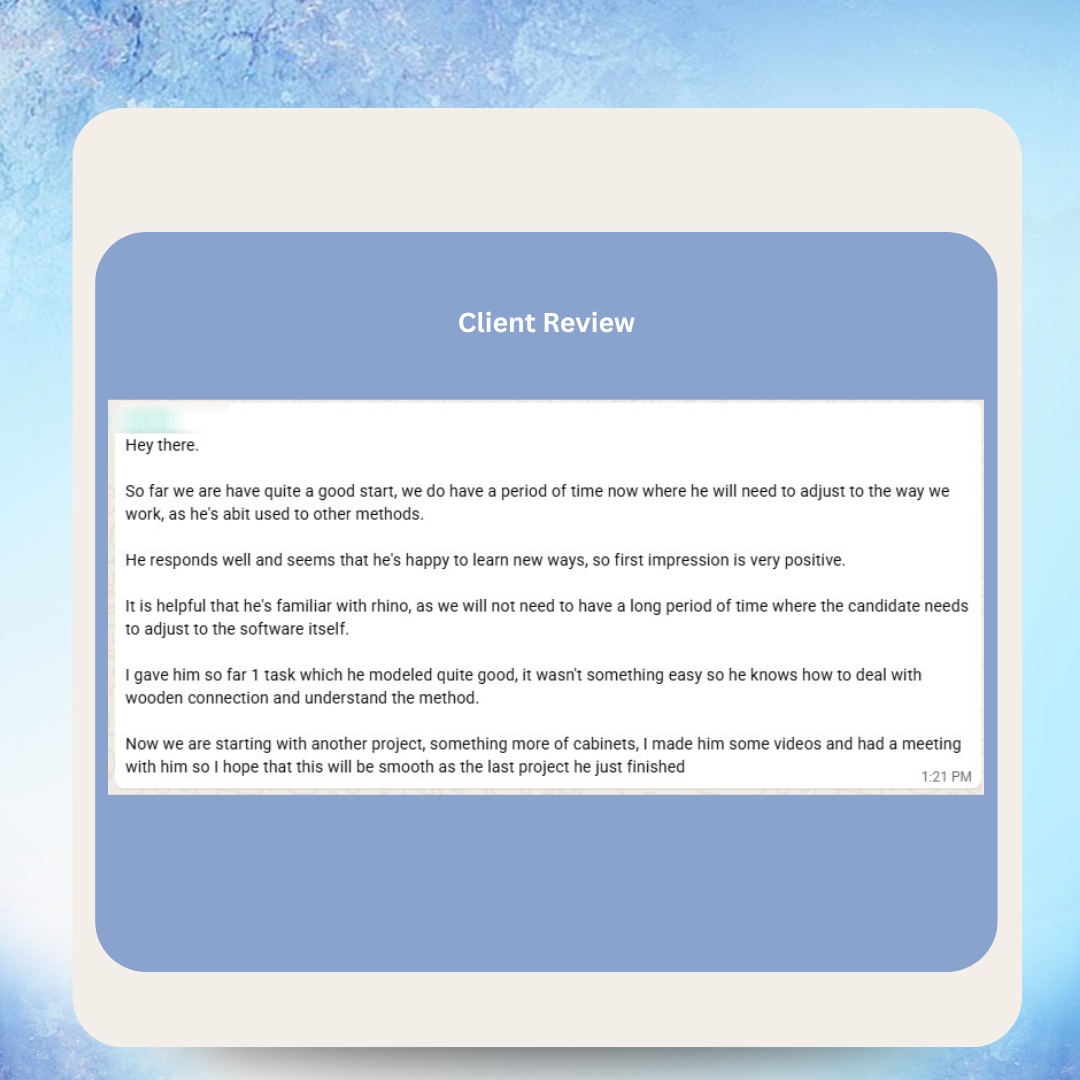
What Our Clients Say




Real Messages from Real Clients


Hear From Our VAs



As Featured In






Frequently Asked Questions
What does an executive virtual assistant do?
An executive VA handles the operational and administrative infrastructure that supports executive leadership — calendar management, email triage and response drafting, travel planning and booking, meeting preparation and follow-up, document drafting and editing, expense report processing, research and briefing documents, project coordination, personal task management, and the gatekeeper function that protects your time and attention for highest-value activities.
How much does an executive VA cost through VA Masters?
Executive VAs through VA Masters cost $8 to $14 per hour depending on experience level and skill set. Compare this to $55,000-$120,000+ per year for a domestic executive assistant before benefits and overhead. A full-time Filipino executive VA costs approximately $16,600 to $29,100 per year all-in. That represents up to 80% savings with no upfront fees, no long-term contracts, and a replacement guarantee.
Can an executive VA manage my email inbox?
Yes. Email triage and management is one of the highest-impact functions our executive VAs perform. They categorize incoming messages by priority, draft responses for routine emails, route messages to appropriate team members, flag urgent items for your attention, and ensure that nothing important falls through the cracks. Most executives recover 1 to 3 hours per day through effective email management alone.
Will an executive VA work during my business hours?
Yes. Filipino VAs are known for their flexibility with international time zones. Most of our executive VAs work your business hours so they are available for real-time calendar management, email triage, meeting preparation, and the responsive support that executive assistance requires. We match candidates to your preferred schedule during the recruitment process.
How do you ensure confidentiality and discretion?
Every VA Masters executive VA signs a comprehensive NDA before accessing any business information. We verify secure working environments and implement role-based system access. Executive VAs are specifically assessed for discretion and professional judgment — they understand that the information they handle is sensitive and that confidentiality is non-negotiable. We select candidates whose professional maturity and ethical standards meet the demands of executive-level support.
Can an executive VA handle travel booking?
Yes. Your VA manages the complete travel lifecycle — researching options based on your preferences, booking flights and hotels, arranging ground transportation, preparing comprehensive itineraries, managing changes and cancellations, and processing post-trip expense reports. They learn your travel preferences quickly and make booking decisions that align with your comfort and productivity needs.
How quickly can I get an executive VA?
VA Masters delivers pre-vetted executive VA candidates within 2 business days. Our 6-stage recruitment process includes executive-specific assessments covering calendar management, email triage, document preparation, research capability, and communication quality. Every candidate we present has been specifically evaluated for executive support competency.
Can an executive VA prepare documents and presentations?
Yes. Your VA creates and edits documents across Google Workspace and Microsoft 365 — board presentations, investor updates, internal memos, client proposals, meeting agendas, and strategic planning documents. They format professionally, incorporate data and visuals, proofread for accuracy, and ensure that every document reflects your leadership standards.
What is the gatekeeper function?
The gatekeeper function means your EA protects your time and attention by managing who gets access to your calendar, filtering the information that reaches you, declining low-value meeting requests, redirecting inquiries to appropriate team members, and ensuring that your schedule reflects your strategic priorities rather than everyone else's demands. It is one of the most valuable functions an executive VA performs.
Is there a trial period or long-term contract?
There are no long-term contracts and no upfront placement fees. You can start with a trial period to evaluate your executive VA's judgment, communication quality, and organizational capability within your actual workflow. VA Masters provides a replacement guarantee — if the match does not work, we recruit a replacement at no additional cost. You pay only your VA's hourly rate with no hidden fees.
Ready to Get Started?
Join 500+ businesses who trust VA Masters with their teams.
- No upfront payment required
- No setup fees
- Only pay when you are 100% satisfied with your VA

Anne is the Operations Manager at VA MASTERS, a recruitment agency specializing in Filipino virtual assistants for global businesses. She leads the end-to-end recruitment process — from custom job briefs and skills testing to candidate delivery and ongoing VA management — and has personally overseen the placement of 1,000+ virtual assistants across industries including e-commerce, real estate, healthcare, fintech, digital marketing, and legal services.
With deep expertise in Philippine work culture, remote team integration, and business process optimization, Anne helps clients achieve up to 80% cost savings compared to local hiring while maintaining top-tier quality and performance.
Email: [email protected]
Telephone: +13127660301