

Best Outsourcing Partners for European Companies
European businesses face a unique set of challenges when choosing outsourcing partners. Strict data protection laws under GDPR, complex VAT regulations across the EU, multiple languages and business cultures within a single market, and the expectation of high service quality all shape what “the right outsourcing partner” actually means for a company headquartered in Berlin, Amsterdam, London, or Stockholm. The decision is not simply about finding the cheapest provider — it is about finding a partner that understands the European regulatory environment, delivers consistent quality, and operates at a price point that creates genuine competitive advantage.
The global outsourcing market has grown past $400 billion, and European companies account for a substantial share of that spending. Yet many European decision-makers remain cautious. Stories of failed outsourcing projects, data breaches, and communication breakdowns have made some companies hesitant to look beyond their borders. That hesitation is understandable but increasingly costly. European labor markets are tight, salaries continue to climb, and the businesses that figure out outsourcing gain a structural cost advantage that compounds over time.
VA Masters has placed 1,000+ virtual assistants with businesses around the world, including hundreds of European companies across the UK, Germany, the Netherlands, Scandinavia, and Southern Europe. We have seen firsthand what works and what does not when European companies outsource. This guide distills that experience into a practical framework for finding, evaluating, and partnering with outsourcing providers that meet the specific needs of European businesses — with potential savings of up to 80% compared to local hiring.
Why European Companies Are Outsourcing More Than Ever
The European outsourcing market is growing for reasons that go beyond simple cost reduction. While saving money remains important, several structural factors are driving European businesses to outsource at an accelerating pace.
The European Talent Shortage
Europe faces a severe talent shortage across multiple sectors. Germany alone had over 770,000 unfilled positions in 2024, and the European Commission has identified talent scarcity as one of the continent's most pressing economic challenges. Aging populations, declining birth rates, and increasingly selective immigration policies mean this shortage will worsen. For many European companies, outsourcing is not a choice between local hiring and remote hiring — it is a choice between remote hiring and not filling the role at all.
Rising Labor Costs
European labor costs are among the highest in the world. The average employer cost per hour worked exceeds EUR 30 in Western Europe, with countries like Denmark, Belgium, and Luxembourg surpassing EUR 45. These figures include mandatory social contributions, pension obligations, holiday allowances, and other statutory benefits that significantly exceed base salary. When a mid-level customer service representative costs EUR 50,000-65,000 fully loaded in the Netherlands, and the same quality of work can be performed by a skilled Filipino professional for a fraction of that amount, the financial argument for outsourcing becomes impossible to ignore.
Regulatory Complexity
Paradoxically, Europe's complex regulatory environment actually drives outsourcing. Companies need specialists in GDPR compliance, VAT administration, multi-country payroll, and regulatory reporting — functions that are expensive to staff locally but well-suited to outsourcing through partners who have already built the expertise and systems. Rather than hiring a full-time GDPR compliance officer at EUR 80,000+ per year, a European SME can outsource data management to a partner with built-in compliance frameworks at a fraction of the cost.
The Remote Work Normalization
The pandemic permanently changed European attitudes toward remote work. Companies that once insisted on office presence now have distributed teams across multiple countries. Once you accept that your marketing coordinator can work effectively from their apartment in Lyon, the leap to accepting that a virtual assistant can work effectively from Manila becomes much smaller. The infrastructure, tools, and management practices for remote collaboration are already in place — outsourcing simply extends the radius of the talent search.
European Outsourcing Trend
A 2024 Deloitte survey found that 76% of European companies had increased their outsourcing spend over the previous two years, with customer service, IT support, and back-office administration leading the growth. The primary driver cited was not cost — it was access to talent that could not be found domestically at any price.
Top Outsourcing Destinations for European Companies
European companies have more outsourcing options than businesses in other regions because of geographical proximity to multiple talent markets. Each destination has distinct strengths and limitations. Understanding these differences is essential for making the right choice.
Eastern Europe: Poland, Romania, Ukraine, Bulgaria
Eastern Europe is the traditional nearshore outsourcing destination for Western European companies. The advantages are clear: geographic proximity (same or adjacent time zones), EU membership for Poland, Romania, and Bulgaria (simplifying data transfer and legal compliance), strong technical education systems, and cultural familiarity with Western European business practices. Eastern European developers, in particular, have built a strong reputation for quality. However, costs have risen significantly. Polish developer salaries have more than doubled in the past decade, and Romanian and Bulgarian costs are climbing rapidly. What was once a up to 80% cost advantage over Western Europe has narrowed to 30-40% for many roles. For non-technical functions like customer service and administration, Eastern Europe is often more expensive than Asian alternatives without providing proportionally better quality.
India: Scale and Specialization
India remains the world's largest outsourcing destination by volume, with a mature BPO industry employing millions of professionals. For European companies, India offers significant cost advantages and enormous scale — if you need 500 customer service agents or a 200-person development team, India can deliver. The challenges for European businesses are communication style differences, time zone gaps (3.5-5.5 hours ahead of Central Europe), and quality inconsistency across providers. Indian outsourcing works best for large-scale, process-driven operations where standardization matters more than individual judgment. For smaller European companies seeking 1-10 dedicated remote workers, India's strengths are less relevant.
Latin America: Nearshore for the US, Offshore for Europe
Latin America has emerged as a strong outsourcing destination — primarily for North American companies. For European businesses, the time zone math works against Latin America. Bogota is 7 hours behind Central European Time, making real-time collaboration difficult. Language alignment favors Spanish and Portuguese-speaking European companies (Spain, Portugal) but creates barriers for the rest of Europe. Latin American outsourcing makes strategic sense for European companies with significant operations in the Americas but is rarely the best choice for Europe-centric operations.
The Philippines: The Sweet Spot for European Companies
The Philippines occupies a unique position for European businesses. Filipino professionals offer exceptional English proficiency, strong service orientation, competitive pricing (up to 80% savings versus Western European rates), and a time zone that creates meaningful overlap with European business hours. The Philippine afternoon and evening align with European morning and midday, enabling several hours of real-time collaboration daily. For customer service, administration, bookkeeping, digital marketing, and dozens of other functions, the Philippines delivers the best combination of quality, cost, and compatibility for European companies. We will examine this in detail in the next section.
North Africa: The Francophone Option
Morocco and Tunisia have developed outsourcing industries that serve French-speaking European companies. If your business operates primarily in French, North African outsourcing offers language alignment, minimal time zone difference (0-1 hours from CET), and competitive costs. The talent pool is smaller than the Philippines or India, and English proficiency varies, making this a niche option best suited for French-language customer service and content.
The right outsourcing destination depends on your specific needs. For IT development projects requiring close collaboration, Eastern Europe may justify its higher costs. For large-scale process operations, India offers unmatched scale. For most European SMEs seeking dedicated remote professionals for customer service, administration, marketing, bookkeeping, or general VA work, the Philippines offers the strongest overall value proposition — which is why it is the destination VA Masters specializes in.
The Philippines Advantage for European Businesses
While the Philippines is already the world's leading destination for virtual assistant talent, several factors make it particularly well-suited for European companies. Understanding these advantages helps European decision-makers see why looking beyond the traditional Eastern European nearshore model is worth serious consideration.
English as a Business Language
English is an official language of the Philippines, used as the medium of instruction from elementary school through university. Filipino professionals do not merely speak English — they write it fluently, understand idiomatic expressions, and communicate with clarity and professionalism that rivals native speakers. For European companies that use English as their business language (which is the majority of companies operating across multiple EU markets), Filipino professionals integrate seamlessly into communication flows. This is a critical distinction from other Asian outsourcing destinations where English ability varies widely and communication often requires significant adaptation.
Service Culture and Work Ethic
The Philippines has a deeply ingrained service culture that translates directly into professional excellence. Filipino professionals take genuine pride in doing excellent work, are naturally empathetic in customer interactions, and bring a warmth and dedication that European clients consistently remark on. The country's BPO industry — which employs over 1.5 million people — has created a professional ecosystem where remote work professionalism, Western business tool fluency, and cross-cultural collaboration are the norm rather than the exception.
Time Zone Compatibility
The Philippines operates on UTC+8, which is 7 hours ahead of Central European Time (CET) and 6 hours ahead during European summer time (CEST). This means a Filipino professional starting work at 2:00 PM Manila time is online at 8:00 AM in Berlin, Amsterdam, or Paris. A standard Philippine working day of 2:00 PM to 10:00 PM Manila time provides a full 8-hour overlap with European business hours (8:00 AM to 4:00 PM CET). For UK-based companies, the overlap is even better. This is a significant advantage over Indian providers (where the overlap requires earlier Philippine hours) and a massive advantage over Latin American providers (where real-time European collaboration is impractical).
Cost Advantage That Compounds
Philippine outsourcing offers European companies savings of up to 80% compared to local hiring. A skilled virtual assistant who would cost EUR 35,000-50,000 per year fully loaded in Western Europe can be engaged through VA Masters at $7-$15 per hour — approximately EUR 12,000-26,000 annually for full-time work. When you multiply this across a team of 3, 5, or 10 people, the savings become transformative. These are not savings achieved through lower quality — they reflect the economic differential between Western Europe and the Philippines, where a professional earning $10-$15/hour lives a very comfortable middle-class life.
Scalability
The Philippines produces over 500,000 college graduates annually, creating a deep and continuously refreshed talent pool. Whether you need one virtual assistant or twenty, the talent is available. For European companies planning to scale their remote teams, this depth of talent means you will never outgrow your outsourcing destination — the Philippines can support teams from 1 to 1,000+.
For European Companies Considering the Philippines
The most common concern European companies raise is time zone management. In practice, the 7-hour difference between CET and Manila is one of the most workable offshore time zone configurations in the world. Your Filipino team starts their day as yours begins, providing a full business day of overlap. Many European clients tell us the time zone works better than they expected — and some even find the slightly offset hours advantageous, with their Filipino team completing work that is ready for European review first thing each morning.
GDPR Compliance and Data Protection When Outsourcing
For European companies, data protection is not optional — it is a legal requirement with significant penalties for non-compliance. The General Data Protection Regulation (GDPR) applies to any processing of personal data of EU residents, regardless of where that processing occurs. This has direct implications for outsourcing, and understanding these implications is essential for compliant partnerships.
Understanding the Legal Framework
When a European company outsources functions that involve personal data (customer service, HR administration, bookkeeping, marketing), the outsourcing partner becomes a "data processor" under GDPR. The European company remains the "data controller" and bears ultimate responsibility for compliance. This means you need a Data Processing Agreement (DPA) with any outsourcing partner that handles personal data, appropriate technical and organizational security measures, a legal basis for transferring personal data outside the EU (if applicable), and documentation of your data processing activities.
Transferring Data to the Philippines
The Philippines is not on the EU's list of countries with "adequate" data protection. This means personal data transfers require additional safeguards. The most common mechanism is Standard Contractual Clauses (SCCs) — pre-approved contract terms adopted by the European Commission that provide a legal basis for data transfer. When you work with VA Masters, our agreements include the necessary SCC provisions to ensure your data transfers are GDPR-compliant. Additionally, the Philippines has its own comprehensive data protection law — the Data Privacy Act of 2012 (Republic Act 10173) — which is modeled on European data protection principles and provides a strong baseline of protection.
Practical GDPR Compliance Steps
To maintain GDPR compliance when outsourcing, European companies should implement the following measures. First, execute a Data Processing Agreement with your outsourcing partner that covers the nature and purpose of processing, categories of data, retention periods, and sub-processor requirements. Second, implement access controls so outsourced team members can only access the data they need for their specific tasks. Third, use secure communication channels with encryption for data in transit and at rest. Fourth, conduct a Data Protection Impact Assessment (DPIA) if the outsourced processing involves high-risk activities such as large-scale profiling or sensitive data categories. Fifth, maintain records of processing activities that include your outsourced operations. Sixth, ensure your outsourcing partner has incident response procedures for data breaches, with notification timelines that comply with GDPR's 72-hour reporting requirement.
Security Best Practices
Beyond legal compliance, practical security measures protect your business. Require two-factor authentication on all accounts accessed by remote team members. Use a password manager with shared vaults to eliminate password sharing via insecure channels. Implement VPN access for sensitive systems. Conduct regular access reviews and immediately revoke access when team members change roles or leave. VA Masters assists with implementing these security practices and ensures our VAs understand their data protection obligations from day one.
GDPR Non-Compliance Risks
GDPR fines can reach EUR 20 million or 4% of global annual turnover — whichever is higher. Beyond fines, data breaches damage customer trust and brand reputation. Do not treat GDPR compliance as an afterthought when outsourcing. Address it upfront, build compliance into your partner agreements, and review your data protection measures regularly. A reputable outsourcing partner will welcome these requirements — they demonstrate professionalism, not paranoia.
Time Zone Strategies for European Teams Working with Offshore Partners
Time zone management is the single most discussed topic when European companies consider offshore outsourcing. The concern is understandable — how do you collaborate effectively with someone 7 hours ahead? The answer lies in strategic scheduling, async-first communication, and clear expectations.
The Overlap Window
Between the Philippines and Central Europe, the natural overlap window runs from approximately 8:00 AM to 4:00 PM CET (2:00 PM to 10:00 PM Manila time). This provides a full 8-hour overlap — enough for your Filipino team member to participate in morning meetings, collaborate in real time on projects, handle customer inquiries during European business hours, and be available for questions and feedback throughout your working day. For UK businesses, the overlap extends even further because the UK is one hour behind CET.
Async-First Communication
Even with strong overlap, building an async-first communication culture improves productivity for everyone. Use project management tools (Asana, Monday.com, ClickUp) as the single source of truth for tasks and deadlines. Use Loom to record video explanations and walkthroughs that team members can watch at their convenience. Use Slack or Teams for real-time communication during overlap hours, and allow async responses outside those hours. Document decisions in writing rather than relying on verbal agreements in meetings. Async-first does not mean never meeting synchronously — it means synchronous meetings are reserved for discussions that genuinely require real-time interaction, while everything else flows asynchronously.
Structured Daily Handoffs
For teams where the Filipino member works partially outside European hours, establish a structured handoff. At the start of the European day (and mid-afternoon Philippine time), the Filipino team member provides an update on work completed since the last handoff, work in progress, any blockers requiring European input, and priorities for the remainder of their day. This handoff can be a brief Slack message, a Loom video, or a structured update in your project management tool. It ensures continuity without requiring constant real-time availability.
Leveraging the Time Difference
Smart European companies turn the time zone difference into an advantage. Assign tasks at the end of the European day that the Filipino team member can complete during their remaining hours — delivering finished work that is ready for European review first thing the next morning. This "follow the sun" approach effectively extends your productive hours without anyone working overtime. A report requested at 5:00 PM CET can be ready by 8:00 AM CET the next day — something no local hire could deliver without overnight work.
Scheduling Tips for Multi-Time-Zone Teams
If your team spans multiple European time zones plus the Philippines, designate 9:00-11:00 AM CET as the golden window for team meetings — this works for Western Europe (morning), Eastern Europe (late morning), and the Philippines (late afternoon). Rotate meeting times if some team members are consistently disadvantaged. Use meeting recordings for anyone who cannot attend live. And most importantly, be intentional about which meetings truly require everyone and which can be replaced with async updates.
How to Evaluate Outsourcing Partners: A Framework for European Companies
Not all outsourcing partners are created equal, and the evaluation criteria that matter most for European companies differ from those relevant to US or Australian businesses. Here is a comprehensive framework for assessment.
GDPR and Data Protection Readiness
This is non-negotiable for European companies. Ask potential partners: Do you have a standard Data Processing Agreement? What technical and organizational security measures do you implement? Have you conducted a data protection audit? Can you provide evidence of employee data protection training? Do you have an incident response plan with timelines compatible with GDPR requirements? A partner that cannot answer these questions confidently is not ready to serve European clients.
Communication Quality
Request video calls with the actual people who would work on your account — not sales representatives. Evaluate English proficiency (or other language requirements), communication clarity, cultural understanding of European business norms, and responsiveness. Pay attention to whether they ask intelligent questions about your business or simply agree with everything you say. The best outsourcing partners challenge your assumptions and bring expertise to the relationship.
Track Record with European Clients
Ask for references from European companies specifically. An outsourcing partner with extensive US experience may still struggle with European regulatory requirements, holiday schedules, communication preferences, and business culture. References from companies in your country or region are even better. VA Masters works with European clients across the UK, Germany, the Netherlands, Scandinavia, and other markets — we can connect prospective clients with relevant references.
Transparency on Pricing
European companies rightly expect transparent pricing. Beware of outsourcing partners who quote low headline rates but add management fees, technology charges, setup costs, or escalation fees. Ask for the all-in cost and understand exactly what is included. With VA Masters, pricing is straightforward: an hourly rate that covers everything, with no hidden charges.
Scalability and Flexibility
Your outsourcing needs will change. Evaluate whether a partner can scale up quickly if you need additional team members, scale down without punitive contract terms, adjust working hours or responsibilities as your business evolves, and provide different skill sets as your needs diversify. Rigid contracts with long lock-in periods are a red flag. The best outsourcing relationships are partnerships that adapt, not prisons that constrain.
Quality Assurance Processes
Ask how the outsourcing partner ensures quality. What is their recruitment and vetting process? Do they conduct ongoing performance monitoring? What happens if a team member underperforms? How quickly can they provide a replacement? VA Masters uses a 6-stage recruitment process that screens for technical skills, English proficiency, cultural fit, and reliability — and we provide replacement candidates within 48 hours if a match does not work out.
The European Company Checklist
Before signing with any outsourcing partner, confirm these five items: GDPR-compliant Data Processing Agreement available and signed, clear pricing with no hidden fees, references from European clients you can actually speak with, defined quality assurance and replacement processes, and flexible contract terms that allow scaling and termination without excessive penalties. Any partner that meets all five criteria is worth serious consideration.
Which Functions European Companies Should Outsource First
Not every function is equally suited to outsourcing. European companies achieve the best results by starting with functions that have clear processes, measurable outputs, and low regulatory complexity — then expanding to more complex areas as the outsourcing relationship matures.
Customer Service and Support
Customer service is the most commonly outsourced function for European companies, and for good reason. It has clear performance metrics (response time, resolution rate, satisfaction scores), well-defined processes, and significant volume that justifies dedicated team members. Filipino professionals excel in customer service — their natural empathy, patience, and service orientation produce satisfaction scores that often exceed those of local European teams. For businesses handling English-language customer inquiries, outsourcing customer service to the Philippines is one of the highest-ROI decisions available.
Administrative and Back-Office Functions
Data entry, document processing, calendar management, travel booking, email management, CRM maintenance, and general administrative tasks are ideal for outsourcing. These functions are process-driven, relatively easy to train and document, and consume significant time from European professionals who could be focused on higher-value activities. A single virtual assistant handling administration can free up 20-30 hours per week of a European manager's time — time that can be redirected toward revenue-generating activities.
Bookkeeping and Financial Administration
Accounts payable, accounts receivable, bank reconciliation, expense processing, and financial reporting are well-suited to outsourcing — especially when using cloud accounting platforms like Xero, QuickBooks, or Exact that enable secure remote access. Filipino bookkeepers trained in IFRS (the accounting standard used across Europe) can handle financial administration at a fraction of the cost of European bookkeepers. For detailed guidance, see our article on outsourcing accounting and bookkeeping to the Philippines.
Digital Marketing
Content creation, social media management, SEO, PPC campaign management, email marketing, and graphic design are functions that outsource exceptionally well to the Philippines. The creative talent pool in the Philippines is deep, and Filipino marketers are fluent in the same tools and platforms used by European marketing teams (Google Ads, Meta Ads, HubSpot, Mailchimp, Canva, Adobe Creative Suite). For European companies competing in English-language markets, Filipino digital marketers produce work indistinguishable from that of local European professionals.
IT Support and Development
Technical support, web development, application maintenance, and QA testing are commonly outsourced functions with strong Philippine talent available. While Eastern Europe maintains an edge in cutting-edge software engineering, the Philippines offers excellent value for IT support, WordPress development, Shopify customization, and routine development tasks. The cost advantage is particularly compelling for European companies where developer salaries have reached levels that make many projects economically unviable with local teams.
E-commerce Operations
European e-commerce businesses frequently outsource product listing management, inventory updates, order processing, returns handling, and marketplace management (Amazon, eBay, Bol.com). These tasks are high-volume, process-driven, and well-suited to the systematic approach Filipino VAs are known for. A dedicated e-commerce operations VA can manage hundreds of product listings, process orders daily, and maintain the operational backbone of an online business at a fraction of the cost of European staff.
Communication and Cultural Alignment
Successful outsourcing depends on communication quality, and communication quality depends on cultural alignment. European business culture has distinct characteristics that differ from both American and Asian norms. Understanding these differences — and bridging them — is essential for productive outsourcing relationships.
European Communication Styles Vary
There is no single "European" communication style. Dutch and German business culture favors directness and explicit feedback. British business culture is more indirect, relying on understatement and inference. Scandinavian cultures value consensus and egalitarianism. Southern European cultures emphasize personal relationships. Your outsourcing partner needs to understand your specific communication preferences, not generic "European" norms. When onboarding a new Filipino team member, be explicit about how you communicate: "In our company, we value direct feedback — please tell me if you disagree with a decision or see a problem" sets expectations clearly.
Bridging Filipino and European Communication Cultures
Filipino communication culture, which emphasizes harmony and respect for authority, can sometimes clash with the directness valued in many European business cultures. Filipino team members may be reluctant to say "no" directly, flag problems proactively, or push back on unreasonable requests. This is not a flaw — it is a cultural pattern rooted in values of respect and social harmony. The bridge is creating an environment where honesty is explicitly welcomed and rewarded. Ask specific questions instead of open-ended ones. Celebrate team members who flag issues early. Over time, Filipino professionals who trust their European managers become remarkably forthcoming and proactive communicators.
Language Considerations
While English is the default business language for most international outsourcing relationships, European companies operating in non-English markets may need multilingual support. The Philippines excels at English but is less suited for European-language customer service in German, French, Dutch, or Scandinavian languages. For multilingual requirements, consider a hybrid approach: outsource English-language functions and internal operations to the Philippines while maintaining local European staff for customer-facing roles requiring native-language fluency. Alternatively, some Filipino professionals have learned European languages — particularly Spanish (due to historical connections) and increasingly German — though this remains a niche talent pool.
Meeting Culture
European companies tend to be more meeting-efficient than their American counterparts. Meetings have agendas, start on time, and end when the business is concluded. Filipino professionals adapt well to this structured approach — the BPO industry has trained millions of Filipino professionals in Western meeting norms. Set clear expectations about meeting formats and participation, and your Filipino team members will adapt quickly. One tip specific to European-Filipino collaboration: avoid scheduling important meetings during the Philippine lunch break (12:00-1:00 PM Manila time, which is 6:00-7:00 AM CET) — your team will be more engaged and focused during their regular working hours.
Cost and Pricing for European Companies
Understanding the true cost of outsourcing requires comparing total employment cost, not just hourly rates. European companies are well-positioned to appreciate this distinction because European employment costs include significant mandatory additions beyond base salary.
For European companies, the relevant comparison is total employer cost. A mid-level professional in Western Europe costs approximately EUR 40,000-65,000 in gross salary plus EUR 10,000-25,000 in employer social contributions, pension, and insurance — totaling EUR 50,000-90,000 per year before office space, equipment, and management overhead. The same function performed by a skilled Filipino VA through VA Masters costs approximately EUR 12,000-26,000 per year. This represents savings of up to 80% on labor costs — savings that European companies can reinvest in growth, product development, or additional team capacity.
The pricing advantages are consistent across functions. Customer service representatives who cost EUR 35,000-45,000 fully loaded in the Netherlands can be engaged at $8-$12/hour through VA Masters. Bookkeepers who cost EUR 40,000-55,000 in Germany can be engaged at $9-$14/hour. Digital marketing specialists who cost EUR 45,000-65,000 in the UK can be engaged at $10-$15/hour. The quality is comparable; the cost structure is fundamentally different due to the economic differential between Western Europe and the Philippines.
For companies invoicing and budgeting in Euros, VA Masters can provide EUR-denominated invoicing to eliminate exchange rate uncertainty. This simplifies accounting and makes outsourcing costs predictable — a feature particularly valued by European finance teams accustomed to precise budgeting.

Working with VA Masters has transformed how I run my e-commerce business. Joyce manages our inventory, processes orders, and handles customer communications across all platforms with exceptional attention to detail. Her support has freed up valuable time that I now invest in product development and strategic partnerships. What impresses me most is Joyce's initiative—she identifies problems before they arise and suggests improvements that have made our operations smoother. Thanks to her help, we've been able to launch two new product lines while maintaining the personal touch our customers love. Having the HR aspects managed by VA Masters makes the whole experience seamless. For any e-commerce entrepreneur wanting to focus on growing their business instead of drowning in day-to-day operations, I highly recommend this solution.
Detailed Job Posting
Custom job description tailored to your specific needs and requirements.
Candidate Collection
1,000+ applications per role from our extensive talent network.
Initial Screening
Internet speed, English proficiency, and experience verification.
Custom Skills Test
Real job task simulation designed specifically for your role.
In-Depth Interview
Culture fit assessment and communication evaluation.
Client Interview
We present 2-3 top candidates for your final selection.
Have Questions or Ready to Get Started?
Our team is ready to help you find the perfect match.
Get in Touch →Common Mistakes European Companies Make When Outsourcing
Having worked with hundreds of European companies, VA Masters has identified patterns of mistakes that recur across industries and company sizes. Awareness of these pitfalls helps you avoid them.
Defaulting to Nearshore Without Evaluating Offshore
Many European companies automatically choose Eastern European outsourcing because it seems "safer" — closer time zones, EU membership, cultural proximity. While Eastern Europe is excellent for certain functions (particularly software development), defaulting to nearshore without evaluating offshore options means paying 2-3x more for equivalent quality in many roles. Customer service, administration, bookkeeping, and marketing are functions where Philippine outsourcing delivers equal or better quality at significantly lower cost. Evaluate both options objectively before deciding.
Choosing the Cheapest Provider
European procurement teams are trained to optimize cost, but the cheapest outsourcing provider is rarely the best value. Low-cost providers often achieve their pricing by cutting corners on recruitment, training, management, and quality assurance — leading to high turnover, inconsistent quality, and ultimately higher total cost when you factor in the management burden and rework required. Choose a provider with transparent pricing, strong recruitment processes, and a track record of quality — the slightly higher hourly rate pays for itself in productivity and reduced management overhead.
Underestimating Onboarding Investment
European companies sometimes expect outsourced team members to be productive from day one. In reality, even the most skilled Filipino VA needs 2-4 weeks to learn your systems, processes, communication style, and quality standards. Invest properly in onboarding: provide documented SOPs, schedule daily check-ins during the first two weeks, give detailed feedback on early work, and be patient as your new team member learns the nuances of your business. This upfront investment dramatically improves long-term productivity. For a structured approach, refer to our guide on training and onboarding virtual assistants.
Treating Outsourced Team Members as Vendors, Not Team Members
The most successful European outsourcing relationships are those where outsourced team members are treated as genuine members of the team — included in team meetings, informed about company news, recognized for achievements, and invested in through professional development. Companies that treat outsourced professionals as interchangeable vendors get vendor-level commitment. Companies that treat them as valued colleagues get extraordinary dedication. Filipino professionals, in particular, reciprocate respect and inclusion with fierce loyalty and above-and-beyond effort.
Ignoring Cultural Differences
Some European managers apply the same management style to Filipino team members that they use with local European staff — expecting the same level of proactive pushback, direct disagreement, and unsolicited feedback. When they do not get it, they conclude the team member lacks initiative. In reality, the team member is following cultural norms of respect and deference. Understanding and adapting to these cultural differences — while gradually building a culture of open communication — is essential for getting the best from Filipino professionals.
Failing to Measure ROI
Track the return on your outsourcing investment systematically. Measure cost savings, productivity improvements, quality metrics, and time freed for higher-value activities. Without measurement, outsourcing becomes a cost center evaluated solely on expense — rather than the strategic investment in capacity and capability that it actually is. Companies that track ROI on their virtual assistant hires are consistently the most enthusiastic advocates for scaling their outsourced teams.
See What Our Clients Have to Say
The Case for Dedicated Virtual Assistants Over BPO Contracts
European companies evaluating outsourcing partners often face a choice between large BPO contracts (outsourcing a function to a company that manages everything) and dedicated virtual assistants (hiring individual remote professionals who work exclusively for you). For most European SMEs, dedicated VAs offer significant advantages.
Direct Relationship and Control
With a dedicated VA, you build a direct working relationship. You train them in your processes, they learn your business intimately, and over time they become a genuine extension of your team. With a BPO contract, you get whichever agent is assigned to your account on a given day — with no continuity, no deep business knowledge, and no personal investment in your company's success. For European companies that value quality and relationship-based business, the dedicated VA model is a natural fit.
Flexibility and Customization
BPO contracts are typically rigid — defined scope, defined hours, defined processes. Dedicated VAs adapt to your needs. Need your VA to handle customer emails in the morning and data entry in the afternoon? Done. Want to shift their focus from bookkeeping to marketing support? Achievable with minimal transition time. This flexibility is especially valuable for European SMEs where roles are often fluid and team members wear multiple hats.
Cost Transparency
BPO contracts include management overhead, technology fees, facility costs, and profit margins that can make the total cost 2-3x the actual cost of the labor. With VA Masters, you pay an hourly rate for a dedicated professional — and that rate covers everything. No hidden fees, no escalating costs, no surprise charges. The cost transparency aligns with European business culture's emphasis on fairness and straightforward dealing.
Quality Through Continuity
A dedicated VA who works with your business for months or years develops deep knowledge of your customers, processes, and standards. This accumulated knowledge drives quality that no BPO's standardized training program can match. European companies that retain dedicated VAs for 2+ years consistently report that their VA understands their business better than many local employees — because the VA has been deeply embedded in daily operations for an extended period.
Why European SMEs Choose VA Masters
VA Masters combines the reliability of an agency (recruitment, vetting, ongoing support, compliance handling) with the benefits of the dedicated VA model (direct relationships, full-time dedication, flexibility). For European companies, we provide GDPR-compliant agreements, EUR invoicing options, European business hours alignment, and experience with the specific needs and expectations of European clients. Our 6-stage recruitment process ensures you receive candidates who are not just skilled but specifically matched to European work culture.
| Feature | VA MASTERS | Others |
|---|---|---|
| Custom Skills Testing | ✓ | ✗ |
| Dedicated Account Manager | ✓ | ✗ |
| Ongoing Training & Support | ✓ | ✗ |
| SOP Development | ✓ | ✗ |
| Replacement Guarantee | ✓ | ~ |
| Performance Reviews | ✓ | ✗ |
| No Upfront Fees | ✓ | ✗ |
| Transparent Pricing | ✓ | ~ |
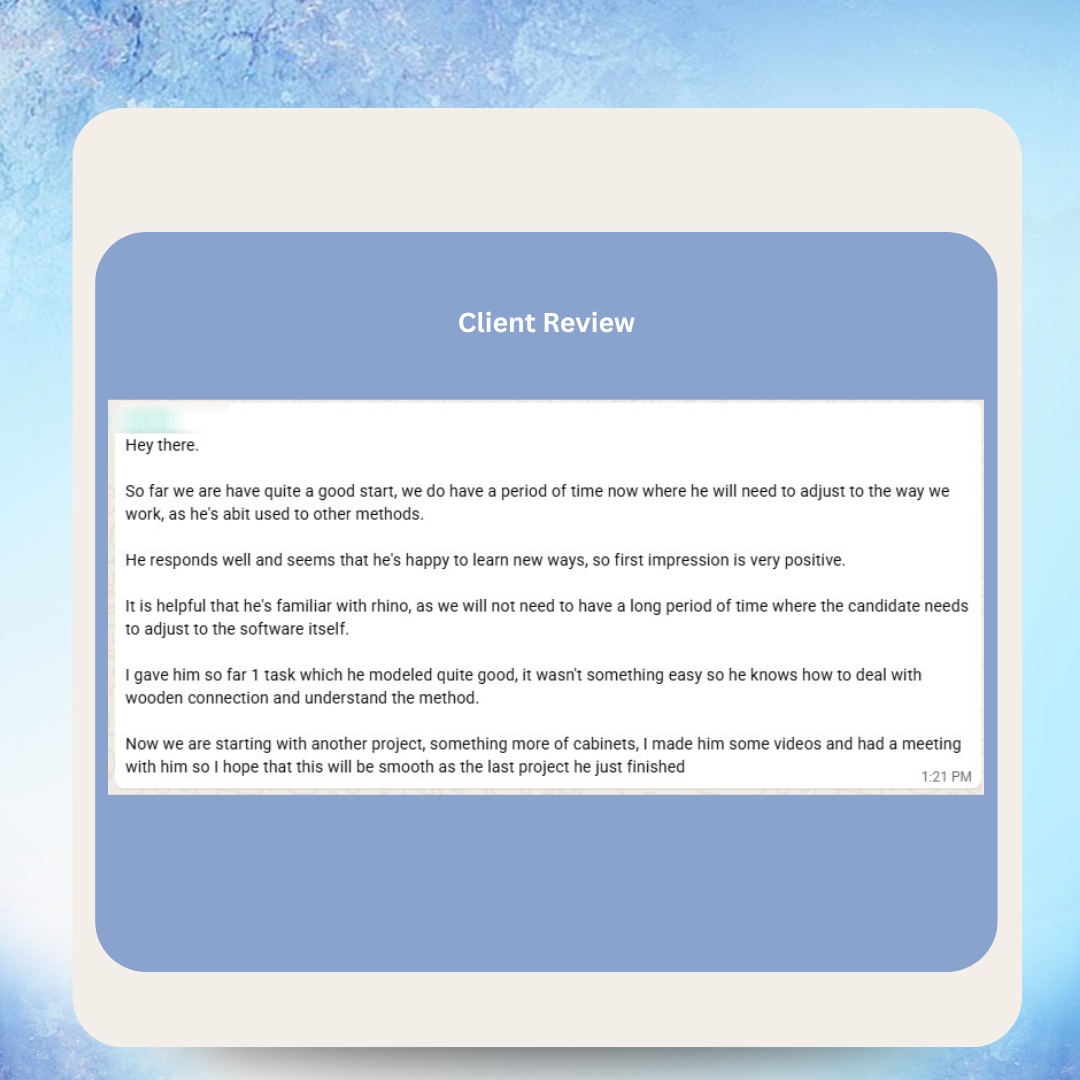
What Our Clients Say




Real Messages from Real Clients


Hear From Our VAs



As Featured In






Frequently Asked Questions
Is it legal for European companies to outsource to the Philippines under GDPR?
Yes, it is fully legal provided you implement appropriate safeguards. The most common mechanism is Standard Contractual Clauses (SCCs), which are pre-approved contract terms from the European Commission that provide a legal basis for data transfer to countries without an EU adequacy decision. Additionally, the Philippines has its own comprehensive data protection law (Republic Act 10173) modeled on European standards. When working with VA Masters, our agreements include GDPR-compliant provisions including SCCs and Data Processing Agreements.
How does the time zone difference between Europe and the Philippines work in practice?
The Philippines is 7 hours ahead of Central European Time (6 hours during summer time). In practice, Filipino professionals working from 2:00 PM to 10:00 PM Manila time are available from 8:00 AM to 4:00 PM CET — providing a full 8-hour overlap with European business hours. For UK-based companies, the overlap is even better. Many European clients find this arrangement works seamlessly, with the bonus that tasks assigned late in the European day can be completed before the next European morning.
What languages do Filipino virtual assistants speak?
Filipino professionals are highly proficient in English, which is an official language of the Philippines and the medium of instruction in schools and universities. For European companies using English as their business language, Filipino VAs integrate seamlessly. For European-language customer service (German, French, Dutch, etc.), Filipino VAs are generally not suited unless they have specific language training. Some Filipino professionals speak Spanish due to historical connections, but this is a niche skill set.
How much can European companies save by outsourcing to the Philippines?
European companies typically save up to 80% on labor costs compared to local hiring. A mid-level professional costing EUR 50,000-90,000 fully loaded in Western Europe (including salary, social contributions, pension, and overhead) can be replaced by a skilled Filipino VA at $7-$15 per hour through VA Masters — approximately EUR 12,000-26,000 annually. For a team of 5, this can represent savings of EUR 150,000-300,000 per year while maintaining equivalent quality.
Is Eastern Europe or the Philippines better for outsourcing?
It depends on the function. Eastern Europe excels for software development requiring close collaboration and EU data residency. The Philippines excels for customer service, administration, bookkeeping, digital marketing, and general VA work — offering 40-60% lower costs than Eastern Europe with comparable or better quality for these roles. Many European companies use both: Eastern European developers for technical work and Filipino VAs for operational and support functions.
How does VA Masters handle recruitment for European companies?
VA Masters uses a 6-stage recruitment process: sourcing from our talent pool and job boards, skills and English proficiency assessment, technical evaluation specific to your role requirements, background and reference checks, cultural fit evaluation with European work culture in mind, and client presentation with detailed candidate profiles. European clients typically receive 2-3 pre-vetted candidates within 2 business days. We specifically screen for experience with European clients, appropriate time zone flexibility, and GDPR awareness.
What happens if my outsourced team member does not work out?
VA Masters provides replacement candidates within 48 hours if a match does not work. We also provide ongoing support during the initial weeks to help with onboarding and integration. Our thorough vetting process means mismatches are rare — but when they occur, we resolve them quickly and at no additional cost to you. This guarantee removes the risk that makes many European companies hesitant about outsourcing.
Can Filipino VAs handle European accounting standards?
Yes. Filipino accounting professionals are trained in international standards and many have specific experience with IFRS, which is the standard used across Europe. They are proficient in cloud accounting platforms commonly used by European businesses including Xero, QuickBooks, Exact, and DATEV. For country-specific tax compliance, a Filipino bookkeeper handles the data entry and reconciliation while your local accountant or tax advisor handles the jurisdiction-specific filings and advice.
How do European companies typically start with outsourcing?
Most European companies start with a single virtual assistant handling administrative tasks or customer service — a low-risk, high-impact entry point. After experiencing the quality and cost savings firsthand, they expand to additional VAs handling different functions. A common progression is: one admin VA (months 1-3), add a customer service VA (months 4-6), add a bookkeeping VA (months 6-9), and continue scaling based on results. VA Masters supports this gradual approach with flexible engagement terms.
What about VAT implications of outsourcing to the Philippines?
Services purchased from Philippine providers are generally subject to the reverse charge mechanism under EU VAT rules, meaning no Philippine VAT is charged and you self-assess VAT in your EU member state (which is typically deductible as input VAT for VAT-registered businesses). This makes the VAT treatment straightforward. VA Masters provides invoices structured to comply with European VAT requirements. We recommend consulting your accountant for country-specific guidance, as VAT rules vary slightly across EU member states.
Ready to Get Started?
Join 500+ businesses who trust VA Masters with their teams.
- No upfront payment required
- No setup fees
- Only pay when you are 100% satisfied with your VA

Anne is the Operations Manager at VA MASTERS, a recruitment agency specializing in Filipino virtual assistants for global businesses. She leads the end-to-end recruitment process — from custom job briefs and skills testing to candidate delivery and ongoing VA management — and has personally overseen the placement of 1,000+ virtual assistants across industries including e-commerce, real estate, healthcare, fintech, digital marketing, and legal services.
With deep expertise in Philippine work culture, remote team integration, and business process optimization, Anne helps clients achieve up to 80% cost savings compared to local hiring while maintaining top-tier quality and performance.
Email: [email protected]
Telephone: +13127660301